Challenge Islamophobia Project

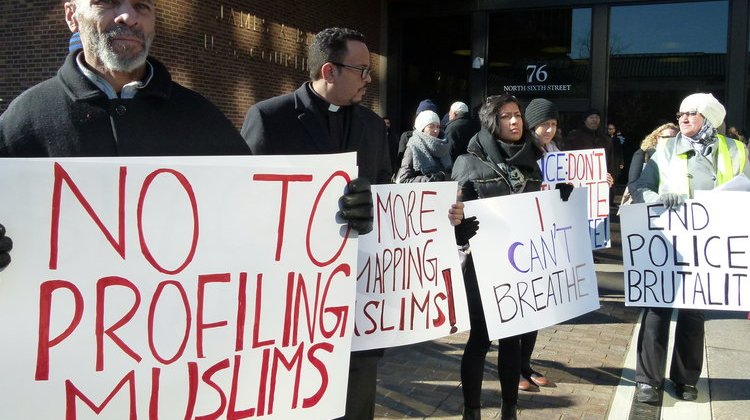
Most teaching resources and teacher workshops about Islam and Muslims focus on increasing knowledge of religious texts, beliefs, and rituals rather than addressing the root causes of Islamophobia. This project addresses that gap by placing Islamophobia firmly within a U.S. context and shared cultural history.

The lessons are designed to avoid the need for a facilitator with specialized knowledge in Islamic studies. The lessons do not teach the details of Islamic faith and practice because Islam is not the root of Islamophobia. Our lessons invite learners to think differently by investigating Islamophobia as a form of racism born from empire.

Challenge Islamophobia is a project of Teaching for Change.

>> Learn more and download teaching resources

Welcome New and Returning Steering Committee Members


HRE USA is excited to welcome Yvonne Vissing as a newly elected member of the HRE USA Steering Committee. Yvonne brings a wealth of experience to HRE USA. She is currently a Professor of Sociology and Founding Director of the Centre for Childhood and Youth Studies at Salem State University in Salem, MA. 


HRE USA is also thrilled to welcome back Kristina Eberbach who has served on the HRE USA Steering Committee for the last 3 years as the Secretary. Kristina is presently the Director of Education for the Institute for the Study of Human Rights at Columbia University in New York, NY.

The Steering Committee would like to thank everyone who participated in the election. We look forward to serving our membership and continuing to carry out the mission of HRE USA to build a vibrant base of support for HRE in the United States.  

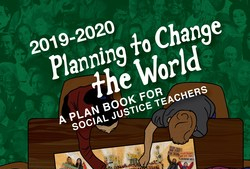
Planning to Change the World

Planning to Change the World is a plan book for educators who believe their students can, will, and do change the world. It is designed to help teachers translate their vision of a just education into concrete classroom activities. 

The newest edition has all the things you would expect in a lesson plan book, plus:

  • Weekly planning pages packed with important social justice birthdays and historical events 
  • References to online lesson plans and resources related to those dates
  • Tips from social justice teachers across the country
  • Inspirational quotes to share with students
  • Thought-provoking essential questions to spark classroom discussions on critical issues
  • Reproducible social justice awards for students

Planning to Change the World is created by the Education for Liberation Network with the support of Rethinking Schools. Proceeds from the sale of the plan book support the work of these two organizations.

>> Learn more and order

New Book: Fully Human – Personhood, Citizenship, and Rights

Lindsey N. Kingston’s new book, Fully Human: Personhood, Citizenship, and Rights (Oxford University Press, 2019) interrogates the idea of citizenship itself, what it means, how it works, how it is applied and understood, and where there are clear gaps in that application. This is a wide-ranging, rigorously researched examination of citizenship, statelessness, and human movement. And it is vitally relevant to contemporary discussions of immigration, supranationalism, understandings of national borders, and concepts of belonging. Not only does Kingston delve into theoretical concepts of citizenship and statelessness, she also integrates analyses of various kinds of hierarchies of personhood in context of these broader issues. The research also includes explorations of nomadic people, indigenous nations, and “second class” citizens in the United States within this theoretical framework of citizenship and statelessness. This careful and broad analysis defines the novel idea of ‘functional citizenship’, which is both theoretical and practical in considering citizenship and statelessness in our modern world. Fully Human focuses on the promises and protections that are outlined in the 1948 Universal Declaration of Human Rights, unpacking the protection gaps and difficulties that have become clearer and more acute in this era of globalization and security concerns, and highlighting some of the key problems with the current human rights regimes that are in place.

>>  Learn more and purchase

Teaching Tolerance Grants

Teaching Tolerance Educator Grants support educators who embrace and embed anti-bias principles throughout their schools. These grants, ranging from $500-$10,000, support projects that promote affirming school climates and educate youth to thrive in a diverse democracy. The grants fund projects on three levels: school, classroom, and district. 

>> Learn more and apply

Keep Families Together and Support Alternatives to Detention

The administration has announced plans to capture and deport thousands of undocumented immigrants all across America. Though the raids have been delayed—for now—the safety, health, and well-being of immigrant children and families continues to be threatened. More than 160 national and state organizations, including NEA, have endorsed two bills to help keep immigrant children and families safe—and together. 

Send an email urging your representative in the House to cosponsor the Humane Enforcement and Legal Protections (HELP) for Separated Children Act (H.R. 3451) and the Help Separated Families Act (H.R. 3452).
>> Take action

The Alternatives to Detention Act recognizes that asylum seekers, migrant children and families, and other vulnerable groups should not be in dangerous, overcrowded mass detention centers. Instead, they should be treated with dignity and await the outcome of their immigration cases in settings like community-based supervision and support. 

Email your members of Congress and tell them to cosponsor and support the Alternatives to Detention Act.
>> Take action

U.S. Falling Behind in Protecting a Range of Human Rights

By Human Rights at Home Blog

A new report from the ambitious Human Rights Measurement Initiative (HRMI) shows just how far behind the U.S. is internationally among its peers in protecting human rights.  According to HRMI data, many people in the U.S. lack civil and political rights, and many people are not safe from arbitrary arrests or extrajudicial killings.  The U.S. also falls significantly short in ensuring economic and social rights commensurate with the nation’s resources.

The HRMI is hosted by Motu Economic and Public Policy Research, a non-profit research institute based in New Zealand, ranked in the top ten economic think-tanks worldwide.

The recently-released report was prepared in close collaboration with a number of academic organizations, and a range of NGOs working worldwide to advance human rights. 

The initial 2019 data set

  • Annual data on five economic and social rights for 120 to 180 countries (depending on the right) from 2006 to 2016.
  • Data on seven civil and political rights for 19 countries for the two years 2017 and 2018.

HRMI will be building out this work with more data in the coming months and years.

>> Read report

HRE USA Joins Call to Disband State Department Commission on Unalienable Rights

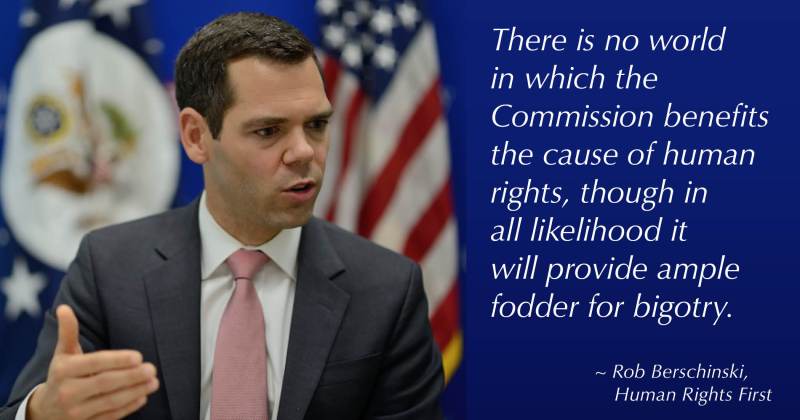
HRE USA joined a coalition of civil society leaders calling for the immediate disbandment of the U.S. State Department’s “Commission on Unalienable Rights,” due to serious concerns over the commission’s purpose, process, and membership. In a public letter organized by Human Rights First, signatories expressed alarm at the extreme views of many of the Commission’s members, and noted that the body’s stated purpose will harm the global effort to protect the rights of all people.

The commission was ostensibly formed to examine how the existing international consensus on human rights aligns with an interpretation of the American “founders’ ideas of individual liberty and constitutional government,” Secretary of State Pompeo said when announcing its creation earlier this month. In a letter—signed by 179 non-governmental organizations and 251 individuals, including former senior government officials, faith community leaders, scholars, educators, and advocates—HRE USA calls on Secretary Pompeo to immediately disband the body.

HRE USA shares in the coalition’s skepticism of the Commission, noting that President Trump’s racist rhetoric and attacks on America’s free press and judiciary, as well as his administration’s role in separating children from their parents, and selectively highlighting the human rights records of some countries while downplaying those of others, among other actions, undermine U.S. credibility on human rights.

The signatories stressed in the letter a concern that the Commission’s express purpose is to circumscribe the rights of some marginalized groups, while creating a hierarchy of rights similar to those frequently favored by repressive regimes.  To illustrate, the letter details various statements made by the ten commissioners in support of “indefensible” human rights violations. For example, one commission member described gender identity as “a matter of mental illness or some other pathology;” another has argued against the use of contraception “even when that use is meant to limit the spread of disease.” 

In addition to the ideologically slanted makeup of the Commission, the letter also addresses the purpose of the commission. “It is a fundamental tenet of human rights,” the letter states, “that all rights are universal and equal.” The creation of a hierarchy of rights is a common tactic for autocratic regimes seeking to limit rights. Signatories encourage Pompeo’s office to instead use their resources to act on the many pressing human rights issues plaguing us at home and abroad.

The letter, which was covered by NBC and The Hill, expresses concerns similar to another signed Tuesday by 22 senators. 
2019 Steering Committee Nominations

Interested in helping shape the future of human rights education? Then consider nominating yourself or a colleague to join HRE USA’s Steering Committee. 

Our rules call for the election every summer of new Steering Committee members to replace retiring members. This year there are 2 open seats to be filled, and we invite all members to make nominations for their replacements. You may nominate anyone who fits the criteria for membership and can fulfill the responsibilities of Steering Committee members, including nominating yourself!

Brief biographies of current Steering Committee members can be viewed here. A ballot will be sent to all HRE USA members in July.

Elected Steering Committee members will serve a three-year term beginning in August 2019.

DEADLINE: TUESDAY, JULY 9, 2019

>> Learn more
>> Nomination Form

For further inquiries, please contact Emily Farell

Housing Justice Conference

EVENT DETAILS: 

When: August 2-3, 2019
Where: CUNY Law School, NYC
Cost: Free and open to the public
Theme: Affordable for Whom? Organizing and Development Strategies for Housing Justice

>> See conference program
>> Register

As cities across the country struggle with rising housing costs and displacement, public recognition of the need for affordable housing is increasing. At the same time, organizers and activists–led by working-class people of color–are proposing bold, community-controlled solutions, and keeping a key question at the forefront: “Affordable for whom?” 

Coalitions of activists, practitioners, and academics around the country have successfully created deep affordability–even in expensive land markets–through community land trusts, cooperatives, mutual housing associations, tenant associations, and much more. 

Affordable For Whom? is a two-day convening focused on the development and preservation of housing that is permanently affordable. Featuring presenters from California to the Deep South to the Northeast, all working to build a national movement to transform our relationship to land and housing. Conference activities will include panel discussions, popular education activities, and strategy and planning sessions related to four interrelated elements of deeply, permanently affordable housing:

  • Innovative models of community-controlled land and housing
  • Stewardship practices that support permanent affordability
  • Creative financing and funding for deeply affordable housing
  • Public policies determined by community priorities

>> See conference program
>> Register

Conference Organizers:  CUNY Law School, NESRI, Picture the Homeless; Right to the City Alliance; New York City Community Land Initiative (NYCCLI)