HRW World Report: US Continues to Move Backward

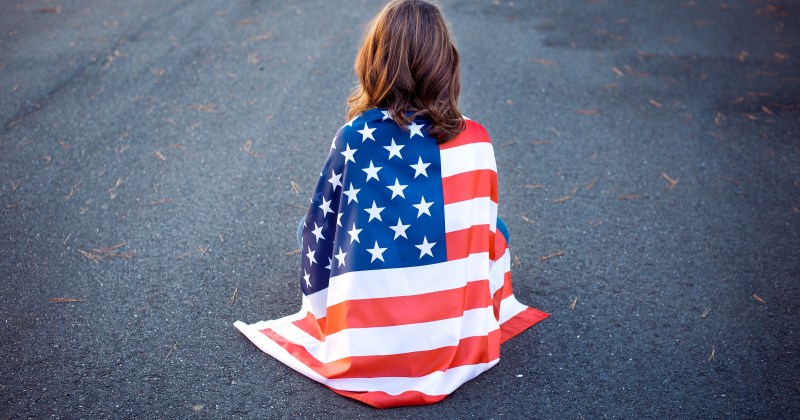
The Human Rights Watch (HRW) World Report is arguably the best country-by-country assessment of human rights to be found. HRW recently released its 2019 report, and the U.S. entry is sobering. According to the report, “The United States continued to move backward on human rights at home and abroad in the second year of President Donald Trump’s administration. With Trump’s Republican party controlling the legislative branch in 2018, his administration and Congress were able to pass laws, implement regulations, and carry out policies that violate or undermine human rights.”

The report chronicles domestic setbacks, such as continued whittling away of the Affordable Care Act, as well as backsliding in the areas of human rights diplomacy, with increased support for authoritarian regimes.

>> Read report online
>> Download full report

Say it Forward: A Guide to Social Justice Storytelling

This new guide by Voice of Witness provides strategies and resources for creating justice-driven oral history projects.

Oral history is a universal form of storytelling. For many years Voice of Witness has shared powerful stories of people impacted by injustice with a broad audience of readers.

Say It Forward extends this work, offering a DIY guide for social justice storytelling that outlines the critical methodology at the core of Voice of Witness’s evocative oral history collections.

What’s Inside?

  • Information, strategies, and steps to address power discrepancies, awareness of cultural norms, insider/outsider dynamics, self-care for interviewers, and more
  • An extensive resource section for oral history, community storytelling, media options for sharing stories, community-organizing resources, and clinical psychology resources related to traumatic stories and self-care
  • Field reports exemplifying how to harness the power of personal narrative to expose larger issues of inequality

>> Learn more and purchase

NCSS 2019 Conference – Call for Proposals

The theme of this year’s NCSS conference is “Informed Action: Agency, Advocacy, Activism.” The conference will be held November 22-24 in Austin, Texas.

NCSS is partnering with the National Council for Geographic Education and the Texas Council for the Social Studies to create an expansive professional learning experience for social studies, social science, and geographic educators and stakeholders.

2019 Call for Proposals now open! 

Proposal Deadline: March 3, 2019

>>  Submit a proposal
>> Learn more

New Status Report on Human Rights in the United States

From US Human Rights Network

The US Human Rights Network (USHRN) is pleased to release its seventh annual report on the status of human rights in the United States on December 10th in honor of Human Rights Day. On this day 70 years ago, the Universal Declaration of Human Rights (UDHR) the first global expression of the rights to which all human beings are inherently entitled—was adopted by the General Assembly of the United Nations on December 10, 1948.

This human rights report is a tool to provide advocates on the ground in the United States with a human rights framework to address their issues on the front lines.

>> Learn more and download report

Black Lives Matter at School

Mark your calendars! The Black Lives Matter at School week of action will be held from February 4-8, 2019.

Black Lives Matter At School is a national committee of educators organizing for racial justice in education.  BLM at School encourage all educators, parents, students, unions, and community organizations to join the annual week of action during the first week of February each year.

There are many ways to participate in Black Lives Matter at School week. Some educators teach BLM lessons every day of the week, wear their Black Lives Matter At School t-shirt, organize after-school rallies, facilitate their students entering the creative challenge, develop curriculum, post on social media, and rally at the school board meeting. One easy way for everyone to participate is to sign the petition endorsing the week of action

The important thing is that you act in some way to join this movement to bring down the structures of anti-Blackness in education and affirm the lives of Black students in your classroom. 

Email BlackLivesMatterAtSchool If you or your organization would like to support or endorse the week of action.

>> Learn more 
>> More Teach BLM Resources


The Power of Human Rights Education Website

The Power of Human Rights Education is open web resource on human rights education recently launched on 18 September 2018 at a side event to the HRC session, to commemorate the 70th anniversary of the UDHR and to contribute to the goals of the World Programme for Human Rights Education. The website promotes human rights education through a visual exhibition and a series of films (Path to Dignity), as well as inspirations to take action. The site was developed by HRE 2020, Soka Gakkai International, NGO Working Group on HRE and Learning, and the Platform of member states for Human Rights Education and Training, with thanks to the OHCHR. 

>> Learn more

International Journal of Human Rights Education

The International Journal of Human Rights Education (IJHRE) is a peer-reviewed, online, open-access journal that was launched in 2017 with its inaugural issue. 

Volume 2 of the journal is now available.  

Hosted by the University of San Francisco’s Gleeson Library and Geschke Resource Center, the IJHRE provides the global movement for human rights education with a dynamic and democratic platform for debates, ideas, and lessons from engaged scholarship and practice. The IJHRE is an independent journal dedicated to the examination of the theory, research, and practice central to the field of human rights education. The aim of this journal is to serve as a central location for critical thought in the field and to energize new efforts in research and praxis.

>> Read journal

Happy Human Rights Day

Today, Monday, December 10th marks the 70th ANNIVERSARY of the Universal Declaration of Human Rights. A milestone document in the global history of human rights that is as relevant today as it was when drafted seven decades ago.  

Although the UDHR is not in itself legally binding, it has become the procreator of modern international human rights law, providing safeguards – and sometimes lifelines – for thousands of people from all walks of life when national laws fail them. It has parented 16UN human rights treaties that are legally binding, including the twin UN Covenants spanning economic, social and cultural and civil and political rights respectively, plus a host of regional treaties in Africa, the Americas, and Europe.

We now take for granted that such human rights standards can be used to hold our governments to account, but just 70 years ago there were no internationally recognized human rights norms at all. The very fact that the UDHR has stood the test of time is a testament to the enduring universality of its perennial values of equality, justice, and human dignity.

The promise of the UDHR, however, has yet to be fulfilled because, as all advocates know, human rights are not a given but rather require a continuous struggle to get and once that has been achieved to keep. In other words, it is down to us to promote its ethical vision as new forms of nationalism and populism threaten to challenge our world.  

At HRE USA we believe human rights education is key to ensuring a future in which all people’s rights are respected, protected, and fulfilled. Please consider supporting HRE-USA by making a tax-deductible contribution on our behalf to our fiscal sponsor, the Center for Transformative Action, a 501(c)3organization. Your donation will allow us to continue to advocate for and further develop programming that supports human rights education across the United States.

In honor of the 70th Anniversary and to help everyone celebrate the gift of the UDHR, HRE USA has created this online resource kit. You can also join the international campaign to #Standup4humanrights. 

 HAPPY HUMAN RIGHTS DAY

Tips for Making Classrooms More Inclusive

By the Human Rights Campaign (HRC)

Back to School is a busy time for educators as they set up their students for success — laminating name tags, creating bulletin boards and writing lesson plans. They know that for many children, the first few days back to school can make or break their year. As educators sharpen their pencils, the HRC Foundation’s Welcoming Schools program is working to ensure that schools also take the time to make classrooms a welcoming place for all by cultivating an LGBTQ and gender-inclusive learning environment.


Don’t know where to start? HRC is here to help with these tips for developing LGBTQ and gender-inclusive classrooms and schools.


  1. Use inclusive language on all forms. Back to school means paperwork for families. Educators can make the process welcoming by ensuring all handbooks, forms and other communications are inclusive of all family structures and gender identities (e.g., using phrases such as “families and caring adults” in place of “moms and dads”).
  2. Stock your library shelves with diverse books. Make sure students have access to books that reflect not only their lives but also identities and perspectives outside their experiences. Challenge stereotypes by featuring a Welcoming Schools recommended book as a first-day read-aloud.
  3. Create a welcoming bulletin board. We know displays are important features in every classroom, so why not switch out the apples and school buses for a display that shows diverse family structures and people of different races, gender expressions, and abilities? Use slogans that encourage respect for all people. For an easy visual, print a Welcoming Schools safe school sign.
  4. Develop clear classroom and/or school agreements. Educators must ensure that bullying policies specifically name groups that are disproportionately bullied or harassed, and then make it clear to students that this means no put-downs about who someone is or who their family is. Preventing bias-based bullying starts on day one.
  5. Prepare for teachable moments. Educators can practice how to respond when they hear students say things like “That’s gay!” or “You act like a girl!” or “You’re not a real family because you don’t have a dad!” Be prepared to interrupt mean teasing about a child’s identity or their family.
  6. Model inclusive language. Instead of addressing classes as “boys and girls,” try using non-gendered words like “students,” “scholars,” or “friends” to be more inclusive of all identities.
  7. Group students according to something other than gender. There’s no need to have boys’ closets and girls’ cubbies. Divide children by number or line them up by birth month, the color of clothing or alphabetically by name.
  8. Try a new lesson plan. Educators can give one of the Welcoming Schools lessons a try and start the year by teaching students how to be allies and learning about what makes each child special.
  9. Plan a family night. Hold an evening event to celebrate all families. Provide information for families and caring adults to help them talk with their children about LGBTQ and gender topics.

>> Learn more about the Welcoming Schools Program