Resolution or Confrontation? Fighting for Human Rights in Post-Roe America

REGISTER HERE

September 20, 2022

12:00 PM – 1:20 PM EDT

Online event

Facilitated by: Leslie Dwyer, Associate Professor, Carter School

In the aftermath of the Supreme Court’s decision to overturn Roe vs. Wade, how can we still talk about “peace” in the United States? Does this moment demand a critique of hegemonic framings of conflict resolution as consensus, common ground, or shared narrative? For the first time in over a century a constitutional right has been taken away from a class of Americans, with a disproportionate impact on communities of color and marginalized groups. Post-Roe includes living under the threat that more rights might be stripped away.

Speakers:

Leslie Dwyer, Associate Professor, Jimmy and Rosalynn Carter School for Peace and Conflict Resolution

Susan Hirsch, Professor and Vernon and Minnie Lynch Chair of Conflict Analysis and Anthropology, Jimmy and Rosalynn Carter School for Peace and Conflict Resolution

Tehama Lopez Bunyasi, Associate Professor, Jimmy and Rosalynn Carter School for Peace and Conflict Resolution

Agnieszka Paczynska, Associate Professor, Jimmy and Rosalynn Carter School for Peace and Conflict Resolution

*Sessions may be recorded for documentation purposes and shared on public platforms

Housing as a Human Right: Next Steps to Health Equity

REGISTER HERE

Mon, September 26, 2022

1:00 PM – 2:00 PM CDT

Although housing is a human right, we are far from everyone having access to safe and adequate housing. Large inequities in housing affordability and quality persist in the U.S. and policies continue to perpetuate those injustices. Cross-sector efforts are needed to ensure fair housing for all. In this webinar, we will learn from cross-sector leaders about efforts at the community-, state-, and national-level to address housing equity.

About the Speakers:

Thomas LaVeist (Host/Moderator) is Dean of the Tulane School of Public Health and Tropical Medicine, and Weatherhead Presidential Chair in Health Equity. Dr. LaVeist’s research and writing has focused on three broad thematic research questions: 1) What are the social and behavioral factors that predict the timing of various related health outcomes (e.g. access and utilization of health services, mortality, entrance into nursing home?); 2) What are the social and behavioral factors that explain race differences in health outcomes?; and 3) What has been the impact of social policy on the health and quality of life of African Americans? His work includes both qualitative and quantitative analysis. LaVeist seeks to develop an orienting framework in the development of policy and interventions to address race disparities in health-related outcomes. Specific areas of expertise include: U.S. health and social policy, the role of race in health research, social factors contributing to mortality, longevity and life expectancy, quantitative and demographic analysis and access, and utilization of health services.

Ana Rausch has more than 22 years of experience in project management and system change implementation. Ana currently serves as Vice President of Program Operations for the Coalition for the Homeless, the lead agency for the TX-700 Continuum of Care (aka The Way Home). In this role, she leads the agency’s HMIS & Program Ops Teams and has led in the development and operations management of The Way Home’s Coordinated Access system. In addition, Ana has spearheaded the revised and improved methodology used during the CoC’s Homeless Count. Ana is originally from Brazil and lives in the northwest Houston area. She has presented at conferences at both state and national levels and holds both a bachelor’s and master’s degree in psychology.

Sydney Shivers serves as Deputy Director for the Mayor’s Office of Community Assets and Investment (OCAI). Following several years coordinating affordable housing initiatives in the nonprofit sector and serving as a Planner with the New Orleans Planning Commission, Sydney now leads cross departmental and cross agency projects aimed at creating equitable, inclusive, amenity rich neighborhoods. She has led successful zoning-reform initiatives to increase the diversity of housing opportunities developed city-wide, and she supported the launch of the Redevelopment Framework, a tool for driving public benefits by leveraging underutilized City-owned properties. Sydney earned her Bachelor’s and Master’s Degrees in Urban and Environmental Planning from the University of Virginia, and she is a candidate for a Master’s of Public Administration from the University of Pennsylvania.

Y. Frank Southall is the Organizing and Community Engagement Manager at the Jane Place Neighborhood Sustainability Initiative (JPNSI) in New Orleans, LA. At JPNSI, he coordinates campaign, organizing, communications, and community engagement strategies for the organization. He has over twenty years of organizing in the labor, environmental, student organizing, racial justice, and housing justice movements.

Power switch: Centring human rights in Africa’s clean energy transition

by Business & Human Rights Resource Centre

Thu, 15 September 2022

14:00 – 15:30 BST

Free online event

REGISTER HERE

Ahead of COP27, we will explore why a human rights-centred approach is essential to an equitable clean energy transition in Africa.

French & Spanish interpretation will be available at this event

Speakers

We are delighted to be joined once again by Mary Robinson (former President of Ireland, former UN High Commissioner for Human Rights, and Chair of The Elders) who will host our discussion.

This year’s keynote speaker will be Mali Ole Kaunga, Executive Director, IMPACT (Indigenous Movement for Peace Advancement & Conflict Transformation).

Mali Ole Kaunga is a Laikipia Maasai and pioneered strategic litigation for Indigenous Peoples in a case against the British Government for using Maasai and Samburu lands for military training. He and has been involved in lobbying for and advancing the interests of Indigenous Peoples affected by the Lake Turkana Wind Power Project and the Isiolo Mega Dam at national and international levels.

Panel speakers

Ikal Angelei – Founder & Director, Friends of Lake Turkana

Ikal is the founder of Friends of Lake Turkana (FoLT), which has worked to stop the construction of the Ethiopian Gilgel Gibe III Dam on the Omo River, Lake Turkana’s primary source of water. Due to FoLT and other partner’s advocacy work on saving Lake Turkana, the Lake was added to the list of world Heritage sites in Danger by UNESSCO in June 2018. Ikal was awarded the Goldman Environmental Prize in 2012.

Francess Piagie Alghali – Sierra Leonne Minister of State in the Office of the Vice-President, EITI board member

Francess is the Principal Assistant to the Vice-President of Sierra Leone and supervises Sierra Leone Extractives Transparency Initiative Unit (SLEITI). She was Executive Secretary of the Human Rights Commission of Sierra Leone, the National Human Rights Institution from 2010 to 2015 and has substantial experience in human rights.

Dr Hubert Danso, CEO & Chairman, Africa investor (Ai) Group

Dr Danso is the Chair of the African Green Infrastructure Investment Bank Advisory Board (AfGIIB). Dr Danso also serves on HRH The Prince of Wales Accounting for Sustainability (A4S) Advisory Council, the World Benchmarking Alliance Just Transition Advisory Group, and the UNDP High-Level Project Steering Committee, advising on the Sustainable Development Goals (SDG) Investor Map.

Joseph Kibugu – African Regional Manager, Business & Human Rights Resource Centre

Joseph has been involved in the National Action Plan processes in Kenya and Uganda & was the author of the recently published briefing on renewable energy in Africa. He is currently leading a project to support communities impacted by renewable energy companies in Kenya, Mozambique and South Africa claim accountability.
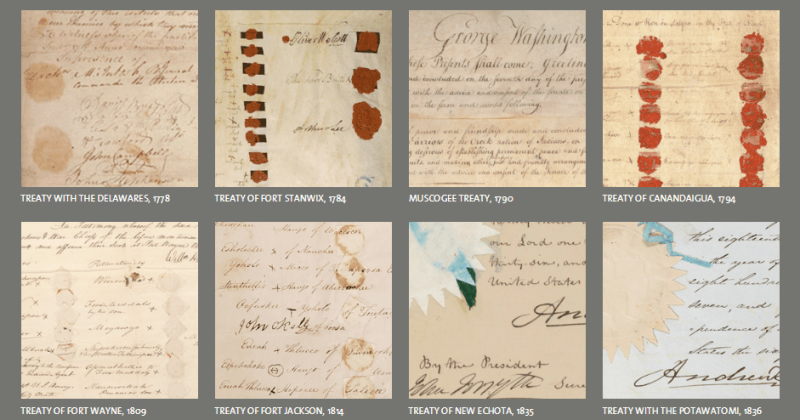
2022 Indigenous Peoples’ Day Curriculum Teach-In

The Smithsonian’s National Museum of the American Indian (NMAI) and Teaching for Change will host an online teach-in with keynote speaker Rebecca Nagle and interactive workshops.

NMAI education experts, Teaching for Change, and K–12 teachers will share curriculum and teaching strategies and explore the NMAI’s Essential Understandings for teaching about Indigenous peoples’ histories and their experiences around treaties and sovereignty today.

Workshops will feature classroom resources from the NMAI’s online education portal Native Knowledge 360° and the Zinn Education Project. The teach-in will be held online via Zoom.

Professional development credits provided. ASL interpretation for keynote and selected sessions.

October 1, 2022, 12pm–3pm (ET)

>> Learn more and register

Teaching about 9/11, War and Empire

The UPenn Graduate School of Education’s Hub for Equity, Anti-oppression, Research and Development (HEARD) invites you to join our community for an interactive panel to broaden our understanding of the ongoing impact of 9/11. Participants will learn more about US engagements in wars over the last two decades; the consequences and costs of these wars; and how and why we need to teach about war. Speakers will share research, pedagogical tools and curriculum resources that help us move beyond teaching about 9/11 to teaching beyond it.

September 15, 2022, 5:15pm–6:45pm (ET)

>> Learn more and register

Alaina Roberts on Black Freedom on Native Land

On Monday, September 12, 2022, historian and writer Alaina Roberts will introduce the Reconstruction era connections between Black freedom and Native American citizenship in the context of westward expansion onto Native land. This session is part of the Teach the Black Freedom Struggle series of online classes.

September 12, 2022, 7pm (ET)

>> Learn more and register

The Constitution Explained Virtual Launch Event

Join constitutional scholar and author Linda R. Monk; Julie Silverbrook, Senior Director of Partnerships and Constitutional Scholar in Residence at iCivics; and Christopher R. Riano, President of the Center for Civic Education, for this introduction to “The Constitution Explained,” an extensive and engaging new series of brief, 2- to 3-minute videos explaining key concepts of the U.S. Constitution and how the American system of government has changed since the founding period. Teachers will learn what the series is all about and how they can implement it in their upper elementary, middle, and high school classrooms during Constitution Day and Citizenship Week and throughout the year. A Q&A session will follow presentation of the videos.

September 12, 2022, 7pm (ET)

>> Learn more and register

Executive Director, Human Rights Program, Institute of Global Studies (University of Minnesota)

Based in a major metropolitan center area that is home to worldwide leaders in human rights work, including the Center for Victims of Torture, The Advocates for Human Rights, and Alight, the University of Minnesota is home to a rich community of human rights faculty, students, centers and programs.Since 2001, the Human Rights Program has served as the University’s energetic hub for creative and interdisciplinary research, teaching, and outreach in the field of human rights.The Program’s three-fold mission is to:advance human rights scholarship through support for research and publications; educate the next generation of human rights scholars and professionals; and engage with serious human right issues through timely projects, public programs and internships places it at the forefront of educating emerging human rights leaders.The Executive Director (ED) will support and enhance the academic, professional, and community mission of the Human Rights Program, working collaboratively in a multi- and interdisciplinary environment to build programs that advance human rights through engaged research.For more information about this position and how to apply, please visit: https://jobsearch.cla.umn.edu/350407 

Application review begins September 20, 2022. Position is open until filled.

>> Learn more and apply

Voices from the Storm: The People of New Orleans on Hurricane Katrina and Its Aftermath

Hurricane Katrina and its aftermath provide an opportunity to examine race and class in contemporary American society as they are both perceived and acted upon. The hurricane inflicted damage on a scale unprecedented in American history, nearly destroying a major city and killing thousands of its citizens. With far too little help from indifferent, incompetent government agencies, those living in poverty bore the brunt of the disaster. The residents of already marginalized communities suffered incalculable losses and endured unimaginable conditions.

The narratives from Voices from the Storm offer a ground’s-eye view of what many citizens experienced during Hurricane Katrina, and these lessons provide a multifaceted exploration of the perceptions and realities of American democracy by utilizing critical reading logs, fishbowl discussions, four corners activities, and more.

>> Access book, curriculum, and theatrical adaptation

Human Rights Center (UC Berkeley) Co-Executive Director – Human Rights Center – School of Law 

Berkeley Law and the Human Rights Center (HRC) are pleased to announce their search for applicants for the position of Co-Executive Director (Co-ED). Following a one-year training period, the Co-ED is expected to assume the role of sole Executive Director.

The Human Rights Center (HRC) is a research and training unit that investigates war crimes and other serious violations of human rights, pursues justice and accountability, and prepares the next generation of human rights advocates. HRC applies innovative technologies and scientific methods to investigate human rights abuses and study their effects on vulnerable populations. Based on our findings, we recommend specific policy measures to protect those affected by abuses and hold perpetrators accountable. HRC trains advocates around the world and provides them with the skills and tools necessary to document human rights violations and turn this information into effective action.

The Co-ED is charged with the administration and management of HRC, and generating external support sufficient to sustain the Center’s growth. The Co-ED oversees a staff of approximately ten individuals, as well as graduate student researchers, student assistants, and visiting scholars. 

>> Learn more and apply