
Iran: US School Attack Findings Show Need for Reform, Accountability

Editor’s Note: STF collected more than 1,300 images of support, met with 7 consul generals and 4 US Congressional Representatives between 2013-2015, advocating for the Safe Schools Declaration.

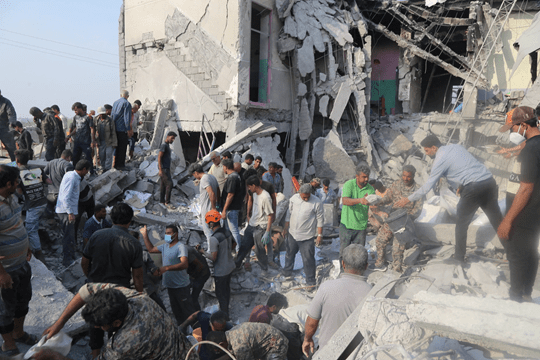
 March 12, 2026, Human Rights WatchReported findings that the United States is responsible for the recent deadly school attack in Iran, and that it was based on outdated targeting data, highlight the need for reform and accountability within the US military to minimize civilian harm during conflict, Human Rights Watch said today.The New York Times reported on March 11, 2026, that an ongoing US military investigation has preliminarily determined that the United States is responsible for a Tomahawk missile strike on the Shajareh Tayyebeh Primary School in the town of Minab on February 28.“The findings of the US military investigation into the Minab school attack show a violation of the laws of war that cannot be boiled down to a blameless mistake,” said Sarah Yager, Washington director at Human Rights Watch. “Even if those responsible for the strike did not deliberately target a school full of children, the US military has an obligation to take all feasible precautions to avoid civilian harm, which it clearly did not do in this case.”The New York Times reported that the investigation found that the attack was the result of a targeting mistake by the US military, which was carrying out strikes on an Islamic Revolutionary Guard Corps naval base of which the school building had previously been a part. The report said that US Central Command officers created the target coordinates for the strike using outdated data provided by the US Defense Intelligence Agency.Iranian authorities told the New York Times that the attack killed at least 175 people, including scores of civilians. Human Rights Watch reviewed lists with dozens of names of children and adults reportedly killed in the attack, and was able to immediately match some names with ages and other identifying information on body bags and caskets.Under customary laws of war applicable to the armed conflict in Iran, an attacking force must do everything feasible to verify that targets are military objectives or cancel or suspend the attack if it becomes apparent that the target is not a military objective. The laws of war prohibit indiscriminate attacks, which include attacks that are not directed at a specific military objective. No evidence has been put forward suggesting that there was a military objective in or near the school grounds at the time of the attack.Even if the attackers were targeting a legitimate military target in the vicinity of the school, the laws of war prohibit attacks on military objectives if the anticipated harm to civilians and civilian objects is disproportionate compared to the expected military gain from the attack.Serious violations of the laws of war committed by individuals with criminal intent—that is, deliberately or recklessly—are war crimes. Investigations into the attack on the Shajareh Tayyebeh school should consider all circumstances of the attack, including whether those responsible acted deliberately or recklessly, and what knowledge they would or should have had about the school before and during the attack, which took place during a school day.A government responsible for violating the laws of war is obligated to make full reparation for the loss, including compensation, rehabilitation, and other appropriate redress. Governments have an obligation to investigate and appropriately prosecute violations of international law, including war crimes, committed by their own forces. Those responsible for the Minab school attack should be held accountable, including through prosecutions where appropriate.US forces had improved targeting processes over recent years to minimize civilian harm, including relying on multiple intelligence sources, teams to advise on the civilian environment, and confirmation that the target is a lawful military objective before a strike is approved. If the attack on the military base in Minab relied on outdated or incomplete information about the site or if other changes in the targeting process resulted in less oversight of strikes, it suggests a breakdown in those safeguards.Congress should hold a hearing specifically to understand current US military processes to distinguish between civilians and combatants as required by international humanitarian law, including the role that any artificial intelligence or automated systems play in determining targets. The use of AI in military targeting decisions raises new risks for accountability in conflict. Military targeting decisions should not be made based solely on automated or AI-generated recommendations.“Accountability is not just about acknowledging what went wrong, but about ensuring that failures in intelligence, target verification, or decision-making are identified and fixed so this never happens again,” Yager said. “The United States should make the findings public, discipline or prosecute those responsible, and carry out reforms to ensure its forces are minimizing civilian harm to the greatest extent possible.”

Learn more:
www.hrwstf.org
HRW’s Middle East/North Africa Page

HRE USA is a project of the Center for Transformative Action.
Learn about the Healthy Democracy Ecosystem Map and Contribute to Next Steps

The Healthy Democracy Ecosystem Map is the first comprehensive look at the universe of organizations promoting healthy democracy in America.

REGISTER FOR A WEBINAR:

 Wednesday, March 25th, 2:30 ET 

Join us for this interactive call where we’ll briefly demo new features of the Healthy Democracy Ecosystem Map, but spend most of our time exploring the question: What’s next for the Healthy Democracy Ecosystem Map?

We’ll ask participants to:

  • Help prioritize future functionality and improvements
  • Share ideas for how the Map could better support:
  • Volunteerism and coordination
  • Community responses to and resistance against political violence
  • Get-out-the-vote and civic engagement efforts
  • Consider whether and how features like signal/chat-based connections could responsibly support this work

This is a chance to help shape the Map’s evolution as a shared resource for the field. 

HRE USA is a project of the Center for Transformative Action.
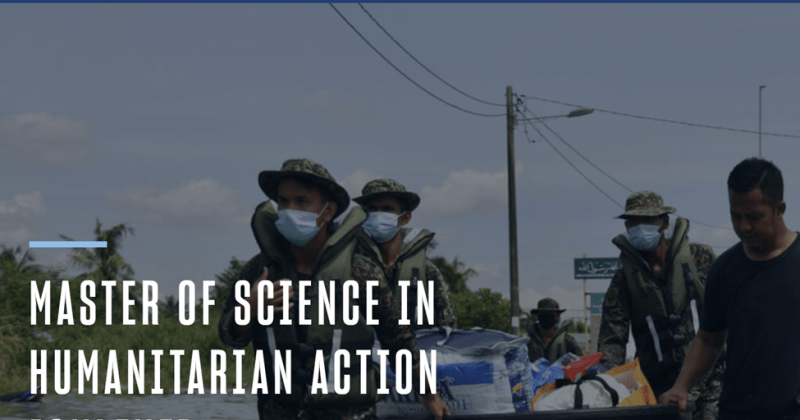
University of San Diego: Master of Science in Humanitarian Action (MSHA)

The Master of Science in Humanitarian Action is a 100% online career-building advanced degree within the University of San Diego’s Joan B. Kroc School of Peace Studies. This program is designed for both recent graduates and experienced professionals and provides the opportunity for students to learn from executive-level directors, experienced consultants and regional coordinators who work directly for humanitarian-related organizations.

This master’s program takes a multidisciplinary approach to prepare students to become the type of critical thinkers and humanitarian leaders who will help solve some of the world’s biggest challenges. Blending conflict analysis, transformation and social innovation with peacebuilding practices, the MS in Humanitarian Action intentionally dissolves the barriers between international humanitarian and domestic emergency management.

The 20-month program admits candidates throughout the year to begin their degree in either the Spring, Summer or Fall. Students will take two courses during each 14-week term, focusing on one 7-week course at a time. Course curriculum includes topics such as assessing humanitarian needs, aid delivery, management and logistics, leadership, effective communication, and more. The program culminates in a capstone simulation exercise where students will tackle a complex humanitarian emergency demonstrating their learned skills and knowledge in order to design, implement and evaluate creative solutions in a real-time scenario.

  • Learning mode: Online
  • Pace: Part-time
  • Duration: 20 months
  • Tuition fee: $21,300
  • Application deadline(s): March 6, 2026 (Priority application deadline) / April 3, 2026 (Final application deadline)

>> Learn more

HRE USA is a project of the Center for Transformative Action.
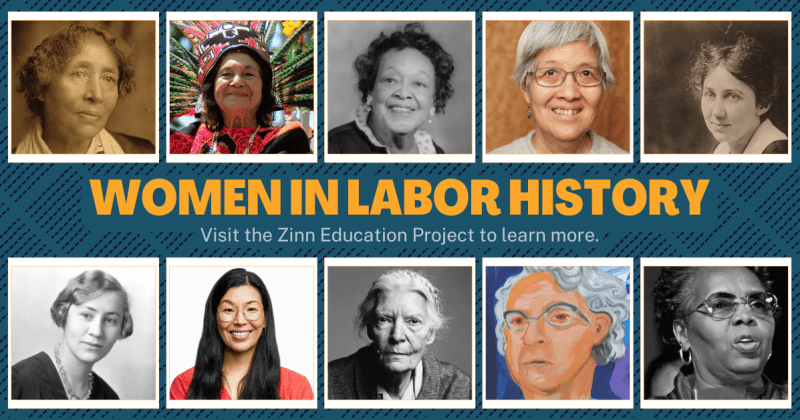
Zinn Education Project: Women’s History Month 

For International Women’s Day and Women’s History Month, we offer a collection of resources, beginning with women in labor history. These women are often missing from textbooks and the media despite the diverse roles women have played to organize, unionize, rally, document, and inspire workers to fight for justice.

Resources include 

>> See all resources

HRE USA is a project of the Center for Transformative Action.

UHRI: Democracy Dialogue: Concluding Dialogue on March 27, 2026

Please join us to explore our understanding of democracy through an intergroup dialogue lens. This week’s focus will be on Freedom of Speech

Democracy Dialogues

6 sessions, join anytime!

One Friday a month 8am – 9:30am Pacific Time

Next session: Friday, March 27, 2026, 8:00 AM 9:30 AM (PT)

Action and Concluding Dialogue

All are welcome

Register here


Donations welcome to support this effort! Please Support Our Work

HRE USA is a project of the Center for Transformative Action.

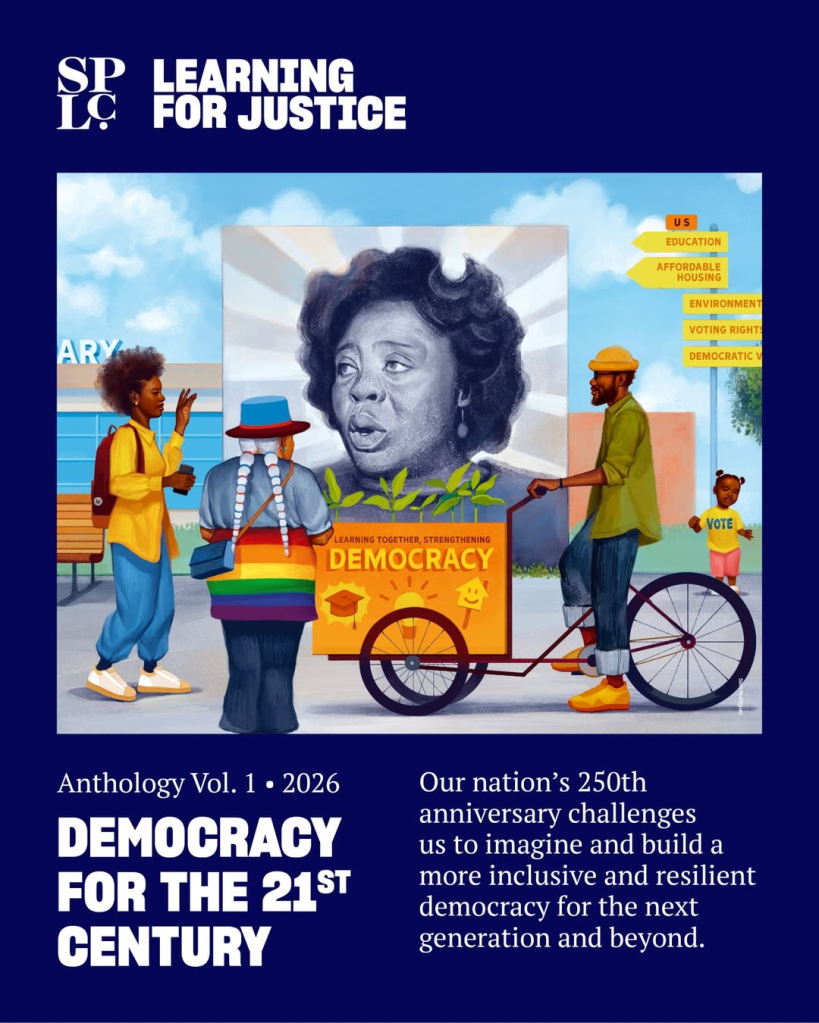
 New Learning for Justice Anthology

Our nation’s 250th anniversary challenges us to imagine and build a more inclusive and resilient democracy for the next generation and beyond.


The new Learning for Justice Anthology examines the foundations and future of democracy in the United States and education’s crucial role in building a more inclusive multiracial society that expands opportunities for civic and political participation.

This first volume of the new Learning for Justice Anthology examines the foundations and future of democracy in the United States and education’s crucial role in building a more inclusive multiracial society that expands opportunities for civic and political participation. This volume offers articles to frame the conversation, an introductory civics and democracy course and additional resources for learning and teaching.

Access the full Learning for Justice Anthology

HRE USA is a project of the Center for Transformative Action.

United Nations Institute for Training and Research (UNITAR) UN Young Leaders Online Training Programme

The United Nations Institute for Training and Research (UNITAR) is pleased to open applications for the 2026 editions of its United Nations Young Leaders Training Programme, a 4-week online course introducing youth worldwide to the work and values of the United Nations.

The programme combines self-paced modules with expert-led webinars and e-workshops. Participants engage with UN officials and practitioners as they explore the UN system, multilateral conferences, and the Sustainable Development Goals (SDGs). These sessions offer a clear and practical introduction to how international organizations operate. Across four weeks, participants develop skills in communication, negotiation, leadership, and global citizenship. Training in UN career development, Model United Nations (MUN), and conference diplomacy supports young leaders in navigating academic and professional pathways within international affairs. 

Each edition admits a maximum of 30 participants. Limited scholarships are available. 

Programme Dates 

➤ January Edition: 12 January – 6 February 2026 
➤ April Edition: 13 April – 8 May 2026 
➤ June Edition: 8 June – 3 July 2026 
➤ August Edition: 27 July – 21 August 2026 

Corresponding registration links are available under Programme Dates on the programme webpage. 

For information about content, tuition, requirements, or scholarships, contact multilateralism@unitar.org. 

>> Apply or learn more at the official programme website

HRE USA is a project of the Center for Transformative Action.
UHRI: 30 Rights in Motion

This month, UHRI is proud to release 30 Rights in Motion, a video series based on the concept and craft of Michele Bury to bring the 30 articles of the Universal Declaration of Human Rights to life. Check it out, and share it to help the light of the Declaration burn stronger in these darkening times. We are excited to be sharing it at the upcoming Virtual Human RIghts Summit and to work with youth to create their own actions for human rights! (more information below)

Special thank you to Michele Bury and Malcolm Wright for creating this special project together.

HRE USA is a project of the Center for Transformative Action.
HRE USA Resource: Human Rights Education Library 

Human Rights Education Library 

This month we’re featuring our HRE Library and highlighting Refugee Rights and Women & Girls

Our online human rights education library is a curated, resource-rich collection of HRE materials for K-12 educators.

Our library includes curriculum, lesson plans, documents, manuals, articles, books, and more.  Whether you are seasoned veteran or just getting started, you can be sure to find something useful and relevant to enhance your HRE learning and practice.

>> See all HRE Library Resources

Refugee Rights 
Article 14 of the Universal Declaration of Human Rights (UDHR, 1948) states, “Everyone has the right to seek and to enjoy in other countries asylum from persecution.” A refugee is a person who has left his or her country due to a well-founded fear of persecution because of race, religion, nationality, political opinion, or social group. When crisis such as natural disasters and armed conflicts force thousands of people flee their home countries, their numbers can overwhelm host countries, even with help from agencies like the UN High Commissioner for Refugees, the Red Cross and Red Crescent, and non-governmental organizations (NGOs).

Women & Girls 
Although the Universal Declaration of Human Rights (UDHR, 1948) states that “Everyone is entitled to all the rights and freedoms set forth in this Declaration, without distinction of any kind, such as … sex,” the majority of the world’s women, never experience equal dignity or full realization of their human rights. Traditional gender roles present a major obstacle to women’s human rights. The Convention on the Elimination of All Forms of Discrimination against Women(CEDAW, Women’s Convention, 1979) prohibits such discrimination against women and obligates governments to take affirmative steps to advance the equality of women. The Declaration on the Elimination of Violence against Women (1993) recognizes the right of women to be free from violence and obligates governments to take steps to eliminate violence against women. 

HRE USA is a project of the Center for Transformative Action.
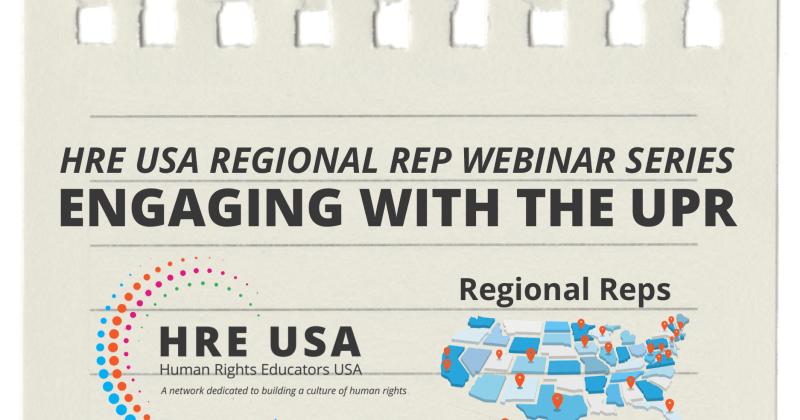
Illustration of a piece of note paper with HRE USA Regional Rep Webinar Series Engaging with the UPR and the HRE USA logo and the regional rep logos

Engaging with the UPR: Session 3 (March 10, 2026) 

Learn about the UPR: What it is, how it works, and what you can do to engage in the process of shaping human rights in the United States!

This series of webinars and resources around engaging with the Universal Periodic Review of Human Rights (URP) has been coordinated by the a coalition of HRE USA Regional Representatives.

Moving from theory to transformation to assist, support, and collaborate to bring collective, local actions to the United States’ 2026 Universal Periodic Review of Human Rights, this series includes video recordings of our sessions and accompanying learning materials and references.

Monthly series started Thursday, January 29, 2026 and will run through April.

All HRE USA members are encouraged to attend! Webinars are open to the public (so bring a friend!)

Upcoming sessions:

  • Session 3: Tuesday, March 10, 2026 • 3pm (PT) / 6pm (ET) 
  • Session 4: Tuesday March 24, 2026 • 3pm (PT) / 6pm (ET)
  • Session 5: Monday, April 6, 2026 • 3pm (PT) / 6pm (ET)

>> RSVP
>> Engaging with the UPR recordings of sessions 1 & 2 and resources page

HRE USA is a project of the Center for Transformative Action.