New guide on human rights education curriculum development

The Danish Institute for Human Rights developed this new guide that includes different phases of curriculum development and sample curricula on human rights for four subjects across pre- primary and lower primary, upper primary, lower secondary, and upper secondary level. The hope is to “bring conceptual clarity on human rights education and curriculum development and provide concrete suggestions on how to build human rights curricula fit for 21st century human rights challenges, while contributing to the realisation of the SDG goals and targets set by the international community.”

For more information and to download the guide, visit this page.

Teaching Reconstruction resources

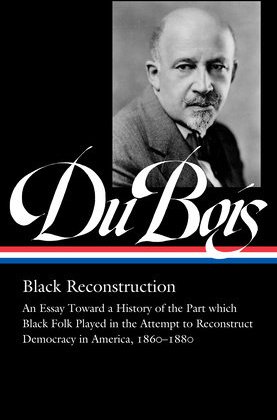
Almost a century after its publication, the Library of America reissued a new edition of Black Reconstruction with reflections from historians Eric Foner and Henry Louis Gates Jr. on Reconstruction’s critical place in battles over democracy in the United States.

For more information about the book and to order it online, visit this page. You can also watch an online discussion with Eric Foner and Henry Louis Gates Jr., editors of the new Library of America volume W. E. B. Du Bois: Black Reconstruction, and Keeanga-Yamahtta Taylor, Professor of African American Studies at Princeton University.

Zinn Education project’s  Teach Reconstruction campaign offers lessons, articles, films, books, and a student project for K–12.

The 2021-22 HRE USA Training As Action Series (TAAS): Tier 1 Module 2

Tier 1 Modules provide general grounding in human rights and human rights education applications, including understanding ways to engage within the various committees, action teams, and working groups of HRE USA. Register now for Tier 1 Module that will take place on Monday, October 4 – 7:00-8:30pm ET. Visit this page for more information and dates of the TAAS.

Webinar: How might universities teach about, through and for human rights?

Dr. Felisa Tibbitts, Chair in Human Rights Education at Utrecht University (Netherlands) and Dr. André Keet, Chair for Critical Studies in Higher Education Transformation at Nelson Mandela University (South Africa) are co-editing the book Emancipatory Human Rights and the University. The book explores the theoretical and practical question of how universities can promote human rights, with perspectives from Africa, Europe, Latin America, North America and Southeast Asia. Pre-register here.

Meet the editors and some authors in a webinar that will take place on 23 September, 20:00 – 21:30 Amsterdam time (GMT +1)/2 p.m.- 3:30 p.m. EDT. Drs. Keet and Tibbitts will be joined by Dr. Regina Cortina of Columbia University (USA) and Dr. Francis Adaikalam, Loyola College (India).

The presentations and discussions will include:

– International Human Rights Standards and the University

– A Feminist Lens on Gender Equality in a Mexican University

– Human Rights Programming and Transformation of South African Universities

– Human Rights in Indian Social Work Education
Ashleigh Deno, 2021 Edmonds Summer Fellowship Report

During her fellowship Ashleigh analyzed HRE USA’s social media accounts and their overall online presence. She compiled a social media analytics report in order to plot the numbers and determine the network’s overall success with each social media platform, which also can help influence and improve performance in the future. View video report.

“It was an amazing experience to be able to work so closely with HRE USA and I truly learned so much from them this summer. In my day job, I am a high school history teacher and I work at a school with a high refugee population. Human rights and human rights education play a large role in both my personal life and in my career, so having the opportunity to collaborate so closely with such a respected organization has been a pleasure. I firmly believe that I have learned so much meaningful information that I can bring with me into my classroom, and I have been equipped with resources to better myself even more going into the future.”

Ashleigh Deno

Affordable Housing Crisis in the US

Throughout its history, the United States has perpetuated a double standard in regard to international human rights by urging other nations to protect and promote these rights, while simultaneously forgoing international human rights treaties in favor of its own Constitution and domestic human rights laws. Notably, the United States does not recognize one of the fundamental rights introduced by the Universal Declaration of Human Rights in 1948 and contained in the International Covenant on Economic, Social, and Cultural Rights: The right to adequate housing. Failure to recognize housing as a human or constitutional right has led to a worsening affordable housing crisis in the United States. Domestic policy has proven insufficient to combat this crisis, and the United States must adopt a different approach for resolution. This article by Maria Massimo, argues that state governments should borrow from international human rights treaties and foreign housing law, and recognize housing as a justiciable right in an attempt to mitigate the affordable housing crisis. States can best ensure a right to housing by including housing as a right in their respective constitutions and creating oversight bodies to promote and protect this new constitutional right.

>> Read article

Human Rights Violations Against Migrants on the Southern Border

In 2017, the Trump Administration imposed its policy of zero-tolerance immigration enforcement on the southern border. This policy resulted in the forcible separation of families and the prolonged detention of children in harsh conditions, without due process or adequate resources. The Trump Administration unleashed these policies to deter people from immigrating and seeking asylum, consistent with President Trump’s racist rhetoric and campaign promises. This article by Jeffrey R. Baker and  Allyson McKinney Timm analyzes and critiques these policies based on international human rights law, noting the resonance human rights norms find among diverse religious traditions.

>> Read article

Critical Integration Migration Law Course

Learn about the human rights laws that govern international migration. Investigate failures to protect the rights of refugees and develop a critical understanding of migration issues from climate change to human trafficking.

To shed light on these complex issues, the University of Kent is offering an online course on International Migration Law that can be taken entirely online. In this learning experience, you will develop extensive knowledge about the instruments of international migration law, learn to apply international treaties to case studies, and explore existing international protection mechanisms for asylum seekers and refugees. 

>> Learn more and register