Global Citizenship Education Through the Power of Film

With over 140 short documentaries and VR experiences there are so many imaginative ways that educators are using SIMA Classroom with their students.

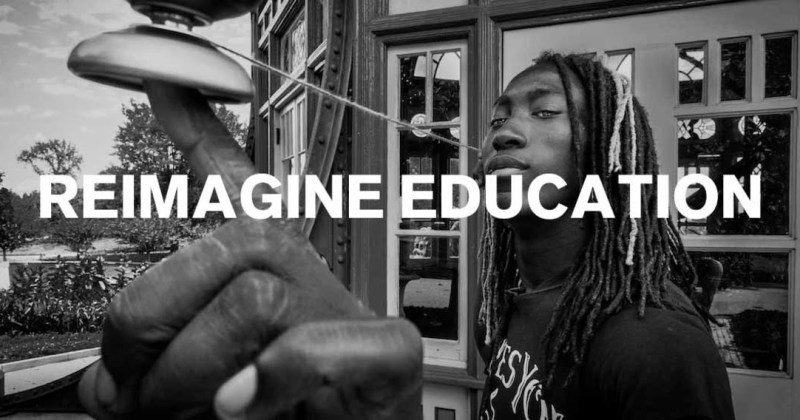
To help you choose the right films for your class, SIMA has created curated film Playlists on some of the most important global education themes. Each one brings together a curated list of award-winning films and our project-based lesson plans to help you reimagine education. Dive into their latest film selections on the Sustainable Development Goals; Gender Equality; VR for Change; and more.

>> Access Playlist

Diverse Democracy Grants

Teaching Tolerance (TT) is funding projects that will help students become empowered voting advocates in their communities through their Diverse Democracy Grants.  TT will be offering awards of $500 to $10,000 to fund projects for educators helping their students to become lifelong voters and empowered voting advocates in their communities.

Available through August 31

>> Learn more

May is Asian American and Pacific Islander Month

May is Asian American and Pacific Islander Heritage Month, and Teaching Tolerance has assembled the following articles and video to help educators celebrate the heritage of this diverse group of Americans with their students—this month and throughout the year.

  • I AM ASIAN AMERICAN
    Uncover the true diversity beneath the Asian American label.
  • TEACHERS, CHECK YOUR TEXTS
    LGBTQ Asian identities need to be amplified in the school curriculum—and not just during a heritage month.
  • HAWAIIANS LIVE IN ALOHA
    This video excerpt is from A Place in the Middle: The True Meaning of Aloha, a 2014 short documentary film. The film can be viewed in its entirety here.

Refugee Crisis Curriculum

Generation Human Rights has had the incredible opportunity to work with RFKennedy Human Rights and CARE to create two curricula for middle school and high school classrooms on the current world refugee crisis

Last year, as the worldwide refugee crisis continued to escalate, RFKennedy Human Rights, Generation Human Rights and photographer and documentarian Ron Haviv came together to create a comprehensive high school multimedia curriculum on the global refugee crisis. The curriculum fills an urgent real time need as educators and youth locally and abroad struggle to fully understand how the crisis originated, how it impacts communities and how students globally can step into the role as human rights defenders in response to the situation.

For middle schoolers, Generation Human Rights and CARE created another interactive multimedia curriculum about the refugee crisis called Letters Of Hope Classroom. The lesson plans enable students to develop a tangible understanding of the crisis and supports them to make connections with young refugees around the world. The program encourages the development of empathy and inquiry as students create a foundation on which to better understand human rights and the global refugee crisis that finds more 65 million people forcibly displaced from their homes and countries.

>> Download High School Curriculum
>> Download Middle School Curriculum

Muslim American Educators Driving Change in the Classroom

Nagla Bedir and Luma Hasan (pictured above), both social studies teachers in New Jersey, co-founded Teaching While Muslim to help address some of the challenges and frustrations they experienced as students growing up as Muslim Americans.

Trying to articulate a complex identity when faced with peers and educators who have a limited understanding of what it means to be Muslim often left Nagla and Luma on the defensive, responding to micro-aggressive questions and bigoted accusations that would not be necessary if school curricula were fully inclusive.

twm-logo.pngNow as educators, they are driving the change to address this lack of inclusion.The Teaching While Muslim site is a space intended to deepen understanding of the complicated identities of Muslims in the United States, including the diverse experiences of Muslim educators. It is also a platform for resources and tools.

Bedir and Hasan took a few minutes to talk about their efforts and where they see their work headed.

>> Read More
>> Support the movement for racial justice in Education

Teaching Empathy

Check out these two new lessons created by the grand finalists of the Facing History and Ourselves 2017 Margot Stern Strom Innovation Grants. Today’s world calls for more empathy and these two winners have worked hard to develop approaches that help your students understand empathy and how to consider other points of view that may differ from their own.  Explore them today and see how you can create a more compassionate world with your students.

>>  Download Lessons

Girl’s Rights Platform

Plan International has developed a new Girl’s Rights Platform that consists of a vast searchable database of a variety of human rights documents and conventions by the UN and regional bodies. There’s also a UN debate tracker planned. That platform has been developed for human rights activists, NGO staff, and academics and is also a useful resource for educators who work with girls and on human rights. The platform includes an online learning experience with modules on different aspects of girls’ human rights. To find the modules, follow the link to the quiz section where you can test and increase your knowledge.

>> Visit website

It Gets Better Project – Education Guide


The It Gets Better Project is a Los Angeles-based nonprofit organization that uses digital media and more to help uplift, empower, and connect LGBTQ+ youth around the globe. They recently launched a new education initiative, one that centers on free-for-download EduGuides that accompany some of their best films, video series, books, and more. The resources are meant for the classroom, as well as any space where learning occurs and where empathy and inclusivity of LGBTQ+ youth are encouraged.

>> Learn more

Anthology: Human Rights and Children

Human Rights and Children by Barbara Stark, Professor of Law at Hofstra University, provides a comprehensive overview of children’s human rights, collecting the works of leading authorities as well as new scholars grappling with emerging ideas of ‘children’ and ‘rights.’ Beginning with the Convention on the Rights of the Child, the most widely ratified human rights treaty in the world, this book explores the theory, doctrine, and implementation of the legal frameworks addressing child labor, child soldiers, and child trafficking, as well as children’s socio-economic rights, including their rights to education. With an original introduction by the Professor Stark and contributions by leading scholars such Jonathan Todres, Martha Davis, as well as many others, this topical volume is an invaluable resource for scholars, students, and activists. Contributors also include .  You can check out the table of contents here.

>> Learn more and purchase

800,000 Reasons to Teach About DACA

HRE USA is happy to release the 6th edition of the Human Rights Here and Now Bulletin, “800,000 Good Reasons to Teach About DACA: A Toolkit for Educators.”

Since 2012, nearly 800,000 undocumented young people who came to the USA as children have been allowed to go to school, work, or serve in the military without fear of deportation under the Deferred Action for Childhood Arrivals (DACA) program. On September 5, 2017, President Trump rescinded the program and gave Congress six months to determine the fate of DACA recipients. “The deportation clock is ticking on hundreds of thousands of young people who know no other country,” said Sen. Richard Durbin of Illinois. Work permits begin to expire on March 5, 2018, and all protections under the program will be stripped away on a rolling basis over the next 2 1/2 years.

Who are these so-called “dreamers”? Why do some people feel they should be expelled from the United States? Why do others agree with Human Rights Watch that Trump’s repeal of DACA will expose hundreds of thousands of people to deportation by a cruel and unjust immigration system? This DACA toolkit offers educators resources for addressing this important and controversial human rights issue that faces schools and communities across the country.

>> Download free resource