Women in Labor History

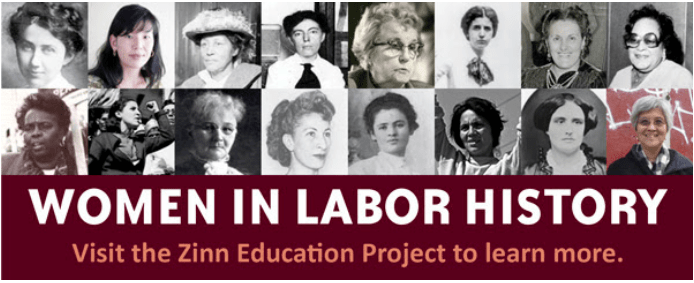
The impact women have made in labor history is often missing from textbooks and the media, despite the numerous roles women have played. From championing better workplace conditions to cutting back the 12-hour day to demanding equal pay across racial lines. Check out these profiles of women in labor history from the Zinn Education Project. 

>> View resource

Happy Women’s History Month!

As we celebrate the tremendous efforts by women and girls around the world in shaping a more equitable future, let’s tap into that momentum to overcome the barriers women still face regarding equal economic opportunities, educational equity, women’s health, and an end to gender-based violence.

Check out these resources compiled by Human Rights Educators USA to teach about the issues that women and girls face around the world and how we can all work towards the realization of women’s empowerment and gender equality. 

>> View Resources

Also, check out these great resources on the fight for women’s equality from our partners: Learning for Justice, Teaching for Change, and the American Federation of Teachers.

Teaching About Feminism

by Educators 2 Social Change

In simple terms, feminism is the advocacy for equal rights and opportunities for all genders. Women have been viewed by many as the “weaker” sex for hundreds of years, but over the past few decades, particularly the past five years, women have been fighting again for their voices to be heard. From the fight for women’s suffrage to women’s marches to the #MeToo Movement, progress has been made regarding treating all genders equally, but there is still a long way to go, as women are continuously paid less than their equal male counterparts and often ignored or silenced in cases of sexual assault and/or domestic violence. By teaching students about feminism, educators are not only promoting equal rights for all genders but are also debunking the idea that “feminism” is a bad word, or even controversial.

There are many valuable resources available online for teaching students about feminism and gender equality. Feminism is often given a negative connotation, but feminists are simply fighting for equality between men and women, which is long overdue. These resources compiled by Educators 4 Social Change will help you in your journey of teaching students about feminism, women’s rights, and equality.

>> See annotated resource list

Planet Classroom

Planet Classroom is a global network for youth by youth that brings together musicians, dancers, video game creators, filmmakers, innovators, and emerging technologists to entertain, educate and engage. The creators and curators focus on celebrating global oneness. They do this by showcasing powerful video storytelling, cultural workshops, and social impact innovations combined with interactive discussion on global challenges featuring voices from around the world. 

All programming on the Planet Classroom Network is made available for FREE.

>> Learn more
>> View Youtube channel

Black History Month Books for All Ages

From First Book

In 2020, educators and avid readers collectively recognized the urgency of reading anti-racist books and exercising self-education. It was apparent, perhaps more so than other years, why Black stories matter, especially in the classroom. While, in 2021 and beyond, recognizing Black pain and struggle remains an important focus, the curators of the First Book Marketplace for educators also work to strike a balance—highlighting books that celebrate Black joy, excellence, and progress.

Lori Prince, director of merchandising at First Book shared, “We want to make sure that all readers see the full breadth of the Black experience, not just stories of trauma and oppression.”

We may celebrate Black History Month in February, but Black history is now—this minute, this year, this decade. Give readers of any age the tools they need to learn more with First Book’s 28 books for 28 days, a hand-picked selection of fantastic reads, designed especially for educators.

>> Access booklist

IJHRE Issue 5 – HRE and Black Liberation

Situating Black activism and movement building in its historical context, this special issue of the International Journal of Human Rights Education (IJHRE) features articles, essays, commentaries, and book reviews that put the longstanding call for Black lives to matter and the quest for Black liberation in conversation with human rights education as a field of scholarship and practice.

The IJHRE is an independent, double-blind, peer-reviewed, open-access, online journal dedicated to the examination of the theory, philosophy, research, and praxis central to the field of human rights education. This journal seeks to be a central location for critical thought in the field as it continues to expand.

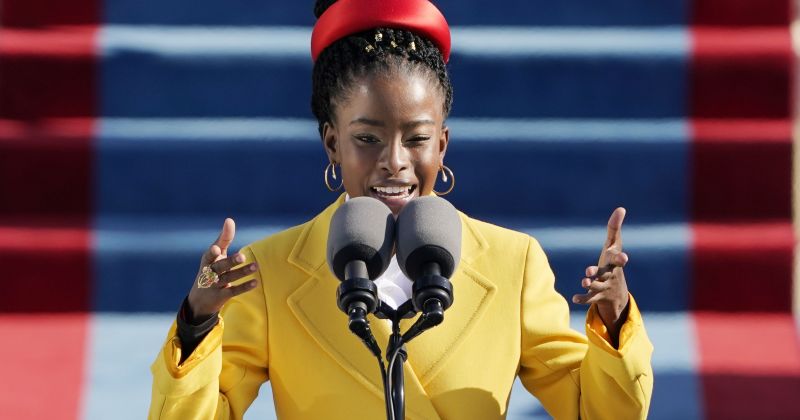
Teach Amanda Gorman’s 2021 Inauguration Poem, The Hill We Climb”

National Youth Poet Laureate Amanda Gorman’s poem “The Hill We Climb,” written for the 2021 inauguration, presents a great opportunity for educators and students to discuss the ways creative expression can help us think about the meaning of democracy. Check out these great lessons below, to get inspired. 

Racial Justice Resource Collection for Educators

As part of our commitment to anti-racism and non-discrimination, HRE USA has created a Racial Justice Resource Collection to help educators engage their students on issues of racism through a human rights lens.

Although race is now generally understood to be a social construct without scientific significance among human beings, concepts of race continue to affect people’s lived experience through racism, the institutionalized practices of preference and discrimination based on differences of what is presumed to be race. 

The UN Convention on the Elimination of All Forms of Racial Discrimination (CERD, Race Convention, 1965) addresses all forms of distinction, exclusion, restriction, or preference based on race as a violation of fundamental human rights and defines “racial discrimination” to mean:

… any distinction, exclusion, restriction, or preference based on race, color, descent, or national or ethnic origin that has the purpose or effect of nullifying or impairing the recognition, enjoyment or exercise, on an equal footing, of human rights and fundamental freedoms …

The collection was developed in partnership with contributing members of the National Council for the Social Studies (NCSS) Human Rights Education Community and Human Rights Educators USA (HRE USA)

 >> Access collection

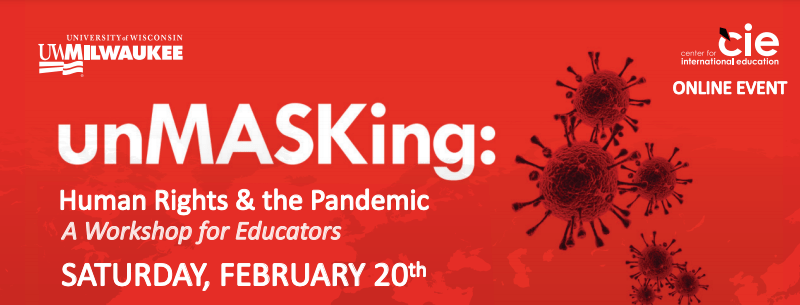
unMASKing: Human Rights and the Pandemic

EVENT DETAILS: 
When: Saturday, February 20th
Time: 11am-1pm CT
Where: Live Stream on Zoom
Cost:  Free

Description:
Guide your students to navigate the pandemic through multimedia lessons and activities! The Covid-19 pandemic has highlighted and exacerbated existing human rights challenges including social and economic rights such as the rights to education, food and health. The two-hour virtual workshop will introduce educators to “unMASKing: The Pandemic Curriculum Project” and possibilities for its use in the classroom or other learning environments. The workshop will provide opportunities to collaborate across classrooms. The program is open to educators, parents and administrators in all settings (classrooms, organizations & homes).

Facilitators:
Elana Haviv is the founder and director of Generation Human Rights (GenHR)
Felisa Tibbitts is co-founder and director of Human Rights Education Associates (HREA) and lecturer at Teachers College of Columbia University.

This workshop is being funded by a Title VI grant from the U.S. Department of Education and organized by the Institute of World Affairs at the University of Wisconsin-Milwaukee. The program is co-sponsored by Human Rights Educators USA, the University and College Consortium for Human Rights Education, and the UW-Milwaukee Center for Global Health Equity.

Share the flyer2021 CIE Unmasking

HRE in humanitarian settings: opportunities and challenges

EVENT DETAILS: 
When: Wednesday, February 10, 2021
Time: 11.30 -12.30 ET
Where: Live Stream
Cost:  Free

Description:HRE in humanitarian settings: opportunities and challenges
Presenters: Megan Devonald and Silvia Guglielmi, Overseas Development Institute, UK 

In this session the presenters discuss how, and to what extent, non-formal programmes targeting adolescent refugees address education aboutthrough and for human rights. HRE in humanitarian settings provides an opportunity for adolescent refugees to understand and exercise their human rights, respect the rights of others, and gain active citizenship skills. Yet in this mixed method study, the researchers find stark differences in how human rights are reflected in programming for refugees. In Jordan, the Makani programme for Syrian refugees integrates human rights across subjects and teacher pedagogy, and fosters skills for active citizenship. By contrast, in Cox’s Bazar, Bangladesh, a lack of basic rights hinders the delivery of meaningful human rights education for Rohingya adolescents. The researchers conclude that human rights education should be a core pillar of humanitarian responses, but that it needs significant adaptations to meet learners’ needs in specific contexts.   

You can view further upcoming webinars here.