Audience and Feedback Survey for Human Rights Education NOW! Podcast

Fill out our audience and feedback survey by March 11th!

Click here to take the survey!

It’s been one year since the launch of the HREUSA Human Rights Education NOW! Podcast and we would like to take the time to better know who our audience is so we can strategize our next steps, tailor our content, and make informed improvements. This information will help supplement our quantitative data and paint a more accurate picture of our performance and impact. Thank you for your continuous support!

The Child Friendly Cities Initiative-Minneapolis Model (2024) [article]

Dr. Charles Oberg just published this Open Source article on The Child Friendly Cities Initiative-Minneapolis Model (CFCI-Mpls Model) (2024). Dr. Oberg along with his colleagues approached UNICEF in Geneva about bringing the CFCI model to the US. HRE USA sent representatives Benil Mostafa and Nancy Flowers to the original meeting held in Jacksonville, Florida, back in May, 2019. Kristi Rudelius-Palmer and Maddy Wegner, HRE USA Steering Committee members, have also served on the CFCI-Minneapolis Executive Committee and the Children’s Rights Learning & Awareness Subcommittee with Dr. Oberg and community volunteer Rachel Peterson. Another output from this initiative was an article published on the Benefits of Child Friendly Cities in the US (2023) by UNICEF leaders Daniel Goldberg and Pamela Wridt and four HRE USA Steering Committee members, Yvonne Vissing, Adrianna Zhang, Maddy, and Kristi. 

In 2024, the UN Convention on the Rights of the Child (CRC) will be 35 years old. For five years, HRE USA has expanded its Children’s Rights Resource Library, Toolkits, and CRC Campaign for Cities and States to pass resolutions and plans in support of the CRC. Currently, HRE USA CRC Working Group is exploring activities to have more impact in our local, state, and nation. Please email kristi@hreusa.org if you would like to be a part of the Working Group. 

>> Read the article

Episodes 25 & 26 with  Audrey Osler are available on Human Rights Education NOW!

We are pleased to announce the availability of our latest installment of podcast episodes in Human Rights Education NOW! Episodes 25 & 26 feature conversations with  Audrey Osler. Audrey Osler is Professor Emerita of Citizenship and Human Rights Education at University of Leeds, and Editor-in-Chief of Human Rights Education Review. She is the Co-Chair of International Association for Human Rights Education (IAHRE). Audrey is known internationally for HRE research addressing policy, curriculum, racial justice, and child rights in established democracies and post-conflict settings. In addition to a long UK-based career, Audrey has worked for 13 years as professor in Norway, and extended periods in the US (University of Washington, Seattle and Utah State); China (Beijing Normal and Hong Kong University of Education); and Japan, where she held Japan Society for the Promotion of Science (JSPS) fellowships. Her books include Human Rights and Schooling: An ethical framework for teaching for social justice (2016); Where are you from? No, where are you really from? (2023) exploring empire, migration, and her family history in India and South-East Asia; and Nordic Perspectives on Human Rights Education (2024 with Beate Goldschmidt-Gjerløw). Audrey can be heard discussing her views on authors that have influenced her here.

Episode 25: Audrey Osler, Part One

In Episode 25, Audrey Osler shares her origins of interest in human rights and human rights education and the importance of human rights education (HRE) language in working with anti-racist education in the UK. She then explains the impact of transnational activities on her approach to HRE, including her work in Louisiana, Beijing, and Japan, and how listening to peoples’ stories and understanding their meanings have enriched her life. Audrey goes on to discuss the relationship between universal human rights standards and local experience as critical to advancing HRE and sustaining concepts of humanity in conflict-ridden situations, as well as her efforts in developing education for cosmopolitan citizenship alongside Professor Hugh Starkey. Audrey emphasizes the centrality of migration in history and contemporary society, and the significance of collecting and gathering stories from marginalized groups as critical to reducing the “othering” of said groups. Next, Audrey describes the legacy of colonialism and the broader impact on the UK population as well as the oversimplification of history currently taught to students. She underlines the pervasive influence of colonialism as interpreted differently by various social groups and the need for serious reconsideration of history curriculum as one that embraces a critical approach. 

Topics discussed:

  • Origins of interest in human rights and human rights education
  • Importance of human rights language in anti-racist education
  • Impact of transnational activities on approaches to HRE
  • Listening to others’ stories as enriching to one’s life
  • Universal human rights standards and local experience in conflict resolution
  • Educating for cosmopolitan citizenship 
  • Migration in history and contemporary society
  • Reduction of “othering” with regards to marginalized groups
  • Legacy of colonialism on history curriculum, need for revision

Full topic listing available for PDF download HERE.

Listen on our Buzzsprout podcast website HERE


Episode 26: Audrey Osler, Part Two

In Episode 26, Audrey Osler shares her thoughts on the impediments to implementing HRE in the USA. She then explains the importance of recognizing children as citizens and the Convention of the Rights of the Child. Audrey then examines the lack of public dialogue in the US around human rights. Next, she discusses how educating journalists about human rights is critical, and how there is a lack of focus on human rights in dealing with domestic policy issues in the USA. Audrey offers a comparison to Norway and its human rights image, including an analysis of Norwegian exceptionalism with regards to human rights, as compared to the UK. Audrey then describes how education can act as a counter-socializing force and challenge notions of exceptionalism, and the need for international perspective and curriculum to challenge nationalistic education through advancing human rights education (HRE), while sustaining a love for one’s nation and still recognizing one’s common humanity. Next, she shares her sentiments and concerns regarding the rise of authoritarianism, and the importance of examining underlying causes and revisiting definitions of power and democracy. She elaborates on confronting the rise of dictatorial tendencies in political parties, and identifies our fascination with personality and spectacle as problematic. Audrey then discusses how her mother was her most Influential role model in challenging injustice, and how an important recommendation to advancing HRE would be for all governments to abide by their international commitments to human rights norms and treaties.   

Topics discussed:

  • Impediments to implementing HRE in USA
  • Importance of recognizing children as citizens
  • Convention of the Rights of the Child
  • Deficient public dialogue around human rights in USA
  • Education of journalists about human rights 
  • Human rights and domestic policy
  • Exceptionalism in Norway, UK, and USA 
  • Rise of authoritarianism, need to reexamine democracy and power  
  • Fascination with personality and spectacle as problematic 

Full topic listing available for PDF download HERE.

Listen on our Buzzsprout podcast website HERE.

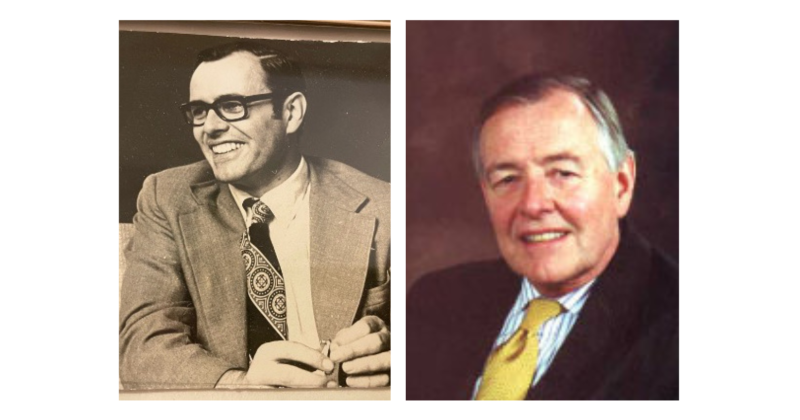
Remembering J. Paul Martin

J. Paul Martin, a pioneer in human rights education, died suddenly on January 7 from pneumonia complicated by Covid.

Born in England in 1936, as a young man Paul Martin served as an officer in the British Army and took vows with the Missionary Oblates of Mary Immaculate (OMI). He was educated at the International Roman Scholasticate, where he attended the Angelicum, now called the Pontifical University of St. Thomas Aquinas, earning Licentiates in Philosophy and Theology. Following his ordination to the priesthood in 1964, he was assigned to the new University of Botswana, Lesotho, and Swaziland, 

After three years in Lesotho, Martin earned his doctorate in philosophy at Columbia University, where he remained for most of his long career. Although he left the priesthood, his deeply ethical perspective and commitment to social justice influenced all his work. Much of his teaching and writing explored the interface between religion and human rights. He regarded the modern international human rights movement as a needed alternative to the amorphous separation of church and state because it “calls not merely for state neutrality but also for state engagement with religion and thus for national and international institutions able both to protect the rights associated with freedom of religion and to minimise inter-religious discrimination and conflict.” In religion as in other aspects of life, he saw human rights education (HRE) as integral to the state’s responsibility to “ensure that those rights are known by all and not impinged upon by any social forces within its jurisdiction.”[1]

As well as a distinguished scholar, Paul Martin was an academic innovator. In 1978 he and law professor Louis Henkin founded the Center for the Study of Human Rights (CSHR) at Columbia University, which Martin directed for 29 years. He pioneered the study of human rights as an interdisciplinary field, including law, public health, journalism and policy studies, as well as the humanities and social sciences. Today the Center – now the Institute for the Study of Human Rights (ISHR) – offers an undergraduate major and a Masters program and is recognized as a leading global center for human rights studies. Colleague Kristina Eberbach affirmed, “Paul gave HRE academic credibility.” After stepping down as director at ISHR, Paul became the Director of the Human Rights Program at Barnard College for twelve years until his retirement.

Martin saw human rights education as a transformative essential for all social change, a vision he extended beyond the university. In 1989 he initiated the Human Rights Advocates Program, which brings human rights defenders from the Global South to study at Columbia and make contacts needed to support their work at home. Now in its 35th year, the program has 350 global alumni doing human rights work all around the world. Throughout his years at the Institute, Paul himself traveled extensively in the Global South, helping to establish programs in human rights education in Ghana, Burkina Faso, Uganda, Brazil, Liberia, Haiti, and Ecuador and elsewhere.  

A devoted classroom teacher, thesis advisor, and mentor to countless Advocates, undergraduate, and MA students, Professor Martin supported many throughout their careers. Former advisee and co-author Snigdha Dutt praised his collaborative spirit, “He prized his students and was eager to learn from and be inspired by them. At all times he put students’ well-being and learning first.”

Paul Martin is survived by his wife of 52 years, Roberta; his son, Christopher; and his daughter, Lizzy, as well as Christopher’s wife, Darina Spasova, and two young granddaughters. In a letter to his colleagues and students, his children remember him as a “crack cricketer in his youth, tinkerer, self-taught sailor, and a deeply religious man–he lived a full life. In all things, our father aimed to improve lives and foster unity by helping people see each other with respect, patience, and empathy.”

In what was perhaps his final publication, “Evaluating the Past and Charting the Future of Human Rights Education,”[2] Martin continues his life-long  approach to HRE: both practical and visionary, both local and universal, and always humanistic. He emphasizes the critical need for research in HRE and asks “If more HRE research is needed, what is needed and who should do it?” His response is a challenge for all engaged in HRE, especially teacher-training institutions, to integrate “both the substantive and the pedagogical dimensions into their teaching and research.” For the future he calls for “an international institutional network of actors and researchers.” He would, no doubt, be gratified to know that just such an organization was established last year, the International Association for Human Rights Education (IAHRE).[3]


Written by HRE USA founding member, Nancy Flowers, February 2024


[1] Martin, J (2015). Whose god? A Human Rights Approach. Nations under God: The Geopolitics of Faith in the Twenty-First Century, retrieved from https://www.e-ir.info/2015/12/23/whose-god-a-human-rights-approach/ 

[2] Martin, J., & Dutt, S. (2023). Evaluating the Past and Charting the Future of Human Rights Education. International Journal of Human Rights Education, 7(1). Retrieved from https://repository.usfca.edu/ijhre/ vol7/iss1/6 

[3] See https://global-iahre.org
STF Special Event: Meet & Greet Richard Pearshouse

When: Wednesday, March 6, 4:30-5:15pm PT
Where: RSVP Today for address/Zoom link

STFers are transitioning their schools to 100% renewable energy and working with educators to embed climate education across curricula as part of the Human Rights and the Climate Crisis Action Plan. To learn more about what Human Rights Watch is doing to combat the global climate crisis, join us for a special meet and greet conversation with HRW’s Director of Environment and Human Rights, Richard Pearshouse.

Richard has led innovative and impactful work protecting communities at risk in resource-driven conflicts and strengthening legal protections for the environment during armed conflicts. His work with HRW has focused on threats against environmental defenders and their communities, and environmental health issues caused by exposure to toxic substances.

Learn more:
www.hrwstf.org
Celebrate 75 Years of Human Rights Toolkit

Call for Fellow Applications: Summer Seminar for Genocide Studies and Prevention

The application deadline is Friday, March 22, 2024, with selection
decisions communicated by Friday, April 5, 2024.

The sixth edition of the Summer Seminar for Genocide Studies and Prevention will be held June 10-14, 2024 at the University of Connecticut (UConn) in Storrs, CT. UConn is one of the top ranked public universities in the nation and includes the Gladstein Family Human Rights Institute, home to one of the largest undergraduate and graduate programs in human rights in the country. The Human Rights Archives at UConn include the Nuremberg trial documents of Thomas J. Dodd as well as a growing collection of primary source materials related to the International Criminal Tribunal for the former Yugoslavia (ICTY).

Objectives: The 2024 Summer Seminar, supported by the Charles E. Scheidt Family Foundation and hosted by the Dodd Human Rights Impact Programs of the Gladstein Family Human Rights Institute at UConn, follows on the success of previous Seminars in supporting the following objectives:
(1) Promote study, research and teaching in the growing field of genocide studies and
prevention as a self-standing scholarly discipline that is distinct and independent from the
existing schools of academic inquiry.
(2) Encourage participating institutions to develop courses, academic modules and foreign
study programs incorporating genocide studies and prevention into department teaching.
(3) Strengthen institutional capacity in terms of teacher-scholars in genocide studies and
prevention, with a goal of developing interdisciplinary academic specializations in the
field (that is, a major, minor, or area of concentration) at participating institutions.
Program: Drawing on a global range of historical case studies, and current crisis spots, the 2024
Summer Seminar will focus on the study, research and teaching of genocide prevention across all
phases of the conflict cycle:

  • preventing genocide from ever taking place (upstream prevention or the “before” analysis
    of risk factors and warning signs),
  • preventing further atrocities once genocide has begun (midstream prevention or the
    immediate, real-time response tools available during crisis), and
  • preventing future atrocities once a society has begun to rebuild after genocide
    (downstream prevention or the “after” efforts to foster resiliency in a post-atrocity
    society).

The in-person Summer Seminar is intended primarily for full-time college or university teachers
interested, or already teaching, in the field of genocide studies. Faculty intending to develop new
courses or academic programs incorporating genocide studies and prevention into department
teaching are particularly encouraged to apply. Applications from current PhD students and
post-docs as well as museum, center, and NGO educators also are encouraged. The Seminar is
intentionally interdisciplinary, so welcomes applications from across the disciplinary spectrum.
Director and Instructional Team: The Seminar director is Dr. James Waller, Christopher J.
Dodd Chair in Human Rights Practice at the University of Connecticut and a Visiting Scholar at
the Senator George J. Mitchell Institute for Global Peace, Security and Justice, Queen’s
University Belfast. Waller is author of Becoming Evil: How Ordinary People Commit Genocide
and Mass Killing (2002, 2nd ed., Oxford University Press), Confronting Evil: Engaging Our
Responsibility to Prevent Genocide (2016, Oxford University Press), and A Troubled Sleep: Risk
and Resilience in Contemporary Northern Ireland (2021, Oxford University Press). In 2017,
Waller was the inaugural recipient of the Engaged Scholarship Prize from the International
Association of Genocide Scholars.
The Summer Seminar’s instructional team also will include internationally recognized academics
and practitioners in the field of genocide studies and prevention from the US, Latin America,
Africa, and Southeastern Europe. In addition, recognizing the expertise participants will bring to
the Seminar, each participant will have an opportunity to workshop syllabi, course ideas,
modules, assignments, etc. with fellow participants in a shared learning community. Participants
will also join an alumni network of nearly 100 previous Seminar fellows around the globe.
Past participants have described their Seminar experience as “the single-most important, and
best, professional development educational experience I have been a part of in my 19 years since
I first entered graduate study” and felt they were “able to take away tangible and digestible tools
and information to share with my students and broader network of scholars and activists.”
Any additional questions about the Summer Seminar can be directed to Dr. James Waller at
james.waller@uconn.edu
Financial Support: Due to a generous gift from the Charles E. Scheidt Family Foundation, the
Summer Seminar is funded to provide fellows five nights of single lodging in an air-conditioned
campus dormitory and food for the entirety of the Seminar. In addition, US-based participants
will receive a $800 fellowship stipend to help offset travel costs to and from the Seminar.
Internationally-based participants, given the greater costs associated with travel, will receive a
$1,200 fellowship stipend (please note that stipends for some non-US residents are subject to a
withholding tax of 30% as required by US law). There is no tuition fee for the Seminar.

The Seminar is funded to allow for 20 participants. Participants are expected to arrange their
travel to be at the Seminar for its duration (arrival on Sunday afternoon/evening June 9 by 5PM
for an opening dinner and departure after 1PM on Friday afternoon June 14). The success of
previous Seminars has been built, in large part, on the residential and relational experience of the
program. Should public health considerations not allow for that in-person component, the
Seminar will be postponed until the following summer rather than convened virtually.
Application: To apply for the 2024 Summer Seminar, please send a (a) statement of interest, (b)
list of related courses or modules currently taught (or interested in developing), and (c) CV to
Mr. Tyler Goldberger, Continuing Education and Alumni Coordinator for the Summer Seminar,
at tjgoldberger@wm.edu.

Resources: Into the Weeds Documentary

Into the Weeds follows the trial of school district groundskeeper Dewayne “Lee” Johnson and his lawsuit against Monsanto (now Bayer) for their weed killer Roundup and other pollutants that contribute to cancer in tens of thousands of plaintiffs. This Canadian film, available to stream in the United States, raises questions about the chemicals students are exposed to at school.

Watch Documentary

Students can learn about alternatives to pesticides and campaigns to protect public health from Beyond Pesticides.

National Council for Black Studies: 48th Annual National Council For Black Studies Conference

For more than 40 years our members have been at the forefront of driving the development of Black/Africana Studies as a respected academic discipline. Our commitment to putting theory into practice, however, has also led us to the front lines of community issues throughout the African Diaspora. Our guiding philosophy is that education should engender both academic excellence and social responsibility.

March 6 – 9, 2024, Hilton San Jose, San Jose, CA

>> Learn more and register

Training as Action Series (TAAS): Finding Joy: Integrating Mental Wellness into Your Advocacy Strategies

Monday, February 26, 2024 – 7-9 pm ET

>> Learn more about TAAS

>> Register

>> Download Flyer

Human Rights Educators USA’s annual Training as Action Series (TAAS) is a virtual training series focused on bridging personal and collective action on some of the most critical human rights issues of today. TAAS creates an educational space to connect and collaborate with others in human rights education and training. It also gives participants the skills and information needed to take action on rights issues in their communities. The 2023-2024 training series will celebrate the 75th anniversary of the Universal Declaration of Human Rights (UDHR) and center on the theme, “Protecting Democracy, Promoting Human Rights.” Sessions will discuss topics such as voting rights, facilitating difficult conversations, organizing an advocacy campaign, communicating with decision makers, protesting, and mental wellness.

Summary
Human rights work often takes an emotional toll on its practitioners, but there are ways to mitigate this toll and find joy and solidarity in the work. This final module aims to explore how to integrate wellness strategies into the various actions discussed throughout the training series, and to establish the importance of self-care in order to care for others.

Objectives

  • Understand the importance of maintaining mental wellness during human rights work
  • Discuss ways to find joy and solidarity
  • Explore how to integrate mental wellness strategies when organizing advocacy campaigns, protests/demonstrations, and other human rights initiatives

The History of Black Music — A Love Supreme

On Monday, March 4, 2024, award-winning musicologist and music historian Guthrie P. Ramsey Jr. will discuss his book Who Hears Here?: On Black Music, Pasts and Present.

A Guggenheim Fellow and a member of the American Academy of Arts and Sciences, Guthrie P. Ramsey, Jr. is a music historian, pianist, composer, and Professor Emeritus of Music at the University of Pennsylvania.

A widely-published writer, he’s the author, co-author, or editor of four music history books and many essays and articles. Who Hears Here? On Black Music, Pasts and Present (2022) is his latest book. As a producer, label head, and leader of the band Dr. Guy’s Musiqology, Ramsey has released five recording projects and has performed at venues worldwide. Ramsey hosted the Musiqology Podcast, and Musiqology Rx is his community arts initiative that provides quality arts programming to under-served communities. He has written for and consulted with museums and galleries, and was co-curator of the acclaimed exhibition Ain’t Nothing Like the Real Thing: How the Apollo Theater Shaped American Entertainment for the National Museum of African American History and Culture. Dr. Ramsey has lectured on music nationally and internationally.

March 4, 2024 at 4pm (PT)/7pm (ET), virtual

>> Learn more and register