Pledge to Teach the Truth

Lawmakers in at least 15 states are attempting to pass legislation that would require teachers to lie to students about the role of racism, sexism, heterosexism, and oppression throughout U.S. history.

More than 1,500 teachers have signed a pledge: “We, the undersigned educators, refuse to lie to young people about U.S. history and current events — regardless of the law.” Read more pledges and add your name today.

To raise public awareness about the danger of these state bills, teachers, educators, and allies are invited to take a public stand at historic sites on Saturday, June 12, 2021.

Hosted by the Zinn Education Project and Black Lives Matter at School.

>> Join the day of action
>> Sign the pledge to teach the truth

Rethinking Schools Spring Issue

The spring issue of Rethinking Schools has a cover story that features one union’s journey toward disability justice and has a special “Educators Speak Out” section uplifting the voices of special education teachers, students, and parents.

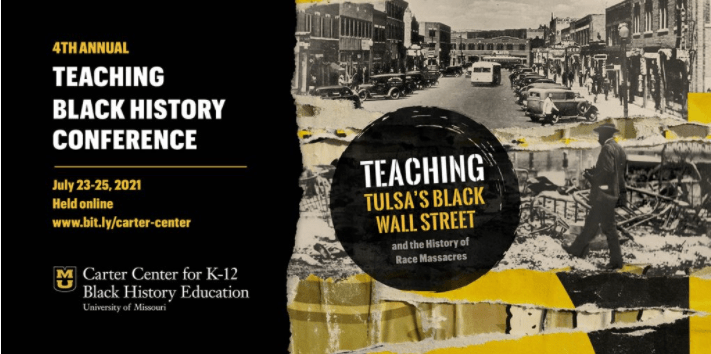
The issue’s editorial focuses on the centennial of the Tulsa Massacre, and argues for reparations.

Rethinking Schools editor Jesse Hagopian also has an obituary of the late Karen Lewis, and editor Linda Christensen has an important article about teaching the “unbound” essay.

The labor writer Sarah Jaffe writes about how some social justice teachers have reinvented the pandemic classroom and Jessica Lovaas and Adam Sanchez describe how they teach a people’s history of the March on Washington.

>> View resource

Human Rights Education Review – Seeking Editors

HRER is looking to strengthen and expand its Editorial Team and move from 2 to 3 editions per year in 2021.  HRER invites colleagues working in higher education, with appropriate experience in research and publications. Editors will be involved in the processes of peer review and have opportunities to help shape HRER’s future development. This is a great opportunity to extend your professional networks and to work internationally. Applications are welcomed from scholars at various career stages, including those ready and willing to take on a leadership role in the journal’s ongoing development.

Application Deadline: May 31, 2021

>> Learn more and apply

Join the HRE USA Steering Committee

Help shape the future of human rights education. 

Nominate yourself or a colleague to join our Steering Committee. Our rules call for the election every summer of new Steering Committee members to replace retiring members. This year there are 2 open seats to be filled, and we invite all members to make nominations for their replacements. You may nominate anyone who fits the criteria for membership and can fulfill the responsibilities of Steering Committee members, including nominating yourself!

Brief biographies of current Steering Committee members can be viewed here. A ballot will be sent to all HRE USA members in July.

Elected Steering Committee members will serve a three-year term beginning in August 2021.

DEADLINE: TUESDAY, JULY 15, 2021

>> Learn more
>> Nomination form

For further inquiries, please contact Kristi Rudelius-Palmer

HRE USA Joins Educating for American Democracy Initiative

A national initiative is underway among Civics educators to regain lost ground in public schools in the United States. A major piece of legislation, the Civics Secures Democracy Act has been introduced in both house of Congress (HR 1814) to promote (and fund) inclusive programs of civics education that recognize and respect diverse relationships with the subject matter of U.S. History and Civics. HRE USA is getting involved. 

The Educating for American Democracy (EAD) Initiative, funded through the US Department of Education and National Endowment for the Humanities, is building momentum across the country for a renewed attention to civic preparation of all students. HRE USA has joined the EAD initiative and its parent CivXNow, as a coalition member and EAD champion.

HRE USA was established in 2011 to advocate for the robust inclusion of Human Rights Education in all social studies education programs in the schools, especially those like Civics, that deal with the relationship of the people and the government and our diverse communities with each other. Without HRE, Civics education too often fails to prepare our youth for the diversity, inclusiveness, and respect of the dignity of the person that is essential for democracy to function. We are a pluralistic society in which differences and community both matter.  

HRE USA believes that effective human rights education is essential to civic involvement in an inclusive democracy. 

HRE USA will continue to expand our description of the HRE/Civics relationship and would love to hear your ideas on how to best center HRE within the family of Civics-related practices needed by a society that values social justice and works to repair its history of racial, gender, ableist injustice. To share your thoughts and ideas, please contact Rosemary Blanchard, HRE USA Advocacy & Policy Committee. 

>> Learn more

Summer Institute for Global Educators

Virtual workshop dates: June 21, 23, 25, 2021, 10AM – 2PM EST

This free online Summer Institute for Global Educators, sponsored by the Longview Foundation and the National Resource Center Program of the U.S. Department of Education, will allow in-service and pre-service secondary educators in all subject areas to develop courses and lesson plans with enhanced global and regional studies content. Educators from Title I schools are especially encouraged to apply.

Online synchronous and asynchronous sessions will include the use of film and media, simulations, games, and technology to enhance global learning and teaching. Pitt College in High School (CHS) teachers will have the opportunity to meet with CHS staff on foregrounding global issues while meeting University and district requirements. Participating Pennsylvania teachers can apply for Act 48 credits.
 
To Apply: Interested participants should complete the application and include a resume or CV and a brief (200-word maximum) statement about their desired outcomes from participation. For questions, please contact Susan Dawkins.

Application Deadline: June 2, 2021

>> Learn more and apply

Human Rights Watch Film Festival

EVENT DETAILS: 
When: May 19 – 27, 2021
Time: Various/on-demand
Where:  Online
Cost: $9/Ticket $70/Festival Pass

The Human Rights Watch Film Festival, in its second digital edition, will be available to audiences across the U.S. from May 19 through 27, 2021, on its streaming site. 

As always, the films will span a range of current and pressing human rights issues from around the world, and Q&As will feature filmmakers, film subjects and human rights leaders with a focus on prioritizing space for identities, viewpoints, forms of expertise and experiences either silenced or marginalized in the film industry, news and media.

Students can get a discount on tickets using the code CHANGEHERE21 and HRW has set aside a set number of free tickets for anyone who needs them by emailing filmticket@hrw.org.

>> Learn more

Book – Our Skin: A First Conversation About Race

Reviewed by Makai Kellogg

Our Skin: A First Conversation About Race is the book we’ve been waiting for! The team (Megan Madison, Jessica Ralli, and Isabel Roxas) did an incredible thing: they explained race and racism to young children. Not only did they do it in a few pages of a board book, but they also provided guidance to the adults who will read it to children. As soon as you open the book, the reader is greeted with colorful representations of the authors and illustrator, as well as a note on the purpose and function of the book. 

The last few pages provide developmental insight by using direct language to explain the “why and how” of having conversations about race, race-related observations, family diversity, identity terms, stereotypes, as well as prejudice, race, racism, empowerment, and activism.

>> Read full book review
>> View resource

Human Rights Education Review – International Conference on Education and Democratic Citizenship

The latest edition of HRER highlights new efforts to develop a sustainable community of global human rights education research. Human rights education (HRE) developed in many forms as a field of practice in the second half of the twentieth century, promoted by non-governmental organizations, various UN initiatives, and other intergovernmental organizations, such as the Council of Europe. The first purpose of HRE was to promote human rights as a ‘common language of humanity’, as expressed by United Nations Secretary-General Kofi Annan (UN, 1998). The UN Secretary-General’s address made nearly 50 years after the Universal Declaration of Human Rights (UN, 1948), celebrated the lives of human rights leaders Mahatma Gandhi and Dr. Martin Luther King, Jnr., for whom a guiding principle of struggle was non-violence.

>> Read journal