No matter who we are or how much we make, we should all have the opportunity to learn without limits. But the astronomical cost of higher education—even public higher education—forces many students to either forego their dreams or be trapped in a lifetime of debt. But the student debt crisis is not accidental—it is working exactly as designed by lawmakers, banks, and loan servicers. Immediate and broad cancellation of federal student loan debt is a necessary step to ensure we all can thrive—no exceptions.
Urge Secretary of Education Miguel Cardona to take immediate action to cancel both the student loan debt of public service workers with at least 10 years of service and $50,000 in student debt for all other federal loans.
By Keith C. Barton, Professor of Curriculum and Instruction at Indiana University from Social Education 83(4), p. 212–216
Educators around the world have advocated for human rights to become a core element of students’ social and civic learning. Although constitutional rights are typically the foundation for social studies and related subjects, human rights represent a universal and cosmopolitan vision, one that applies to citizens and non-citizens alike and is not restricted by national boundaries. Studying human rights can highlight our responsibilities to all fellow humans, not only those with whom we share national citizenship.
Human rights also point to a more stable foundation for safe, secure, and fulfilling lives. Constitutional protections can change with shifting political winds, and rights that once seemed secure can disappear when overturned in court, when leaders choose to interpret them in new ways, or when governments are overthrown. Although human rights have evolved over time (and continue to do so), and although their enforcement usually has less authority than national law, they nonetheless provide a societal vision that is more stable than the changing arena of national politics.
A new lesson, entitled “Digital Rights”, was added to HRE USA’s Curriculum Integration Guide. The lesson was prepared by Karen Hopkins and Shabnam Mojtahedi, HRE USA members in Washington DC and field-tested by HRE USA member and social studies teacher Jake Torsiello with students at Randolph HS in Randolph Twp. NJ.
As of August 1, 2021 John Terry, the NJ/PA regional representative for HRE USA, will assume the coordinator role for the Curriculum Integration Project as HRE USA Steering Committee member Bill Fernekes, moves on to other human rights-related projects.
Bill Fernekes
A tribute from John Terry on Bill Fernekes work… It was in 2014 that I was first introduced to Bill Fernekes and a working group of educators he had assembled at the Rutgers Graduate School of Education. I was an early career educator who had limited working knowledge of human rights but was passionate about developing quality and meaningful lessons for students in my social studies classes. Despite this background, Bill had invited me to develop a lesson plan that would model how to integrate human rights content and principles into a lesson for a history class I was teaching. Thus, with the guidance of Bill and my colleagues in this group, I had a crash course introduction to the world of human rights education. I found an affinity with this group of educators in that they were academically and professionally focused, while also dedicated to a shared set of principles and values, and I responded to Bill’s subsequent invitations to contribute to this group’s work.
In the years since, I have contributed model lesson plans to HRE USA’s Curriculum Integration Guide, served as a peer reviewer for other lesson plan contributors, and provided professional development based on the lessons I and others have contributed to the Guide. In addition, I also assembled a Service Learning for Human Rights Education Guide, which was published on HREUSA.org alongside the Curriculum Integration Guide’s lesson plans and other materials on HREUSA.org. If it was not for my work with this particular project in human rights education, I do not know if I would be the same practitioner of and advocate for human rights education that I am today. Last year, I was honored when Bill called upon me to serve as a Regional Representative for HREUSA.org, and this year, I intend to deepen my role as a volunteer for the organization by taking on responsibility for overseeing the open-ended work of developing the HRE USA Curriculum Integration Guide and making it come alive for the educators who may benefit from its existence.
HRE USA wants to thank Bill Fernekes for his vision, mentorship, and significant contribution to the development and implementation of this HRE USA initiative for the past six years!
EVENT DETAILS: When: Saturday, August 7, 2021 Time: 10 am – 12 pm ET Where: Live Stream Cost: FREE
Description: GenHR is co-organizing a free, online teacher training workshop for unMASKing: The Pandemic Curriculum. > Learn more >> Register” target=”_blank”>Generation Human Rights (GenHR) and Human Rights Education Associates (HREA), in association with VII Photo Agency, have collaborated to develop an online, multimedia, open-sourced curriculum designed for youth in grades eight through twelve. The curriculum provides teachers with a roadmap to guide students, in a supportive and inclusive way, as they explore the local and global impacts of COVID-19, share their personal experiences, and process-related human rights issues.
The program is open to educators, parents, and administrators in all settings (classrooms, organizations, and homes).
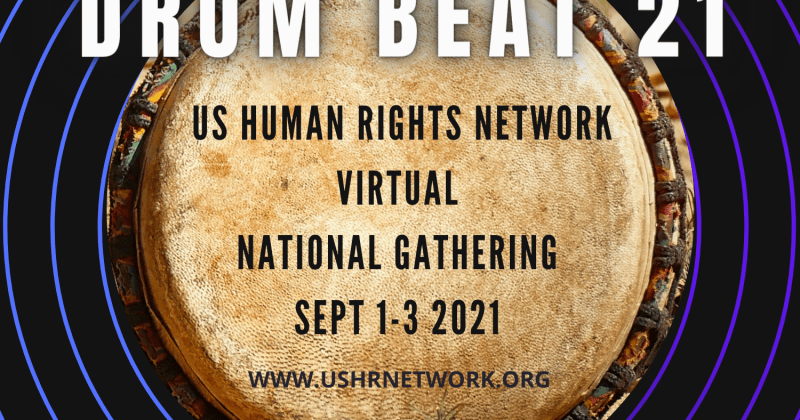
EVENT DETAILS: When: September 1-3, 2021 Where: Live Stream Cost: FREE
Description:
The theme of this year’s USHRN National Gathering, DRUM BEAT 21, is: “Human Rights Here! Human Rights Now!”, circling up not only all our people but our interconnected issues, with a human rights framework and racial justice lens. It’s fitting that DRUM BEAT 21 aligns with the 20th anniversary month of the World Conference in Durban, South Africa, and a current moment in time when the eyes of the world are on law enforcement’s role in ongoing Black and Indigenous genocide, extraction, and exploitation – across the U.S. and all around the globe.
DRUM BEAT 21 will bring member direct-action campaigns’ learnings to the forefront, exploring how each has benefited from applying 1) human rights principles to its internal workings, and 2) international standards and mechanisms to hold their targets to account for minding human rights priorities in policies, budgets, and practices. We will leave with stronger shared analysis, language, tools, and energy for supporting each other’s human rights demands, and living human rights every day, unequivocally.
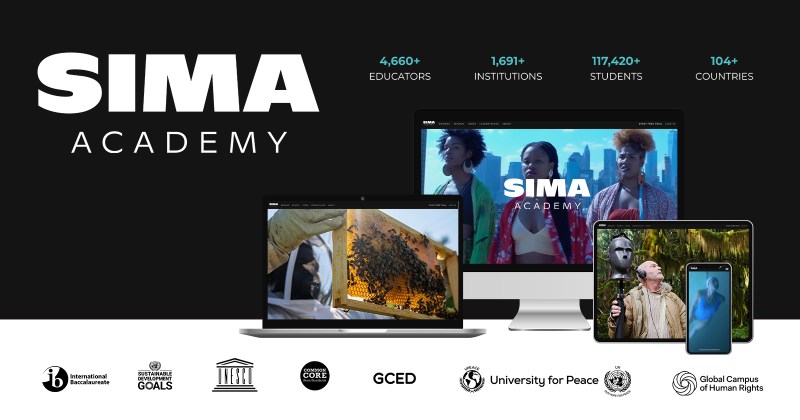
SIMA Academy is an award-winning collection of expert vetted short documentaries that inspire a more just, inclusive and sustainable world. Sourced from 140 countries by the annual international Social Impact Media Awards, the streaming platform is the“Netflix for Changemakers”, empowering educators and students in over 100 countries to advance Global Citizenship, Media Literacy, Diversity, Equity and Inclusion. Experience unprecedented insight into today’s global challenges and the social innovations addressing them through the personal stories of those on the frontlines.
Engaging Schools is growing and recently launched a search for a Program Associate! We’re seeking a student support professional to partner with district administrators, school leaders, and staff members to recalibrate District Codes of Character, Conduct, and Support and implement schoolwide climate and culture initiatives. Program Associates provide professional learning that includes coaching and consultation, and they facilitate change processes with a focus on middle and high schools in urban districts.
Our organization is dedicated to building an antiracist and inclusive culture and an increasingly diverse staff. We’re supporting change and working to dismantle systemic racism in the districts with whom we partner. Given the diversity within and among these districts, we strongly encourage applicants with lived experience of racism and other forms of oppression/discrimination.
This position will remain open until it is filled.
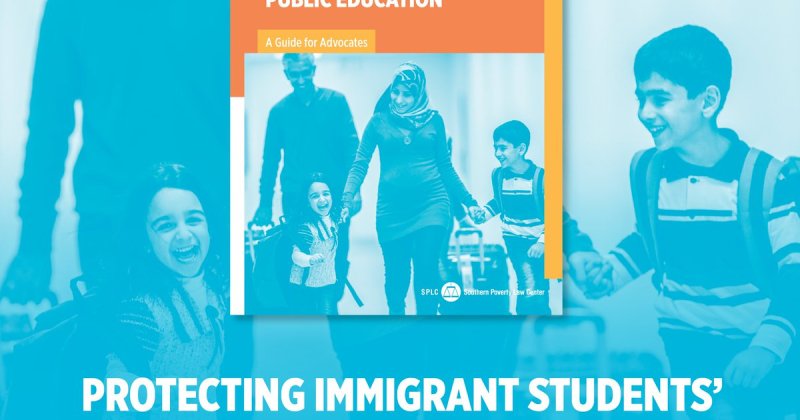
Access to public education is a right afforded to all children, regardless of a child’s or guardian’s citizenship, immigration status, or English language proficiency. These rights were upheld by the U.S. Supreme Court in its landmark 1982 decision in Plyler v. Doe.
This new guide from the Southern Poverty Law Center, Protecting Immigrant Students’ Rights to a Public Education: A Guide for Advocates, offers information and recommendations that educators, caregivers, and other trusted adults can use to ensure that their school or district is meeting its legal responsibility to ELLs and immigrant students and families.
Designed to share with families and available in multiple languages, an accompanying pamphlet offers overviews of this information, easy-to-use reference lists, and links to further resources. You can check out all of the new resources for educators and caregivers here.
EVENT DETAILS: When: Monday, August 2, 2021 Time: 1pm – 2:10 pm ET Where: Live Stream Cost: FREE
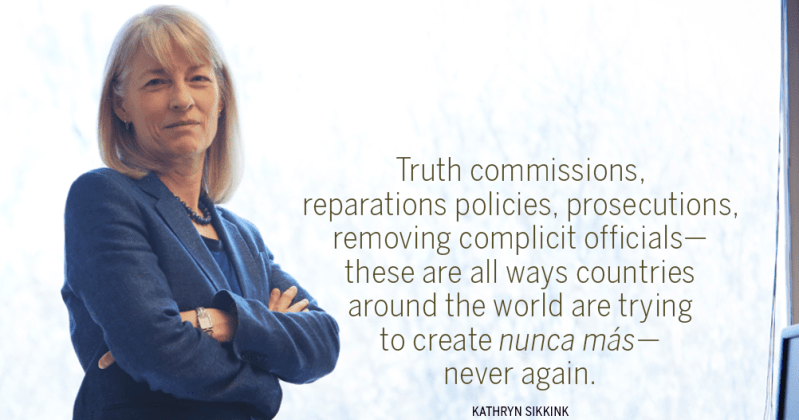
Description: You are warmly invited to join the keynote address of Dr. Kathryn Sikkink, Ryan Family Professor of Human Rights Policy at the Harvard Kennedy School of Government, which will take place at the annual meeting of the University and Community Consortium for Human Rights Education (UCCHRE). Faculty and staff of higher education institutions are welcome to attend the annual meeting as well, which will immediately follow the presentation.
Roots & Shoots was founded by Jane Goodall, DBE in 1991, with the goal of bringing together youth from preschool to university age to work on environmental, conservation, and humanitarian issues. Educators can join their Roots & Shoots global community, and get access to a variety of resources to nurture the next generation of compassionate change-makers and leaders with 21st-century learning skills such as critical thinking, problem-solving, empathy, and collaboration. The Roots & Shoots model and curriculum guides students through the 4-Step Formula to identify projects, grow compassionate traits, and teach skills to cultivate a generation of change-makers. The program also offers From mini-grants and online courses for teachers.






 HRE USA