Explore lessons and resources about Dr. Martin Luther King Jr. and the Civil Rights Movement: Beyond “I have a dream” here.
Explore lessons and resources about Dr. Martin Luther King Jr. and the Civil Rights Movement: Beyond “I have a dream” here.

Sponsored by Citizens for Global Solutions, Minnesota
Documentary: “UNTIL WE FIND THEM”, a portrait of two journalists seeking truth and justice for the people who disappeared in Mexico.
Date: Thursday, January 20, 2022
Time: 7 pm-8:15 pm (Central Time – USA)
Where: Zoom (register at link below)
Cost: FREE and open to the public
Description: This documentary is a portrait of two journalists seeking truth and justice for the people who disappeared in Mexico.
Watch the film (30 minutes long, in Spanish with English subtitles), then join our discussion with filmmaker Hunter Johnson. We will NOT show the documentary during the event.
Where to watch: Vimeo. Password = darwin
REGISTER HERE. After registering you will receive a confirmation email containing information about joining the film discussion.
Guest Speaker: Hunter Johnson, the filmmaker of “Until We Find Them”. Hunter is a documentary filmmaker and photographer whose projects seek to advance human rights through visual storytelling. Working with The Perennial Plate, a two-time James Beard Award-winning and Emmy-nominated documentary team, Hunter created dozens of human-focused short films that have garnered tens of millions of views. This work includes a show on PBS, a series of films on The Atlantic, and screenings at the United Nations Office in Geneva and the 2018 AFI DOCS Film Festival. Hunter has also produced videos for Human Rights Watch and Amnesty International. “Until We Find Them” is currently screening in film festivals around the world. Hunter has a Masters of Human Rights from the Humphrey School of Public Affairs, with a concentration in Arts Advocacy.

The map is already being used in classrooms globally. Join the conversation by using this link: https://bit.ly/unMASKedStories
Learn more about unMASKing: The Pandemic Curriculum Project

The Danish Institute for Human Rights developed this new guide that includes different phases of curriculum development and sample curricula on human rights for four subjects across pre- primary and lower primary, upper primary, lower secondary, and upper secondary level. The hope is to “bring conceptual clarity on human rights education and curriculum development and provide concrete suggestions on how to build human rights curricula fit for 21st century human rights challenges, while contributing to the realisation of the SDG goals and targets set by the international community.”
For more information and to download the guide, visit this page.

On Human Rights Day 2021 and on the 20th anniversary of the Durban Declaration and Programme of Action (DDPA), we are launching, with IMADR, a new child-friendly International Convention on the Elimination of All Forms of Racial Discrimination (ICERD) and its standards. This new resource seeks to raise awareness of international human rights standards against racial discrimination and as a tool for child human rights defenders!


Wednesday, January 12th, 2022
6:45 PM Gathering for Family and Friends, 7:00 PM Program
REGISTER HERE to join via Zoom
Naomi Koller is the daughter and grandchild of Holocaust survivors. Naomi’s paternal grandparents, Anna and Israel Koller lived a very comfortable life in the Carpathian Mountain region of Romania in the town of Viznitz. Their two young sons included Naomi’s father, Mark and his brother, Dov. With Israel Koller’s parents and siblings nearby, life was wonderful with music, friends, family and education marking the cornerstones of their life. This is the heroic story of Naomi’s grandmother, Anna Koller and it is a story of valor and family.

Tune in tonight to watch a two-hour PBS documentary special, Preserving Democracy: Pursuing a More Perfect Union. The film includes a student discussion on the role of civic education in engaging and fostering an informed citizenry.
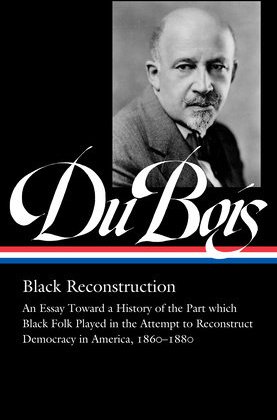
Almost a century after its publication, the Library of America reissued a new edition of Black Reconstruction with reflections from historians Eric Foner and Henry Louis Gates Jr. on Reconstruction’s critical place in battles over democracy in the United States.
For more information about the book and to order it online, visit this page. You can also watch an online discussion with Eric Foner and Henry Louis Gates Jr., editors of the new Library of America volume W. E. B. Du Bois: Black Reconstruction, and Keeanga-Yamahtta Taylor, Professor of African American Studies at Princeton University.
Zinn Education project’s Teach Reconstruction campaign offers lessons, articles, films, books, and a student project for K–12.
Missed the 2021 Human Rights Day Celebration? Watch a recording of it here!

As we carry out our work to have Human Rights Education (HRE) become an integral part of U.S. public education standards and curricula, we believe it is vital to also articulate the connection between HRE and social justice advocacy. Recognizing and valuing these connections can help strengthen collaborations and clarify that all of us working in these arenas have common goals for positive social change that furthers equality, equity, justice and dignity for all people.
HRE and its connection to social justice advocacy:
Universal human rights are the bedrock principles that underlie all racial and social justice movements. The universal human rights principles, spelled out in such documents as the Universal Declaration of Human Rights (UDHR), as expounded by HRE, provide practical and well-established legal and ethical foundations for use by all social justice movements, worldwide. When referenced and followed, universal human rights principles provide standards and norms that are invaluable tools to support social justice advocates in their struggles to overcome white supremacy and other oppressive ideologies.
Example of connection between HRE and Social Justice Advocacy: Our Human Right to participate in our government, secured through protecting the right to vote:
UDHR Article 21 states the following:
(1) Everyone has the right to take part in the government of his/her country, directly or through freely chosen representatives.
(2) Everyone has the right of equal access to public service in his/her country.
(3) The will of the people shall be the basis of the authority of government; this will shall be expressed in periodic and genuine elections which shall be by universal and equal suffrage and shall be held by secret vote or by equivalent free voting procedures.
Social Justice advocates like Stacey Abrams, her supporters at Fair Fight, as well as members of the
NAACP, Common Cause and Brennan Center for Justice, are among the many who are striving to ensure that every person can exercise their right to vote. The importance of this work could be further amplified by including reference to the significance of voting as a universal human right belonging to every human being, identifying the gaps that exist in preventing people from exercising each part of UDHR Article 21, and pointing to how each social justice effort is vital to closing these gaps.
 HRE USA