A Candid Conversation about Systemic Racism for ALL

July 31, Sun, 5:30 PM – 6:30 PM PDT

August 21, Sun, 5:30 PM – 6:30 PM PDT

In an effort to dismantle white supremacy we work to highlight the Lives and Voices of BIPOC community members and support ally education.

REGISTER HERE

This webinar, A Candid Conversation about Systemic Racism, is meant to be an honest and authentic conversation about the long-time injustice of racism in America. We discuss systemic racism, in an effort to dismantle white supremacy, from the inside out. Our greatest intention is to enhance the lives and highlight the voices of BIPOC community members giving them a safe space to share their own experiences, challenges and hopes, without having to educate white people. When we do not have a guest, we use the webinar time to support education of allies.

We hope you will attend and join us in honoring and respecting the lives of Black, Brown and Indigenous people.

Jodi Lewis and Misha Safran look forward to discussing with BIPOC identified friends, BIPOC identified colleagues and other BIPOC community members their thoughts and perspective on what has been going on in this country (USA) for a very long time.

THIS WEBINAR is for ALL audiences who wish to respect and honor BIPOC lives and voices.

***IMPORTANT***

Once you register here on eventbrite, your registration is NOT complete ~ We use the Zoom Webinar Platform which requires you to register in order to access the event link. Because eventbrite does not provide you with the link needed to attend, be sure register via zoom: https://us02web.zoom.us/webinar/register/WN_wf0hsfRASweO_TzpKaj2Jg

We will NOT keep your email address as this is eventbrite’s policy. So, if you wish to be on our email list so you know of other events, feel free to email us to let us know we can add you misha@mishasafran.com.

We are truly grateful for our friends and community members, many of whom are members of the BIPOC community, for trusting us with the sharing of their personal experiences. We have worked to build a safe space, a brave space, for these webinars, listening with open minds so to welcome these honest and vulnerable shares about the impact of systemic racism and are always open to feedback and suggestions.

These webinars are typically held the third Sunday of each month with different guests/panelists each time. Sometimes we do not have a guest so we use this time for providing resources or highlighting a historical event in the lives of Black, Brown, and Indigenous People as a way to support ally education.

If you consider yourself a member of the BIPOC community, or you know someone who would like the opportunity to voice their experiences, please feel free to schedule a time to be on the panel or pass on our link listed below. We can have up to three panelists in one evening!

ALL attendees will receive follow up emails with resources for becoming more learned allies.

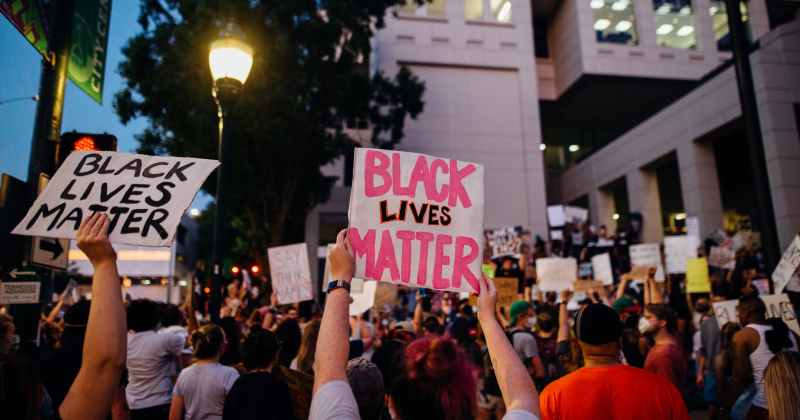
#BLACKLIVESMATTER #DismantleSystemicRacism #divorcewhitesupremacy

In Solidarity and with Love,

Misha Safran and Jodi Lewis

Teaching Social Justice and Equity in the ELA Classroom

Thu, July 28, 2022

1:00 PM – 2:00 PM EDT

Online event

It IS possible to teach ELA content that challenges students AND social injustice in a meaningful, productive way. A team of researchers and teachers from the University of Delaware Partnership for Public Education will explain the Equity-Focused Quad Text Set approach, which links a research-based instructional framework with young adult texts that have the potential to address vital issues of social justice in an authentic way.

Our research and teaching experiences show that teachers can use Equity-Focused Quad Text Sets as a framework for accomplishing three goals:

  • Promoting literacy, including encouraging robust discussions, building reading volume, and practicing sophisticated, standards-aligned reading, writing, and discussion skills;
  • Teaching content, deepening students’ understanding of ELA concepts, theories, principles, and skills; and
  • Engaging students with issues of social justice.

We will share a free toolkit that includes sample units and text pairings, model several example sets, and share additional supports for educators as they prepare to teach for social justice and equity in ELA. Participants will see how this tool can build literacy skills and engage students in deep learning about social justice, inspiring them to become agents of change.

REGISTER HERE

Available for one-hour of PD credit. A certificate of completion will be available for download at the end of your session that you can submit for your school’s or district’s approval.

Rediscovered Books Human Rights Book Club

Thu, July 21, 2022

7:00 PM – 9:00 PM MDT

The Human Rights Book Club is dedicated to reading and discussing topics relevant to the advancement of global human rights.

REGISTER HERE

Join Rediscovered Books Human Rights Book Club as we read, Angeline Boulley’s debut multi-award winning novel, Firekeeper’s Daughter. This book is a groundbreaking YA thriller about a Native teen who must root out the corruption in her community, perfect for readers of Angie Thomas and Tommy Orange.

Eighteen-year-old Daunis Fontaine has never quite fit in, both in her hometown and on the nearby Ojibwe reservation. She dreams of a fresh start at college, but when family tragedy strikes, Daunis puts her future on hold to look after her fragile mother. The only bright spot is meeting Jamie, the charming new recruit on her brother Levi’s hockey team.

Yet even as Daunis falls for Jamie, she senses the dashing hockey star is hiding something. Everything comes to light when Daunis witnesses a shocking murder, thrusting her into an FBI investigation of a lethal new drug.

Reluctantly, Daunis agrees to go undercover, drawing on her knowledge of chemistry and Ojibwe traditional medicine to track down the source. But the search for truth is more complicated than Daunis imagined, exposing secrets and old scars. At the same time, she grows concerned with an investigation that seems more focused on punishing the offenders than protecting the victims.

Now, as the deceptions—and deaths—keep growing, Daunis must learn what it means to be a strong Anishinaabe kwe (Ojibwe woman) and how far she’ll go for her community, even if it tears apart the only world she’s ever known.

About the Author

Angeline Boulley, an enrolled member of the Sault Ste. Marie Tribe of Chippewa Indians, is a storyteller who writes about her Ojibwe community in Michigan’s Upper Peninsula. She is a former Director of the Office of Indian Education at the U.S. Department of Education. Angeline lives in southwest Michigan, but her home will always be on Sugar Island. Firekeeper’s Daughter is her debut novel.

Don’t Stop Talking About Gun Violence  

“Over the last two decades, discourse about gun violence has always ebbed and flowed. But for change to happen, anti-gun violence advocacy has to stay top of mind,” LFJ Senior Writer Coshandra Dillard outlines in our newest article. Including statements from young activists who spoke during the recent March for Our Lives event, Dillard highlights the need for unrelenting efforts to end gun violence, arguing that the mass shooting on July 4 adds even more impetus for us all to act. These LFJ resources offer strategies to do just that. 

We Are Once Again Reeling From Grief and Outrage (2022)

To Counter Racist Violence, Teach Honest History (2022) 

5 Courses on Indigenous Peoples’ Activism, Culture and Worldviews

EXPLORE NOW
In 2007 the UN General Assembly adopted the Declaration on the Rights of Indigenous Peoples, setting minimum standards for the survival, dignity and well-being of indigenous peoples and communities. Until today the document is the most comprehensive international instrument for the protection of indigenous peoples’ rights.Despite these efforts, indigenous communities are continuing to face countless issues including lack of political representation, economic exclusion, racism and discrimination and the violation of their resource and land rights.To help defend and promote the human rights of indigenous peoples, it is essential to understand the issues they are facing, their unique history, culture and worldviews.We have compiled a list of 5 courses to learn more about indigenous peoples. All courses in this list can be audited for free. You can opt-in for a paid certificate for an extra fee. Financial aid is available for those who qualify through the course providers.

Indigenous Canada (University of Alberta)
Aboriginal Worldviews and Education (University of Toronto)
Climate Change and Indigenous People and local communities (University of Barcelona)
Indigenous Religions & Ecology (Yale University)
Artic Development (University of Alberta)

Global Youth-Led Training Webinar

Youth activists are invited to participate in a virtual conversation on Saturday, July 30th from 1 – 4 p.m. EDT.

This event will provide the opportunity to meet, share, listen and learn from other youth. We have some topics in mind, such as links with human rights, use of artistic mediums, lobbying and how to survive setbacks, but tell us what you would like to talk about! If you have not already done so, please complete the online Registration Survey and feel free to pass along this invitation to other youth activists you know.
Take the survey and RSVP here: https://docs.google.com/…/1YNdQ5u4sMFU6HcW4…/viewform… 

Researching Human Rights & Social Justice with HeinOnline

Discover how your institution can receive free, perpetual access to our Social Justice Suite, included in all Core package subscriptions!

Wed, July 27, 2022

2:00 PM – 2:30 PM EDT

REGISTER HERE

Last month, in honor of Pride Month, HeinOnline added a new database, LGBTQ+ Rights, to our complimentary Social Justice Suite. Join our research specialists as they dive into HeinOnline and explore how Human Rights and Social Justice have continued to evolve over the course of history and how much farther we still have to go.

Human Rights Education Review: Call for papers: Language learning and human rights education 

Guest editors: Tony Burner and Melina Porto

Human Rights Education Review invites papers for a Special Issue on the intersection of language learning and human rights education. We invite submissions that explore this intersection, considering, in particular:

  • What is the role of language education in enabling students to address and challenge the injustices (linguistic and otherwise) they face in their lives on a daily basis?
  • What is the role of language education in contributing to building democratic, peaceful, just, and sustainable societies where human rights are respected?

In other words, how are language education and human rights education interconnected?

The last 20 years has witnessed a rise of nationalism in which linguistic diversity and multilingualism are presented as a threat to nationhood and the status quo, with a frequent emphasis on one-nation-one-language, and a denial of ethnic roots. Yet language education may play an essential role in realizing human rights, and human rights serve to protect language education. The term linguistic human rights (LHR) is frequently used today, yet we observe there is surprisingly little in international human rights instruments addressing LHR, compared to other rights such as those relating to gender, race, and religion.

Language learning raises a range of ethical issues. What gets represented in and through the languages used, valued, welcomed, and fostered in and outside classrooms, and what is hidden? Whose rights are denied, whose freedom of expression is quashed? What can language learners express? What can they not express? These questions invite analysis of language learners’ rights, freedom of expression (for example, creative, artistic, performative, embodied) and freedom of belief, as experienced in and outside of formal language learning arenas. They also invite reflection on the ultimate aim of language education and language learning.

For this special issue of Human Rights Education Review, we encourage papers from a range of perspectives and from different international contexts. We welcome papers that focus, in the words of the 2011 UN Declaration on Education and Training, on education aboutthrough and/or for human rights. Education about rights might explore, for example, opportunities in the language learning classroom to enhance and strengthen human rights knowledge and understanding. Education through rights might consider the degree to which language learning methodologies are in keeping with human rights principles. Education for rights might look at language learning as a means of enabling learners to claim their rights or act to defend the rights of others.   

We invite papers that address the intersection of language learning and human rights education, including, but not limited to the following topics:

  • Human rights education through the language curriculum
  • Language learning as an antidote to ethno-nationalism and rights denial
  • Language learning and education for global/ cosmopolitan citizenship
  • Human rights and language learning methodologies
  • Minority language use in education as a human rights issue
  • Developing language skills to defend human rights
  • Language learning and students’ freedom of expression
  • Language learning and the recognition of complex identities

If you would like to make a submission in response to the CfP please send an extended abstract of no more than 300 words to the Managing Editor of Human Rights Education Review Marta Stachurska-Kounta: marta.m.stachurska-kounta@usn.no by 24 October 2022. Your abstract should include a short list of indicative literature on which you expect to draw, from the fields of both language learning and human rights education. Please ensure you use the subject line: HRER: Language learning and human rights education in your email. You will hear back from us by 7 November 2022. All invited manuscripts will be subject to double-blind peer review. Submission of the full paper is due by 6 March 2023. We expect to publish the Special Issue in Volume 7(1) in January 2024.

Human Rights Education Review is an award winning, open access journal, that publishes original research and scholarship. Authors retain the copyright of their own work, and no charges are made to authors or readers. By publishing in HRER you have the opportunity of reaching the widest possible international readership. You can view previous issues of the journal here and learn more about HRER editorial policies. 

Tony Burner is Professor of English Language Education in the Department of Languages and Literature Studies, University of South-Eastern Norway, Norway

Melina Porto is Professor of English Language Education at Universidad Nacional de La Plata (UNLP), Argentina

Join HRE USA Steering Committee!

Help shape the future of human rights education. Nominate yourself or a colleague to join our Steering Committee.

Our rules call for the election every summer of new Steering Committee members to replace retiring members. This year there are 2 open seats to be filled, and we invite all members to make nominations for their replacements. You may nominate anyone who fits the criteria for membership and can fulfill the responsibilities of Steering Committee members, including nominating yourself!

Brief biographies of current Steering Committee members can be viewed here. A ballot will be sent to all HRE USA members in July.

Elected Steering Committee members will serve a three-year term beginning in August 2022.

DEADLINE: TUESDAY, JULY 15, 2022

>> Learn more

>> Nomination Form

For further inquiries, please contact Kristi Rudelius-Palmer