Human Rights Careers: Master of Arts in Development Studies and Diplomacy

The Master of Arts in Development Studies and Diplomacy is an interdisciplinary and holistic programme that will broaden students’ knowledge in the field of development studies, sustainability, and diplomacy, and equip them with the required soft skills for a successful international career in any of these areas of expertise.

University: University for Peace (UPEACE) & United Nations Institute for Training and Research (UNITAR)

  • Country: Costa Rica, Switzerland
  • Learning Mode: Blended and online
  • Pace and Duration: Full time, 4 semesters
  • Tuition fee: USD 19,500 (Hybrid) / USD 8700 (Online)

Application deadline(s): 31 May 2024 (Hybrid) / 20 August 2024 (Online)

>> Learn more

Abortion as a Human Right: A Dialogue

March 28, 6-8pm

How does viewing abortion through a human rights lens shift our analysis, understanding, and approach to this highly contested issue? What is the relationship between human rights and reproductive justice, and how can these approaches help bridge the diversity of viewpoints about abortion? How might embedding abortion in the human rights framework contribute to the global fight against authoritarianism and in defense of democracy more broadly?

These and other questions will be considered by a panel of national leaders in the reproductive justice, racial justice, and human rights movements at “Abortion as a Human Right: A Dialogue.” This event will take place on Thursday, March 28, 2024, 6-8 p.m. in the Carroll Room, Julia McWilliams Child ’34 Campus Center, Smith College, and will feature:

  • Byllye Y. Avery, Founder, Black Women’s Health Imperative
  • Amy Hagstrom Miller, Founder, Whole Woman’s Health abortion clinics 
  • Regina Davis Moss, Executive Director, In Our Own Voice: National Black Women’s Reproductive Justice Agenda
  • Rosalind Petchesky ’64, Distinguished Professor Emerita, Hunter College, and Founder, International Reproductive Rights Research Action Group 
  • Loretta Ross, Associate Professor of the Study of Women & Gender, Smith College and Co-creator of Reproductive Justice Theory

Marlene Gerber Fried, Professor Emerita of Philosophy at Hampshire College and the Founder of Collective Power for Reproductive Justice, will moderate the panel.

This event is organized by fellows in the 2023-24 Kahn Institute long-term project, (Re)visioning Human Rights, Democracy and the Liberal Arts, which serves as an unbounded space for developing new research, teaching, and practice models at the intersection of liberal arts education, human rights, and the future of democracies.

Sponsored by the Smith College Kahn Institute for Liberal Arts, Smith College Special Collections, and the John D. and Catherine T. MacArthur Foundation. Free and open to the public. All viewpoints are welcome. Light refreshments will be available following the panel.

For disability access information or accommodation requests, please call 413-585-2407. To request a sign language interpreter, email ods@smith.edu at least ten days before the event.

WEBINAR: Using United Nations Tools to Challenge U.S. Racism: Commemorating the International Day to End Racism

The U.S. Human Rights Cities Alliance and John Parke Young Initiative on the Global Political Economy

Wednesday, March 20, 6:00-7:00 PM EST/ 5:00-6:00 PM CST/ 3:00-4:00 PM PST

This panel will present lessons from the work of local organizers to mobilize international human rights as a tool for advancing racial equity, human rights, and justice. In particular, we will share lessons from efforts to engage local communities in reviews of U.S. compliance with the International Convention on the Elimination of all forms of Racial Discrimination and with the recent country visit of the UN Expert Mechanism on Law Enforcement and Racial Justice, as well as opportunities provided through the newly established United Nations Permanent Forum on People of African Descent.

Panelists will report on the work of recent international investigations of racial disparities and discrimination in the United States, including the International Expert Mechanism on Racial Discrimination in the Context of Law Enforcement (EMLER) and the Convention on the Elimination of all forms of Racial Discrimination (CERD). We will hear about some of the key findings and recommendations in these reports and learn how grassroots activists and policymakers can use them to hold U.S. officials accountable for global human rights and improve conditions in local communities. We will also learn about the upcoming Third session of the Permanent Forum on People of African Descent, which will develop the Draft United Nations Declaration on the Promotion, Protection, and Full Respect of the Human Rights of People of African Descent, addressing themes of reparations, sustainable development, economic justice, and education and culture. 

Panel participants: 

  • Kerry McLean, J.D., Director, Human Rights and Public International Law, Columbia University Law School.
  • Lisa Borden, Senior Policy Counsel for International Advocacy, Southern Poverty Law Center.

Register below:

https://occidental.zoom.us/meeting/register/tZAode6hpj8pHtSZkaXlVeXeM8F2qzai6s-_#/registration

Please feel free to share this with your networks.

Learn more about the Human Rights Cities Alliance: https://humanrightscities.wixsite.com/hrca.

Questions about the webinar may be directed to younginitiative@oxy.edu or info@humanrightscities.mayfirst.org.

Questions about the National Human Rights Cities Alliance can be directed to info@humanrightscities.mayfirst.org.

 Join the group: https://gaggle.email/join/u.s.-human-rights-cities-alliance@gaggle.email.

TAAS Global Screening & Conversation: Human Rights Education: Empowering Youth to Promote Gender Equality

We are excited to invite you to an inspiring and empowering Human Rights Education USA Training As Action Series (TAAS) event focused on promoting gender equality through youth-led initiatives. 

HRE USA TAAS Special Global Screening & Conversation

Saturday, March 16th from 8:00  – 9:30 am PT / 11:00 am – 12:30 pm ET

Register in advance

This HRE USA TAAS Special Global Screening, co-sponsored by the Office of the UN High Commissioner for Human Rights (OHCHR), Amnesty International (AI), and Soka Gakkai International (SGI), is centered around the multimedia resource “Changemakers: Stories of Young Human Rights Educators.” Launched in December 2023 by AI, SGI, and the OHCHR, this resource aims to inspire and empower young people to advocate for human rights causes.

Summary and what to expect:

  • Screening: Be captivated by the stories of three remarkable young human rights educators whose lives have been transformed by their commitment to human rights education.
  • Interactive Discussion: Engage in a thought-provoking dialogue on the role of youth in promoting gender equality through human rights education.
  • Q&A Session: Hear directly from three inspiring individuals featured in the multimedia resource
    • Ms. Dejana Stosic from Serbia (gender equality and gender-based violence)
    • Mr. Soufiane Hennani from Morocco (gender diversity and equality)
    • Ms. Aizat Ruslanova from Kyrgyzstan (women’s human rights)

Objectives:

  • Present stories of youth empowerment through human rights education, as documented in the multimedia resource.
  • Provide a space for dialogue on human rights education for, with and by youth as a tool to promote human rights, including gender equality.
  • Discuss ideas on how to utilize the multimedia resource as well as other innovative formats to strengthen human rights education for youth in formal and non-formal contexts.

The event is designed for young individuals and anyone in the general public passionate about advancing human rights and gender equality. Let’s unite to empower youth as effective advocates for gender equality and human rights.

We look forward to your participation!

The HRE USA TAAS Team

Kara Anderson, HRE USA Edmonds Fellow (‘23), Albion College Student

Justine Ho, HRE USA Intern, Rutgers University Student

Meredith Hood, HRE USA Edmonds Fellow (‘23)

Annika Malholtra, HRE USA Intern, Rutgers University Student

Hallie McRae, HRE USA Steering Committee, University of California, Berkeley Student

Kristi Rudelius-Palmer, HRE USA Steering Committee

Elizabeth Schwab, HRE USA Steering Committee & Boston College Student

Jess Terbrueggen, HREUSA Steering Committee

Maddy Wegner, HRE USA Steering Committee

Adrianna Zhang, HRE USA Steering Committee, Stanford University Student

UN Special Rapporteur on the Right to Education United States Country Visit

HRE USA submitted Input for the UN Special Rapporteur on the Right to Education’s U.S. Country Visit from April 29-May 10, 2024. Members of the HRE USA team met with Special Rapporteur staff and offered our assistance. This collective effort was made possible by the research, drafting, editing, formatting, and website updates made by multiple members of the HRE USA community and Steering Committee.

Thank you all for your work to provide input to the Special Rapporteur!

>> Special Rapporteur on the right to education

Audience and Feedback Survey for Human Rights Education NOW! Podcast

Fill out our audience and feedback survey by March 11th!

Click here to take the survey!

It’s been one year since the launch of the HREUSA Human Rights Education NOW! Podcast and we would like to take the time to better know who our audience is so we can strategize our next steps, tailor our content, and make informed improvements. This information will help supplement our quantitative data and paint a more accurate picture of our performance and impact. Thank you for your continuous support!

The Child Friendly Cities Initiative-Minneapolis Model (2024) [article]

Dr. Charles Oberg just published this Open Source article on The Child Friendly Cities Initiative-Minneapolis Model (CFCI-Mpls Model) (2024). Dr. Oberg along with his colleagues approached UNICEF in Geneva about bringing the CFCI model to the US. HRE USA sent representatives Benil Mostafa and Nancy Flowers to the original meeting held in Jacksonville, Florida, back in May, 2019. Kristi Rudelius-Palmer and Maddy Wegner, HRE USA Steering Committee members, have also served on the CFCI-Minneapolis Executive Committee and the Children’s Rights Learning & Awareness Subcommittee with Dr. Oberg and community volunteer Rachel Peterson. Another output from this initiative was an article published on the Benefits of Child Friendly Cities in the US (2023) by UNICEF leaders Daniel Goldberg and Pamela Wridt and four HRE USA Steering Committee members, Yvonne Vissing, Adrianna Zhang, Maddy, and Kristi. 

In 2024, the UN Convention on the Rights of the Child (CRC) will be 35 years old. For five years, HRE USA has expanded its Children’s Rights Resource Library, Toolkits, and CRC Campaign for Cities and States to pass resolutions and plans in support of the CRC. Currently, HRE USA CRC Working Group is exploring activities to have more impact in our local, state, and nation. Please email kristi@hreusa.org if you would like to be a part of the Working Group. 

>> Read the article

Episodes 25 & 26 with  Audrey Osler are available on Human Rights Education NOW!

We are pleased to announce the availability of our latest installment of podcast episodes in Human Rights Education NOW! Episodes 25 & 26 feature conversations with  Audrey Osler. Audrey Osler is Professor Emerita of Citizenship and Human Rights Education at University of Leeds, and Editor-in-Chief of Human Rights Education Review. She is the Co-Chair of International Association for Human Rights Education (IAHRE). Audrey is known internationally for HRE research addressing policy, curriculum, racial justice, and child rights in established democracies and post-conflict settings. In addition to a long UK-based career, Audrey has worked for 13 years as professor in Norway, and extended periods in the US (University of Washington, Seattle and Utah State); China (Beijing Normal and Hong Kong University of Education); and Japan, where she held Japan Society for the Promotion of Science (JSPS) fellowships. Her books include Human Rights and Schooling: An ethical framework for teaching for social justice (2016); Where are you from? No, where are you really from? (2023) exploring empire, migration, and her family history in India and South-East Asia; and Nordic Perspectives on Human Rights Education (2024 with Beate Goldschmidt-Gjerløw). Audrey can be heard discussing her views on authors that have influenced her here.

Episode 25: Audrey Osler, Part One

In Episode 25, Audrey Osler shares her origins of interest in human rights and human rights education and the importance of human rights education (HRE) language in working with anti-racist education in the UK. She then explains the impact of transnational activities on her approach to HRE, including her work in Louisiana, Beijing, and Japan, and how listening to peoples’ stories and understanding their meanings have enriched her life. Audrey goes on to discuss the relationship between universal human rights standards and local experience as critical to advancing HRE and sustaining concepts of humanity in conflict-ridden situations, as well as her efforts in developing education for cosmopolitan citizenship alongside Professor Hugh Starkey. Audrey emphasizes the centrality of migration in history and contemporary society, and the significance of collecting and gathering stories from marginalized groups as critical to reducing the “othering” of said groups. Next, Audrey describes the legacy of colonialism and the broader impact on the UK population as well as the oversimplification of history currently taught to students. She underlines the pervasive influence of colonialism as interpreted differently by various social groups and the need for serious reconsideration of history curriculum as one that embraces a critical approach. 

Topics discussed:

  • Origins of interest in human rights and human rights education
  • Importance of human rights language in anti-racist education
  • Impact of transnational activities on approaches to HRE
  • Listening to others’ stories as enriching to one’s life
  • Universal human rights standards and local experience in conflict resolution
  • Educating for cosmopolitan citizenship 
  • Migration in history and contemporary society
  • Reduction of “othering” with regards to marginalized groups
  • Legacy of colonialism on history curriculum, need for revision

Full topic listing available for PDF download HERE.

Listen on our Buzzsprout podcast website HERE


Episode 26: Audrey Osler, Part Two

In Episode 26, Audrey Osler shares her thoughts on the impediments to implementing HRE in the USA. She then explains the importance of recognizing children as citizens and the Convention of the Rights of the Child. Audrey then examines the lack of public dialogue in the US around human rights. Next, she discusses how educating journalists about human rights is critical, and how there is a lack of focus on human rights in dealing with domestic policy issues in the USA. Audrey offers a comparison to Norway and its human rights image, including an analysis of Norwegian exceptionalism with regards to human rights, as compared to the UK. Audrey then describes how education can act as a counter-socializing force and challenge notions of exceptionalism, and the need for international perspective and curriculum to challenge nationalistic education through advancing human rights education (HRE), while sustaining a love for one’s nation and still recognizing one’s common humanity. Next, she shares her sentiments and concerns regarding the rise of authoritarianism, and the importance of examining underlying causes and revisiting definitions of power and democracy. She elaborates on confronting the rise of dictatorial tendencies in political parties, and identifies our fascination with personality and spectacle as problematic. Audrey then discusses how her mother was her most Influential role model in challenging injustice, and how an important recommendation to advancing HRE would be for all governments to abide by their international commitments to human rights norms and treaties.   

Topics discussed:

  • Impediments to implementing HRE in USA
  • Importance of recognizing children as citizens
  • Convention of the Rights of the Child
  • Deficient public dialogue around human rights in USA
  • Education of journalists about human rights 
  • Human rights and domestic policy
  • Exceptionalism in Norway, UK, and USA 
  • Rise of authoritarianism, need to reexamine democracy and power  
  • Fascination with personality and spectacle as problematic 

Full topic listing available for PDF download HERE.

Listen on our Buzzsprout podcast website HERE.

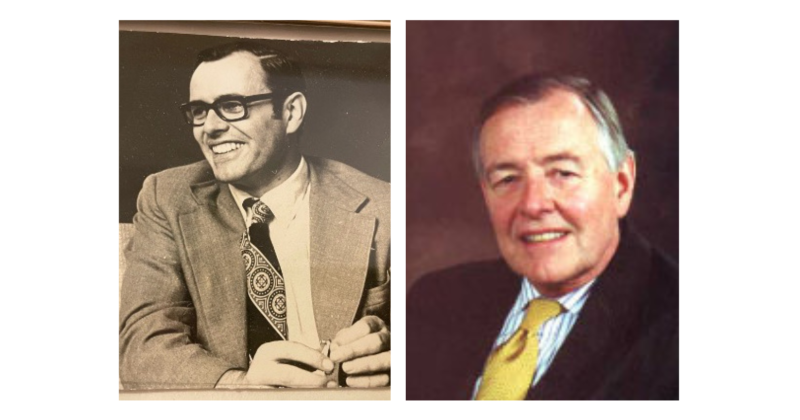
Remembering J. Paul Martin

J. Paul Martin, a pioneer in human rights education, died suddenly on January 7 from pneumonia complicated by Covid.

Born in England in 1936, as a young man Paul Martin served as an officer in the British Army and took vows with the Missionary Oblates of Mary Immaculate (OMI). He was educated at the International Roman Scholasticate, where he attended the Angelicum, now called the Pontifical University of St. Thomas Aquinas, earning Licentiates in Philosophy and Theology. Following his ordination to the priesthood in 1964, he was assigned to the new University of Botswana, Lesotho, and Swaziland, 

After three years in Lesotho, Martin earned his doctorate in philosophy at Columbia University, where he remained for most of his long career. Although he left the priesthood, his deeply ethical perspective and commitment to social justice influenced all his work. Much of his teaching and writing explored the interface between religion and human rights. He regarded the modern international human rights movement as a needed alternative to the amorphous separation of church and state because it “calls not merely for state neutrality but also for state engagement with religion and thus for national and international institutions able both to protect the rights associated with freedom of religion and to minimise inter-religious discrimination and conflict.” In religion as in other aspects of life, he saw human rights education (HRE) as integral to the state’s responsibility to “ensure that those rights are known by all and not impinged upon by any social forces within its jurisdiction.”[1]

As well as a distinguished scholar, Paul Martin was an academic innovator. In 1978 he and law professor Louis Henkin founded the Center for the Study of Human Rights (CSHR) at Columbia University, which Martin directed for 29 years. He pioneered the study of human rights as an interdisciplinary field, including law, public health, journalism and policy studies, as well as the humanities and social sciences. Today the Center – now the Institute for the Study of Human Rights (ISHR) – offers an undergraduate major and a Masters program and is recognized as a leading global center for human rights studies. Colleague Kristina Eberbach affirmed, “Paul gave HRE academic credibility.” After stepping down as director at ISHR, Paul became the Director of the Human Rights Program at Barnard College for twelve years until his retirement.

Martin saw human rights education as a transformative essential for all social change, a vision he extended beyond the university. In 1989 he initiated the Human Rights Advocates Program, which brings human rights defenders from the Global South to study at Columbia and make contacts needed to support their work at home. Now in its 35th year, the program has 350 global alumni doing human rights work all around the world. Throughout his years at the Institute, Paul himself traveled extensively in the Global South, helping to establish programs in human rights education in Ghana, Burkina Faso, Uganda, Brazil, Liberia, Haiti, and Ecuador and elsewhere.  

A devoted classroom teacher, thesis advisor, and mentor to countless Advocates, undergraduate, and MA students, Professor Martin supported many throughout their careers. Former advisee and co-author Snigdha Dutt praised his collaborative spirit, “He prized his students and was eager to learn from and be inspired by them. At all times he put students’ well-being and learning first.”

Paul Martin is survived by his wife of 52 years, Roberta; his son, Christopher; and his daughter, Lizzy, as well as Christopher’s wife, Darina Spasova, and two young granddaughters. In a letter to his colleagues and students, his children remember him as a “crack cricketer in his youth, tinkerer, self-taught sailor, and a deeply religious man–he lived a full life. In all things, our father aimed to improve lives and foster unity by helping people see each other with respect, patience, and empathy.”

In what was perhaps his final publication, “Evaluating the Past and Charting the Future of Human Rights Education,”[2] Martin continues his life-long  approach to HRE: both practical and visionary, both local and universal, and always humanistic. He emphasizes the critical need for research in HRE and asks “If more HRE research is needed, what is needed and who should do it?” His response is a challenge for all engaged in HRE, especially teacher-training institutions, to integrate “both the substantive and the pedagogical dimensions into their teaching and research.” For the future he calls for “an international institutional network of actors and researchers.” He would, no doubt, be gratified to know that just such an organization was established last year, the International Association for Human Rights Education (IAHRE).[3]


Written by HRE USA founding member, Nancy Flowers, February 2024


[1] Martin, J (2015). Whose god? A Human Rights Approach. Nations under God: The Geopolitics of Faith in the Twenty-First Century, retrieved from https://www.e-ir.info/2015/12/23/whose-god-a-human-rights-approach/ 

[2] Martin, J., & Dutt, S. (2023). Evaluating the Past and Charting the Future of Human Rights Education. International Journal of Human Rights Education, 7(1). Retrieved from https://repository.usfca.edu/ijhre/ vol7/iss1/6 

[3] See https://global-iahre.org