2025 Black Lives Matter at School

Join us for the eighth annual Black Lives Matter at School Week of Action from February 3–7, 2025. This transformative week inspires school communities of all ages to engage in critical reflection, honest conversations, and targeted action toward building schools where Black lives truly matter.

To help you prepare for this impactful week, we’re offering professional development opportunities for educators. Keep reading to discover the events and resources designed to support you!

Sign up for the Week of Action

Two days left to contribute to the Empower Youth, Secure the Future campaign!

Our Empower Youth, Secure the Future campaign, coinciding with the 35th anniversary of the Convention on the Rights of the Child (CRC), is still on and we would greatly appreciate your contributions!

The CRC has been a cornerstone in advocating for children’s rights worldwide. This campaign is dedicated to empowering youth and fostering a committed community of human rights learners and educators. The principles of the CRC guide our mission to ensure that every child knows and can defend their rights, which will be ever-crucial in the coming year(s).

Your involvement and support are crucial to the success of this campaign! Here’s how you can help our campaign flourish:

  • 💙 Donate: Your generous contributions will significantly impact our ability to achieve our goals. Every donation counts and brings us closer to empowering the next generation of human rights advocates. 
  • 📫 Share: Spread the word about our campaign with your esteemed networks. Your influence can help us reach a broader audience and garner the support we need to make this campaign a success. 
  • 🗣️ Advocate: Continue to advocate for human rights education within your communities and beyond. Your leadership and dedication inspire others to join our mission and work, which is as crucial as ever as we move into 2025. 

www.givegab.com/campaigns/empoweryouth-securethefuture  

Thank you for your commitment and dedication to human rights!

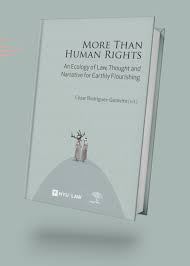
New release: More Than Human Rights: An Ecology of Law, Thought and Narrative for Earthly Flourishing

NYU Center for Human Rights & Global Justice released an open access publication: More Than Human Rights: An Ecology of Law, Thought and Narrative for Earthly Flourishing.

“This book includes contributions from leading lawyers, scientists, philosophers, and writers from around the world who participated in the inaugural gathering of the More-Than-Human Rights (MOTH) project. The volume discusses the philosophical, legal, and scientific foundations of the MOTH framework as well as its implications for ideas and practices in fields such as law, human rights, ecology, politics, and storytelling.”

This book will be of special interest to those interested in the rights of nature and can be downloaded here: https://lnkd.in/d5UMNK_E

Next week! Defending Democracy Webinar for Educators

There’s one week left to register for our upcoming webinar about our latest curriculum, Defending Democracy: Lessons for Building Resilience and Taking Action! This new project highlights ways that young people can take action to protect democracy and fight authoritarianism.

Tuesday, January 14, 2025
4:30-5:30pm PT
Zoom

Register for the Jan. 14 Webinar


Woven Teaching’s latest curriculum, Defending Democracy: Lessons for Building Resilience and Taking Action, highlights ways that young people can take action to protect democracy and fight authoritarianism.

Please join us at our upcoming webinar, where we will discuss Human Rights Education and explore Defending Democracy. During this session, we will also be joined by our colleagues at the Global Project Against Hate and Extremism, an organization that is committed to uncovering and combating extremism. They will share their perspective on Project 2025, as well as challenges facing students and educators under the incoming presidential administration in the United States. Finally, we will discuss actionable steps that can be taken to protect democracy in the United States. 

Palestine and Black Power: New lesson from Rethingking Schools

We share here a new lesson from Rethinking Schools on Black perspectives on Palestine-Israel during the Civil Rights and Black Power movements. 
Rethinking Schools managing editor and lesson co-author Adam Sanchez wrote, “What I love about this lesson is it does not shy away from the complex views of civil rights leaders — it presents the Zionist views of Bayard Rustin, the NAACP, and Dr. Martin Luther King’s attempt at taking both sides, alongside Malcolm X, SNCC, and the Black Panthers’ more unabashedly pro-Palestinian viewpoints. It attempts to point out when both sides veered into Islamophobic or antisemitic rhetoric. . . .The lesson presents students with complex truths and allows them to decide what they think about it.”
Three of the authors are teachers who are currently under attack. Read Defenders of Israel Attempt to Silence Anti-Racist Educators in Philadelphia in the latest issue of the Rethinking Schools magazine.
Let us know if you use the lesson.

Lesson

Episodes 46 & 47 with Kristi Rudelius-Palmer are available on Human Rights Education Now!

We are pleased to announce the availability of our latest installment of podcast episodes in Human Rights Education NOW! Episodes 46 & 47 feature conversations with Kristi Rudelius-Palmer. Kristi Rudelius-Palmer, Ph.D., is a distinguished human rights learning consultant, strategy advisor, and director for Human Rights Educators USA. As a Fulbright Specialist (2023-2026), she collaborated with the University of Iceland’s School of Education to launch its first course on human rights and ecological well-being. Kristi co-founded the International Association for Human Rights Education and the University and College Consortium for Human Rights Education and serves on the executive committee of Minneapolis’ Child Friendly City initiative, recognized by UNICEF USA. From 1989 to 2016, she co-directed the University of Minnesota Human Rights Center, spearheading initiatives such as the Human Rights Library and the K-12 Minnesota Human Rights Education Initiative. Her publications include “Stories As Theories”: Illuminating Human Rights Education Through The Narratives Of Human Rights Educators, Towards a Just Society: The Personal Journeys of Human Rights Educators, Storytelling as a, Relational and Instrumental Tool for Addressing Racial Justice, Human Rights Education Handbook: Effective Practices for Learning, Action, and Change, and Taking Your Human Rights Temperature.

Episode 46: Kristi Rudelius-Palmer, Part One

In Episode 46, Dr. Kristi Rudelius-Palmer reflects on the origins of her passion for human rights and human rights education, tracing it back to transformative experiences during her junior year in Europe, where she developed an interest in anti-racist/anti-apartheid activism and founded an Amnesty International chapter at her college. She highlights the profound influence of her family, particularly the lessons drawn from Holocaust history and the importance of caring for others, which shaped her commitment to social justice. Kristi discusses her tenure at the University of Minnesota Human Rights Center, where mentorship by Dr. David Weissbrodt deepened her understanding of institution-building and the power of networking in human rights education. She emphasizes the significance of initiatives like internship programs, the development of the World Programme for Human Rights Education, and the creation of an internet-based library of UDHR and human rights education materials. Kristi shares insights from her collaborations with global HRE leaders, focusing on effective training practices for educators and the importance of intergenerational storytelling in advancing human rights education. Looking ahead, she discusses her leadership role at Human Rights Educators USA, highlighting priorities such as fostering youth leadership, sustaining relationships during challenging times, and leveraging podcasting and scholarly journals to expand the reach and impact of human rights education globally.

Topics discussed:

  • Anti-racist/anti-apartheid activism and founding an Amnesty International chapter.
  • Family influence and lessons from Holocaust history.
  • Mentorship by Dr. David Weissbrodt on institution-building and networking.
  • Work on the World Programme for Human Rights Education and UDHR library.
  • Global collaborations on educator training and HRE practices.
  • Leadership at HRE USA, focusing on youth leadership and storytelling.
  • Podcasting and scholarly journals for expanding HRE impact.

Full topic listing available for PDF download HERE.

Listen on our Buzzsprout podcast website HERE

Episode 47: Kristi Rudelius-Palmer, Part Two

In Episode 47, Dr. Kristi Rudelius-Palmer reflects on her work in human rights education (HRE), beginning with her learnings from Indigenous activist educators and communities along with the importance of integrating the International Indian Treaty Council initiatives, the Declaration on the Rights of Indigenous Peoples, and the American Indian Movement into educational frameworks. She discusses efforts to create spaces for learning about Indigenous cultures while addressing public misconceptions about Indigenous history, such as reinterpreting Columbus’s legacy to challenge flawed historical narratives. Kristi emphasizes the connection between HRE and social justice, advocating for collective human rights experiences and respecting diverse perspectives. She stresses the need for action against injustice, encouraging a shift from guilt to responsibility, drawing on LeVar Burton’s work to explore intersectional identities. Kristi also explores the application of HRE in addressing children’s rights, highlighting the UN Convention on the Rights of the Child and initiatives like child-friendly cities and the “Raising Children with Rights and Responsibilities” curriculum. Her work emphasizes youth involvement in securing their rights through platforms like the HRE USA Training As Action Series. Kristi discusses the rise of authoritarianism and the importance of educational standards from an HRE perspective, alongside advocating for youth engagement in democracy. Inspired by role models such as Harriet Tubman, Martin Luther King Jr., and Eleanor Roosevelt, Kristi underscores the importance of storytelling in advancing human rights education. She concludes with a recommended strategy for advancing HRE in the U.S., proposing a nationwide human rights scavenger hunt to connect communities with the principles of the UDHR and create spaces where human rights can flourish.

Topics discussed:

  • HRE with Indigenous communities and cultural learning spaces
  • Addressing misconceptions of Indigenous history
  • HRE’s role in social justice and challenging injustices
  • Child rights and the UN Convention on the Rights of the Child
  • Democracy and the rise of authoritarianism
  • Influence of figures like Harriet Tubman and MLK Jr.
  • Strategy for advancing HRE in the U.S. through community engagement

Full topic listing available for PDF download HERE.

Listen on our Buzzsprout podcast website HERE.

Thank you for supporting the Human Rights Education NOW! podcast!

Training As Action Series 2024-2025

The Human Rights Educators USA’s virtual Training As Action Series (TAAS) focuses on bridging personal and collective action on some of the most critical human rights issues of today. The annual series is offered each year between September and April.

The theme of the 2024-2025 training series is: “Youth Power, Defending Human Rights: Learnings and Actions for the 35th Anniversary of the Convention on the Rights of the Child (CRC).” Sessions will discuss topics such as youth rights, the CRC, education as a tool for empowerment, international youth solidarity, the theory of change, digital citizenship, and mental wellness.

You can watch recordings of the 2024 TAAS Sessions here and register for the 2025 sessions below:

Module 6: Challenging U.S.-Centric Models, Building International Youth Solidarity

Module 7: Big Actions, Big Feelings: Practical Empathy in Human Rights

Module 8: Theory of Change: Designing Youth Spaces/Places in Human Rights

Call for papers: Special Issue 2026 Human Rights Education in Latin America

Guest editors: Melina Porto and Leonel Pérez Expósito

Human Rights Education Review invites submissions for a Special Issue on Human Rights Education (HRE) in Latin America. We welcome conceptual and empirical studies and expect this Special Issue to illuminate the specificities of HRE in the region and to contribute to a dialogue within and beyond Latin American countries. Our aspiration is to enhance human rights education research globally through such dialogue.

An overarching goal of human rights education is to enable a culture of human rights and support freedom, justice and peace in the world (United Nations, 1948; preamble) through pedagogies and approaches that meet the needs of diverse learners, and which resonate with the needs and experiences of their communities (Osler, 2016).

The Guest Editors of this Special Issue welcome papers that address HRE across all phases of formal education, to include primary, secondary and higher education, and which help identify the curricula spaces in which HRE can occur, such as those within the language curriculum. Moreover, they recognise that HRE takes place in community settings and through engagement in activism and social movements, and therefore they also encourage contributions that examine human rights learning in these contexts.

Latin America, in common with other regions, is frequently characterized by scenarios of poverty and inequality (Lustig, 2020), violence (Briceño-León, 2008), authoritarianism, and corruption (Pastrana Valls, 2019), as well as being impacted severely by climate change (Uribe Botero, 2015). These challenges create significant obstacles to the realization of greater equality and the consolidation of democracy, key elements in building societies that respect and promote human rights. However, Latin America can be considered a beacon of hope for democratic alternatives displayed in a range of vibrant social movements, progressive governments, new forms of participatory politics, and innovative responses to social challenges. This sociopolitical dynamic echoes the development of theoretical frameworks such as critical pedagogy, decolonization, emancipatory education, and intercultural education (Freire, 2002 [1970]; Walsh, 2010), which may illuminate local, regional and international thinking in the field of education for rights and greater societal justice.

Human rights education is a tool that can make a significant contribution in tackling societal challenges. Each society must necessarily address its specific history in responding to the HRE imperative. Thus, veteran Chilean human rights educator, Abraham Magendzo (2011), writes powerfully of how his personal and professional journey was shaped by his experiences of growing up Jewish under Pinochet’s military dictatorship and his awareness of concurrent human rights violations in other Latin American countries. These histories have helped shape HRE in the region.

HRE is critical to human development and societal transformation in Latin America but, as in other regions, it still faces relevant challenges and has not yet fulfilled its full potential (Magendzo & Pavéz, 2015). A wider holistic application is needed, so learning becomes a transformative force which empowers youth and develops solidarity, tolerance, and respect for social justice (Lakshminarayanan & Thomas, 2022). For example, creative pedagogies that draw on art and activism (see, for instance, Bittar, 2020 for a case study in Brazil) may support human rights education more widely as would a focus on the knowledge, experiences and rights of indigenous and marginalized populations. The exploration of these dimensions, and others such as the link between HRE and environmental concerns, contributes to providing HRE with a sensitive and historically responsive foundation as historical and other injustices in the region are addressed, as well as supporting an analysis of their ongoing impacts. 

Accordingly, the Guest Editors invite contributions that address, but are not limited to, the following subjects:

  • Human rights education through the curriculum.
  • Human rights learning in informal settings
  • Analysis of public policies in human rights education: possibilities, challenges and hindrances.
  • The conceptualization of human rights and human rights education in the Latin American context, addressing inter alia, decoloniality and interculturalism.
  • The intersection of human rights education and environmental protection.
  • Human rights education and the rights of indigenous and other marginalized groups.
  • History, contextualizing rights and building democracy.
  • Peace and human rights education as elements in transitional justice.

This Special Issue aims to illustrate the particularities and commonalities in HRE across the Latin American region, highlighting various lenses and pedagogical strategies in place. It aims to create a space in which human rights educators may reflect on the past, consider the present and imagine a future in which HRE contributes to a more just and peaceful region and planet.

If you would like to make a submission in response to the Call for Papers send an extended abstract of no more than 300 words to Human Rights Education Review Managing Editor Kalpani Dambagolla to kalpanidambagolla@gmail.com by 3 March 2025. Your abstract should include a short list of indicative literature on which you expect to draw. Please ensure you use the subject line HRER: Human rights education in Latin America in your email. You will hear back from us by 17 March 2025. All invited manuscripts will be subject to double-blind peer review. For invited papers for this special issue, submission of the full paper to HRER will be via ScholarOne by 31 August 2025. We expect to publish the Special Issue in Volume 9, 2026. 

Human Rights Education Review

Human Rights Education Review is an award-winning journal that publishes original research and scholarship. It is the scholarly journal of the International Association for Human Rights Education and published by Routledge/Taylor & Francis.  By publishing in HRER you will have the opportunity of reaching the widest possible international readership. You can view previous issues of the journal here and learn more about HRER editorial policies.  From mid-December 2025, you can find the journal on our new site:

Guest editors

Melina Porto is a researcher at the National Research Council (CONICET) and Professor of language education at Universidad Nacional de La Plata in Argentina. Her interests include intercultural language education, human rights education, and social justice.

Leonel Pérez Expósito is Professor of sociology and education at Univesidad Autónoma Metropolitana in Mexico City. His interests include civic and political education, education and equity, human rights education, and learning assessment.

References

Bittar, E. C.  (2020). Art, human rights activism and a pedagogy of sensibility: the São Paulo Human Rights Short Films Festival-Entretodos. Human Rights Education Review3(1), 69–90. https://doi.org/10.7577/hrer.3743.

Briceño-León, R. (2008). La violencia homicida en América Latina. América Latina Hoy50, 103-116.

Freire, P. (2002 [1970]). La pedagogía del oprimido (54 ed.). Siglo XXI.

Lakshminarayanan, R., & Thomas, D. (2022). From vision to transformation: integrating human rights courses in higher education in India. Human Rights Education Review5(3), 21–47. https://doi.org/10.7577/hrer.4546.

Lustig, N. (2020). Desigualdad y política social. In Carranza et al., El desafío del desarrollo en América Latina. Políticas para una región más productiva, integrada e inclusiva. CAF. Retrieved from https://scioteca.caf.com/handle/123456789/1659

Magendzo Kolstrein, A. (2011). Why are we involved in human rights and moral education? Educators as constructors of our own history. Journal of Moral Education40(3), 289–297. https://doi.org/10.1080/03057240.2011.596327

Magendzo Kolstrein, A., & Pavéz, J. (2015). Educación en derechos humanos: una propuesta para educar desde la perspectiva controversial. Comisión de Derechos Humanos del Distrito Federal de México.

Osler, A. (2016). Human rights and schooling: An ethical framework for teaching for social justice.  Teachers College Press.

Pastrana Valls, A. (2019). Estudio sobre la corrupción en América Latina. Revista mexicana de opinión pública27, 13-40.

United Nations. (1948). Universal Declaration of Human Rights.  https://www.ohchr.org/en/human-rights/universal-declaration/translations/english

Uribe Botero, E. (2015). El cambio climático y sus efectos en la biodiversidad en América Latina. Comisión Económica para América Latina.

Walsh, C. (2010). Interculturalidad crítica y educación intercultural. In J. Viaña Uzieda, L. Tapia Mealla, & C. E. Walsh (Eds.), Construyendo interculturalidad crítica (pp. 167-181). Instituto Internacional de Integración, Convenio Andrés Bello.
Listen to the Human Rights Education Now! Podcast

Visit our Buzzsprout Podcast Page for quick access to all other available directories: ApplePodcasts, Spotify, Overcast, YouTube Music, Pocket Casts, Deezer, and PlayerFM. 

Human Rights Education Now!  is a podcast that aims to (1) inform a broader audience in the U.S. and internationally about human rights education (HRE) stories, practices, related issues and theories, (2) expand awareness and knowledge about HRE USA and its programs, and (3) engage partner individuals, groups and organizations in changing the conversation about rights in the U.S. to one employing a human rights education lens.

Join Woven Teaching for a Webinar to Defend Democracy!

Tuesday, January 14, 2025
4:30-5:30pm PT
Zoom

Register for the Jan. 14 Webinar


Woven Teaching’s latest curriculum, Defending Democracy: Lessons for Building Resilience and Taking Action, highlights ways that young people can take action to protect democracy and fight authoritarianism.

Please join us at our upcoming webinar, where we will discuss Human Rights Education and explore Defending Democracy. During this session, we will also be joined by our colleagues at the Global Project Against Hate and Extremism, an organization that is committed to uncovering and combating extremism. They will share their perspective on Project 2025, as well as challenges facing students and educators under the incoming presidential administration in the United States. Finally, we will discuss actionable steps that can be taken to protect democracy in the United States.