TAAS Module 6:  Challenging U.S.-Centric Models, Building International Youth Solidarity 

As one of the five permanent members of the United Nations Security Council, the United States of America can often find itself at the center of human rights spaces and discussion. This module seeks to dismantle U.S.-centric models of understanding human rights in favor of a model that uplifts international solidarity. Participants will analyze comparative case studies of human rights issues in the U.S. and globally and will examine what international solidarity looks and feels like.

Monday, February 24, 7-8:30 pm EST 

 Register here

 Flyer

Facilitators:

Carrie Booth Walling is Director of the Human Rights Program at the University of Minnesota – a hub of interdisciplinary research, teaching, and community outreach in the field of human rights in the College of Liberal Arts. She is Director of Graduate Studies for the Graduate Minor in Human Rights, a faculty member in the Institute for Global Studies and affiliated faculty at the Hubert H. Humphrey School for Public Affairs. Walling specializes in human rights, human security, transitional justice, the United Nations Security Council and mass atrocity crimes. Passionate about everything human rights, Walling’s recent book, Human Rights and Justice for All: Demanding Dignity in the United States and Around the World encourages readers to see the human rights issues in their neighborhoods and equips them to engage in human rights advocacy to promote policy change. Walling is also author of All Necessary Measures: the United Nations and Humanitarian Intervention

Elizabeth Schwab is an undergraduate at Boston College studying Communication and International Studies with a concentration in Social Justice and Ethics. She is a Gabelli Presidential Scholar at Boston College, a National Stamps Scholar, and a McGillycuddy-Logue Fellow at Boston College. She has researched ethical volunteering with vulnerable groups while teaching English to Syrian and Ukrainian refugees in Germany. With experience working with The New York Times, she specializes in the intersection between journalism and human rights education.

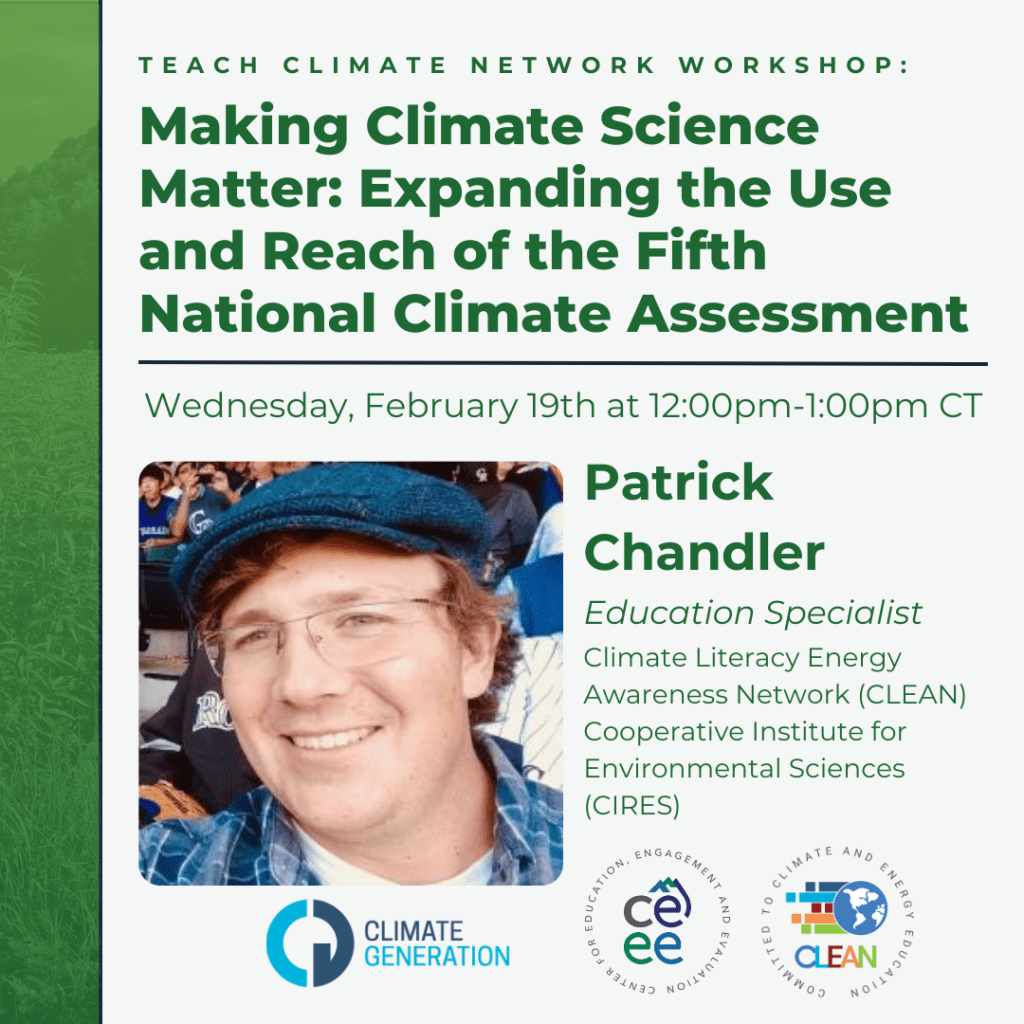
Attend the next Teach Climate Network Workshop on February 19!

Join the Teach Climate Network and presenter Patrick Chandler on Wednesday, February 19th from 12:00 pm – 1:00 pm CT for a workshop about using climate science in lesson planning for the classroom.

Register for the Webinar

The National Climate Assessment is a major scientific report developed by several government agencies that describes climate change in the United States. This session will highlight the science found in the report, and then explore resources that support introducing the NCA5 to non-scientific audiences through the NCA5 Educator’s Guide.

The Climate Energy and Literacy Awareness Network (CLEAN) Team will introduce a guide that connects the information in the report to teaching guidance and resources. Patrick will describe how the new design and updates to the guide make it a powerful tool for education and outreach professionals and how to support their efforts in classrooms, communities, and beyond.

Patrick Chandler is an Education Specialist for the Climate Literacy Energy Awareness Network (CLEAN) and other Cooperative Institute for Environmental Sciences (CIRES) climate education projects. His current focus is developing support and resources for teaching climate change across the curriculum in both science and non-science classrooms. Previously, Patrick designed educator guides and workshops for the CU/United Nations’ Right Here Right Now Global Climate Summit (RHRN) centered on helping teachers bring a human rights lens to climate change. Before starting with CIRES, Patrick was the Education Director for the Washed Ashore Project, raising awareness about marine debris through art/science partnership exhibits; taught biology for Kenai Peninsula College; was the International Coastal Cleanup Coordinator for Alaska; and the Special Programs Coordinator for the Center for Alaskan Coastal Studies. He has over fifteen years working in and developing environmental education, art, stewardship, and science programs and received his Ph.D. in Environmental Studies from CU, Boulder focused on art and science partnerships to catalyze community action on environmental and social justice issues.

We understand that some of these workshops do not work for educator’s schedules, so all registrants will receive a recording and additional resources in their email within 1 week of the event. We are striving to make our events more welcoming to all, with specific goals about racial equity and inclusivity. Your answers during registration will help us to know how we are doing.

Zinn Education Project: Presidents’ Day

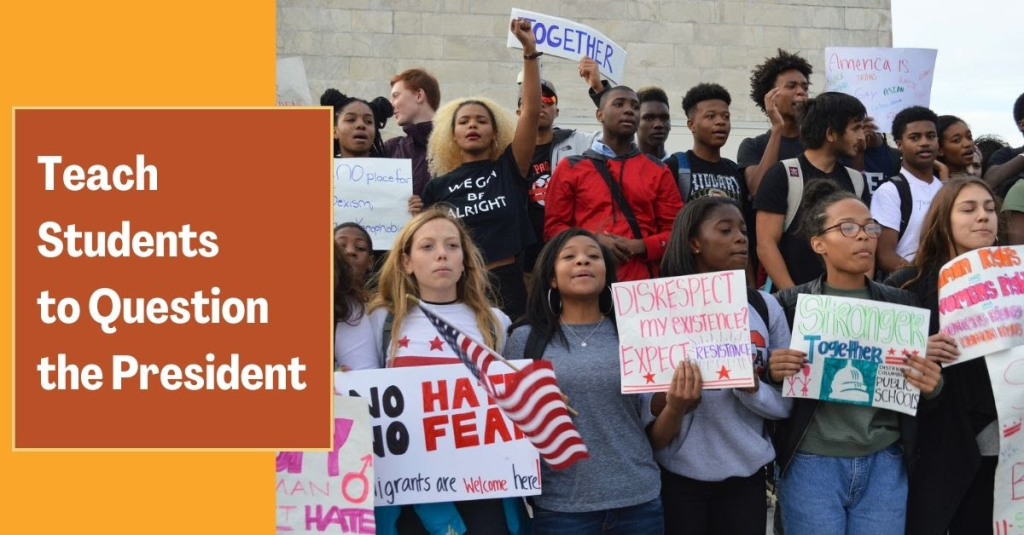
We need to remind students that this country has been at its best when people have organized to question and challenge presidents — opposing presidential support for slavery, war, invasion, environmental destruction, segregation, mass deportations, and injustice of all kinds. Our students need stories of this resistance to inform and inspire their own activism.

As we approach Presidents’ Day, students are witnessing the three branches of government being collapsed into one. It’s time to help students think critically about the presidency — and to question and challenge the president.

We offer lessons on past presidents and on issues relevant to this administration, including immigration, voting rights, education, McCarthyism, Palestine, climate, and more.

Teaching about Reconstruction and the Reconstruction Amendments (13th, 14th, and 15th) sheds light on current events. For example, the administration is attacking birthright citizenship, as guaranteed by the 14th Amendment. Students can learn that the 14th Amendment turned the Constitution into a document cited in legal arguments for equality. It is no wonder that the Trump administration is laser-focused on weakening it.

Presidents’ Day

Apply now for the UN Nairobi Immersion Programme 2025

Applications are now open for the UN Nairobi Immersion Programme, a 5-day field visit to Nairobi organized by the United Nations Institute for Training and Research (UNITAR) in 2025. Scholarships are available. Register now

Enhance your expertise in diplomacy and gain direct access to the United Nations with this immersive training programme, including gaining a deeper understanding of UN career pathways and networking with UN staff.

The United Nations Nairobi Immersion Programme (17th March – 21st March 2025) includes expert lecturers, training workshops, conferences and guided tours through UN premises. Participants will also have the chance to participate incareer development sessions on how to advance their professional careers and find a solid footing in the world of international organizations.

This Immersion Programme includes activities with the United Nations Office at Nairobi (UNON), the United Nations Environment Programme (UNEP), the Nairobi National Museum and other Nairobi-based institutions.

A maximum of 30 participants are accepted into this programme. All individuals are welcome to register, and spots will be allocated on a first-come-first-served basis.

UNITAR will offer scholarship opportunities for a limited number of participants to attend the training free-of-charge. For enquiries related to scholarships and criteria required, kindly send an email to: Multilateralism@unitar.org

For more information on costs, dates, application procedures, and to see a video of previous editions, please visit the official website.

Attend the Youth Climate Justice Summit on February 15!

Join Youth Environmental Activists (YEA!) for our 2025 Youth Climate Justice Summit (YCJS) on Thursday, February 13th, from 10 am to 4 pm. YCJS will be a day of high school youth action, learning, and a chance to participate directly in government. Led by youth, for youth, this event will be a chance to interact with youth climate justice activists from across the Twin Cities Metro Area and discuss how to make change in your communities! Please note that each student must be individually signed up through this form so that our team can track food allergies, consent forms, etc.

The YCJS will be hosted at Springboard for the Arts. Youth will be chaperoned for the short walk to and from the capitol when meeting with legislators.

Register

Challenge Disinformation: Central America

Immigrant communities and truthful teaching are under attack. There are many fronts to organize on, including teaching about immigration, racial equality, fascism, and U.S. interventionism.

Teachers across the country have joined the call to teach about Central America.

View lessons and resources at TeachingCentralAmerica.org to teach about stories in the news today, including Panamaimmigration, and the climate crisis. (Also listen to Democracy Now!’s recent coverage of Panama and El Salvador.)

The lessons center resistanceartpoetry, and finding joy.

View Lessons and Resources

Democracy Watch: Tracking Legislative Threats

This tool exposes legislative trends that restrict civil and human rights and undermine our democratic processes and institutions. It was designed to help advocates, journalists, and concerned citizens monitor and respond to legislation that impacts our communities and restricts our rights.

Human Rights First developed Democracy Watch to track, map, and expose trends in federal and state bills that directly or indirectly undermine democratic processes (i.e. free and fair elections), weaken democratic institutions (i.e. public education), or harm specific communities, including but not limited to, immigrants, refugees, Jewish communities, Muslim communities, women, LGBTQ+ communities, Black and Brown communities, Asian American communities, and Indigenous communities.

Try it now

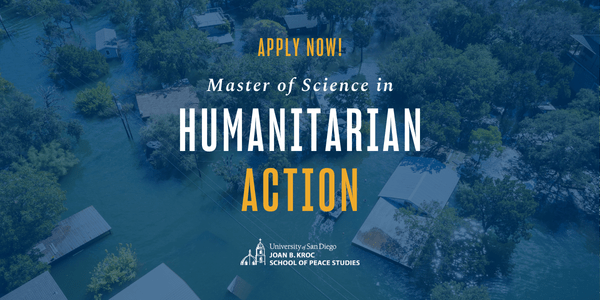
Apply now for the Master of Science in Humanitarian Action

Gain core knowledge and skills recognized by employers in the field as critical to the success of humanitarian aid workers.


Make a positive impact for your future and the future of others with your MS in Humanitarian Action (MSHA). This 100% online degree program trains students to assess humanitarian needs, manage the complex landscape of local, national, and international actors; and design and evaluate innovative solutions to humanitarian crises.

This program brought together by USD’s Kroc School of Peace Studies and USD Online is a 30-credit Master’s degree designed as an online program for working professionals. It is the first humanitarian action Master’s program housed in a school of peace studies.

Explore

Webinar: Only Young OnceThe Urgent Need to Transform Youth Justice Across the Deep South

Join the Southern Poverty Law Center for a dynamic conversation about the need to transform the youth legal system in the Deep South. The conversation will highlight findings from SPLC’s “Only Young Once” research report series which details the harms and challenges with youth justice across the Deep South, as well as policy reforms to address them.

Tuesday, Feb. 11, 6:30 p.m. ET Virtual Webinar
Register now

Join the Southern Poverty Law Center for a dynamic conversation about the need to transform the youth legal system in the Deep South. The conversation will highlight findings from SPLC’s “Only Young Once” research report series which details the harms and challenges with youth justice across the Deep South, as well as policy reforms to address them.

TAAS Module 5: Digital Citizenship & Human Rights in the Age of Disinformation

This module aims to support participants in navigating the intersection between human rights and technology. Participants will understand digital citizenship and using technology for human rights defense, be prepared to hold difficult conversations about the use of technology with youth, and strategize how to combat misinformation.

Monday, February 10, 7-8:30 pm EST 

 Register here

 Flyer

Session Facilitators: Nina Simone Grotch | Woven Foundation and Felisa Tibbitts

Felisa Tibbitts (www.FelisaTibbitts.com) is Chair in Human Rights Education in the Department of Law, Economics, and Governance at Utrecht University in the Netherlands, where she also serves as UNESCO Chair in Human Rights and Higher Education. In addition, Felisa is Human Rights Education Associates (www.hrea.org) Executive Director and co-editor with André Keet of Emancipatory Human Rights and the University: Promoting Social Justice in Higher Education (2024)Human Rights Education Now! Podcast 12 and 13