Join Us on September 17: Teach Truth on Constitution Day

Studying the Constitution is essential — especially now, as constitutional rights are increasingly under attack. 

Each September, schools across the country celebrate Constitution Day — students create posters praising the document, watch patriotic videos, or recite the Preamble — rather than engage in critical inquiry. These rituals present the Constitution as a sacred text, not a document created and amended through struggle.

Students rarely learn who the Constitution was written for — and who was excluded. They are taught to revere the document as the cornerstone of democracy, not to question its origins or its limits.
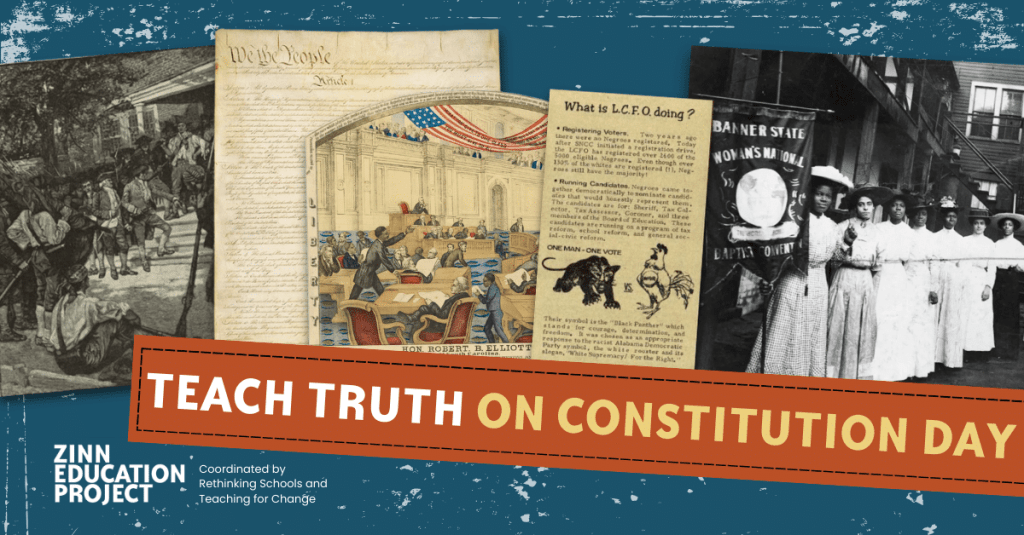
Today, powerful figures wield the Constitution — and undermine it — in ways that intensify profound harms across the country. It is essential that students know their rights: not just to pass a test, but to protect themselves. They should learn that throughout U.S. history, people have fought to expand the rights the Constitution promises, and to demand the rights it omits. Constitution Day should not be a celebration of myth, but an invitation to think critically.

The schools that receive federal funding are mandated to teach about the Constitution on Constitution Day (September 17). So, let’s do that. Let’s engage young people in an active study of the Constitution.

Join our campaign to Teach Truth on Constitution Day. Learn more about why we launched the campaign and our framework, Ten Ways to Rethink the Constitution.

Classroom Actions

We encourage teachers to use Constitution Day to do one or more of the activities outlined here

Sign up to participate — let’s make our commitment to teaching truthfully visible and contagious. (Not a teacher? We suggest ways you can support the campaign and defend the freedom to learn.)

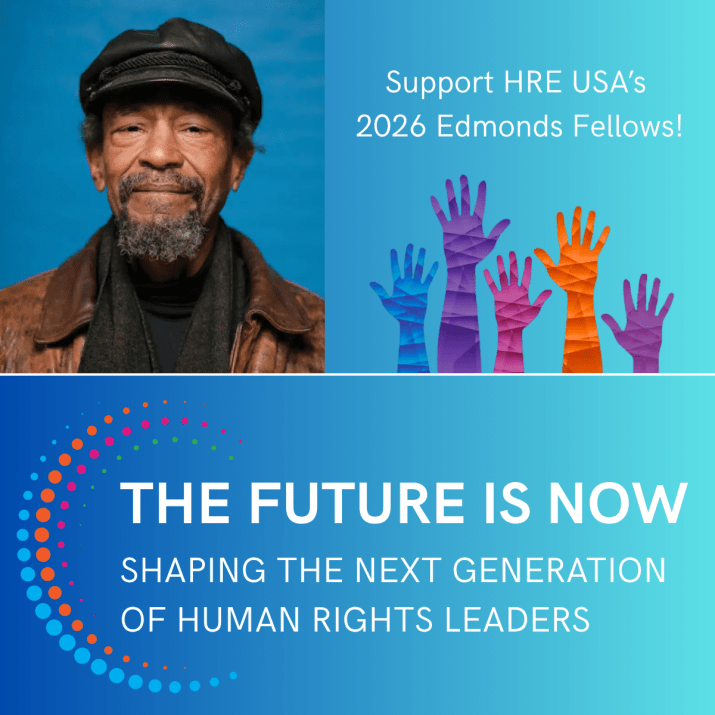
Support the 2026 Kirby Edmonds Fellowship Campaign

We are proud to launch the Kirby Edmonds Fellowship Campaign, one of our most important fundraisers of the year. Centered around the theme “The Future is Now: Shaping the Next Generation of Human Rights Leaders,” this campaign reflects our belief that investing in young leaders today is essential to building a more just and equitable tomorrow.

The campaign supports the Kirby Edmonds Summer Fellowships, created to honor the remarkable legacy of Kirby Edmonds, a founding member of Human Rights Educators USA and a lifelong advocate for social justice. These fellowships provide emerging human rights education leaders with invaluable mentorship and hands-on experience. 

Your donation will go directly toward funding the training and mentorship of Edmonds Fellows for Summer 2026. Each fellowship costs us $2,000. This year, we are proud to support four Edmonds Fellows, and with your help, we hope to expand these transformative opportunities to even more young leaders next year.

Share the campaign: tinyurl.com/edmonds2026

Blue gradient backgrounds with a portrait photo of Kirby Edmonds

Nominations open for 2025 Youth in Action for Human Rights Awards 

To encourage a new generation of human rights activists, the 2025 Youth in Action for Human Rights Awards recognize youth leaders, one individual and one group, whose work explicitly or implicitly reflects and promotes human rights values. Because young activists must nominate themselves for the awards, HRE USA urges adults familiar with their work to urge them to apply.

Nomination deadline: October 1, 2025.

For further information and nomination forms see:
>>  English: hre-usa-youth-in-action-award.my.canva.site/en
>>  Español: hre-usa-youth-in-action-award.my.canva.site/es

Teaching for Change: Native Knowledge 360° Teach-In

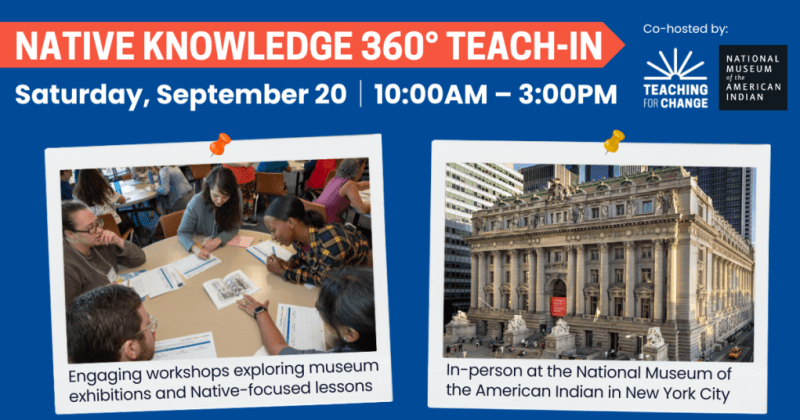
The 9th annual Native Knowledge 360° Teach-In, hosted by the Smithsonian’s National Museum of the American Indian (NMAI) in collaboration with Teaching for Change, is an opportunity for educators to convene in person and strategize on uplifting Native voices directly into the classroom

Teachers select two workshop sessions that include relevant and resource-rich experiences to support effective use of NMAI-NYC exhibitions, American Indian-focused classroom lessons, and resources from Teaching for Change and NMAI. Cost is $20 and includes morning coffee, lunch, and professional development credit

Thanks to a generous donor, every attendee will receive a copy of Why You Can’t Teach United States History without American Indians.

Register

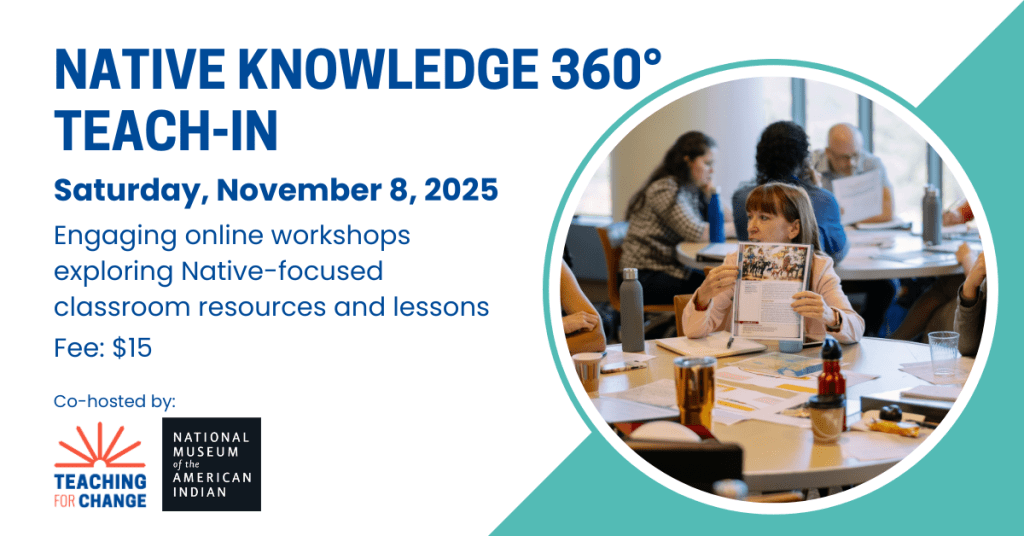
Can’t make it to the in-person event hosted in New York City?Join us for an online teach-in. Teaching for Change and NMAI museum educators will share key concepts from NMAI’s Essential Understandings Framework, children’s literature from Social Justice Books, lessons from the Zinn Education Project, and classroom materials from NMAI’s Native Knowledge 360° education initiativeRegister

Zinn Education Project: American Revolution 250: Indoctrination or Education?

This administration is promoting the upcoming 250th anniversary of the American Revolution as a time to celebrate “a new era of American greatness.”


U.S. history textbooks and standards are plastered with the country’s founding documents, so-called “Charters of Freedom”: the Declaration of Independence, the Constitution, and the Bill of Rights. It is important that young people study these texts so they can better understand and act upon the system of government they have inherited. In most cases, however, the curricular charge accompanying these documents discourages critical thinking. Instead, they and their authors must be celebrated, if not worshipped. 

In the face of the racial justice uprisings of 2020, the Trump administration doubled down on this approach with a glaringly whitewashed “1776 Commission.”


And state lawmakers have flooded legislatures with bills that outlaw teaching the history of racism or sexism, while insisting upon the “study” of founding documents. These measures demand that teachers and students never question the ruling class that founded this country — nor the one at the helm today.

That is why we have compiled resources for an honest study of the American Revolution, so that students can learn from history to shape a more just future. We invite your feedback and suggestions of resources to add.

Teaching the American Revolution

THE 2025-2026 SPEAK TRUTH TO POWER VIDEO CONTEST IS OPEN!

For over a decade, the Speak Truth to Power video contest has empowered students to use filmmaking as a tool for social change. Screened at the Tribeca Film Festival, these films shine a light on pressing human rights issues and celebrate the defenders working to create change across the nation. “The STTP video contest has changed the lives and perspectives of my students,” shared Robin Kovat, a teacher at James Madison HS, Brooklyn. “So many have told me that now, as a result of this project, they look at the world differently.” 

These student-made documentaries don’t just raise awareness; they drive real action and advocacy. Students interested in participating should submit their films for consideration by May 3, 2026. 

Learn more and submit to the video contest →

Teaching Human Rights in the New School Year

We are excited to share resources for educators going back to their classrooms. All of these materials are free and downloadable at woventeaching.org.


 Defending Democracy: Lessons for Building Resilience and Taking Action Based on the framework of Professor Timothy Snyder’s New York Times book, On Tyranny: Twenty Lessons from the Twentieth Century, the lessons of Defending Democracy highlight ways that young people can take action to protect democracy and fight authoritarianism. Highlights of Defending Democracy:An emphasis on critical thinking, media literacy, and collaboration, and community buildingHighly accessible, practical, and action-orientedAdaptable and created for either high- or low-technology environmentsGlobal and US-based examples, as well as historical and contemporary case studies. Download Defending Democracy

Human Rights Education Implementation Toolkit Responding to recent threats and uncertainty about the future of democratic institutions and non-profits in the U.S. and globally, Woven Teaching is currently focusing on the dissemination and implementation of our human rights education materials across a wide network of educators.We believe strongly that community power and education are the best tools available to promote and protect human rights. Because of this, we have created a Human Rights Education Implementation Toolkit. The goal of this is to be able to quickly provide schools and organizations with the resources, tools, and support needed to implement Woven Teaching’s resources–curricula, trainings, and other materials–in order to meet the needs of their communities. Toolkit

Free Printed Materials We are now offering printed copies of our materials free-of-charge to educators in the United States! To request lessons and curricula, please complete this order form.

For more information about other Woven Teaching materials and resources, please visit woventeaching.org/resources

Episodes 60 & 61 with William R. “Bill” Fernekes

William R. “Bill” Fernekes taught social studies and Spanish from 1974-1987 at Hunterdon Central Regional HS in Flemington NJ, later serving as supervisor of social studies from 1987 to his retirement in 2010. He has been a consultant to the U.S. Holocaust Memorial Museum, the New Jersey Commission on Holocaust Education, and numerous other scholarly institutions.  He is a recipient of the Mel Miller Award from the National Social Studies Supervisors Association as the outstanding social studies supervisor in the U.S., the Distinguished Service Award from the Rutgers Graduate School of Education Alumni Association and the Lifetime Achievement Award in Human Rights Education from HRE USA. 

Episode 60: Bill Fernekes, Part One

In Part One, Bill Fernekes shares his journey into human rights education, beginning with his early exposure to Holocaust education and activism through organizations like Amnesty International and Facing History and Ourselves. He reflects on how these experiences shaped his teaching practice and views on the need for early, comprehensive human rights education, especially as a more inclusive alternative to traditional U.S. civics frameworks. As a founding member of Human Rights Educators USA, Bill discusses the organization’s growth and potential areas for expansion. He highlights the power of storytelling and testimony in Holocaust education, the challenges of teaching sensitive topics like LGBTQ+ inclusion, and the growing threats to democracy and human rights in schools. He also addresses the gap between human rights education and policy, citing Bernie Sanders as an example of rights-based political discourse. The episode closes with a preview of Part Two.

Topics Discussed:

  • Early influences: Holocaust education, Amnesty International, and teaching integration
  • Education & human rights: Need for early, holistic, and inclusive human rights education
  • HRE USA: Founding, achievements, and growth opportunities
  • Teaching challenges: Using testimony, LGBTQ+ inclusion, and community resistance
  • Policy & advocacy: Bridging education with rights-based policymaking
  • Preview of Part Two and closing acknowledgements

Full topic listing available for PDF download HERE.

Listen on our Buzzsprout podcast website HERE.

Episode 61: Bill Fernekes, Part Two

In Part Two, Bill Fernekes emphasizes the need to balance theory and practice in human rights education (HRE), advocating for curriculum transformation grounded in dignity and decolonization. He explores the link between human rights, public policy, and poverty, highlighting programs like the California Task Force and Human Rights Close to Home. Bill stresses that HRE should empower—not indoctrinate—students. He critiques the U.S. for not ratifying the UN Convention on the Rights of the Child and envisions its integration into education. Looking ahead, he supports expanding the podcast’s scope with new hosts and more youth involvement. He honors role models Nancy Flowers and Paul Robeson, emphasizing the power of lived values and universal advocacy. Bill calls for mandatory human rights education in all teacher licensure and professional training programs, closing with gratitude and reflections on the importance of resisting injustice.

Topics Discussed:

  • Balancing HRE theory and practice; curriculum transformation and dignity
  • Decolonizing education and connecting HRE to public policy and poverty
  • Advocacy vs. indoctrination in educational settings
  • UN Convention on the Rights of the Child: U.S. resistance and educational potential
  • Podcast future: Dialogues, youth voices, and expansion beyond K–12
  • Role models: Nancy Flowers and Paul Robeson’s lasting influence
  • Key recommendation: Require HRE in all teacher licensure and training programs
  • Final reflections and closing acknowledgments

Full topic listing available for PDF download HERE.

Listen on our Buzzsprout podcast website HERE.

Thank you for supporting the Human Rights Education NOW! podcast!