The Unitarian Universalist Service Committee (UUSC) is inviting applications for its Human Rights Innovation Fellowship on the topic “Resisting Criminalization.” Individuals or non-profit organizations with an innovative project that is relevant to the fellowship’s theme can apply. In addition, advocacy organizations, academic institutions, research centers, grassroots organizations, and UUSC partners may apply for the fellowship. The fellowship will provide funding up to $25,000.
Application deadline: January 17
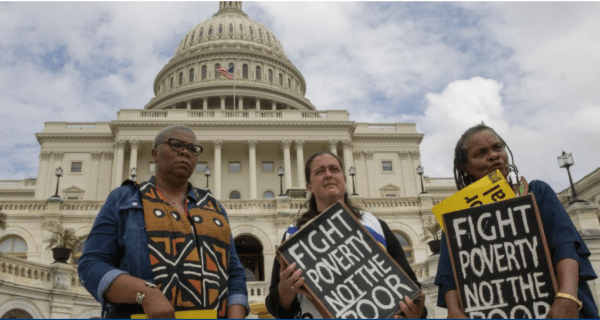
The fellowship proposal should address a major challenge facing individuals and/or communities who are criminalized in the United States. Criminalization refers to policies and practices that stigmatize, scapegoat, and profile whole communities as “criminal” or “terrorist.” UUSC’s primary goals in this campaign are to advance community protection strategies and expanded sanctuary, decriminalize poverty, and advance restorative justice.
A recent national survey released by UCLA’s Institute for Democracy, Education and Access, Teaching and Learning in the Age of Trump: Increasing Stress and Hostility in America’s High School, found that the president’s political rhetoric and policy decisions have spilled into classrooms at public high schools in significant ways, causing stress, polarization and hostility among students. (See also NPR article).
The report, shows that nearly 80 percent of teachers said some students had expressed concern for their well-being because of the charged public conversation about issues such as immigration, health care, the environment, travel bans and LGBTQ rights. Furthermore, 40 percent said concerns over key issues — such as Trump’s ban on travelers from eight countries, most with Muslim majorities; restrictions on LGBTQ rights; and health care — are making it harder for students to focus on their studies and making them less likely to come to school.
In response, Sandy Sohcot, the Director of The World As It Could Be (TWAICB), suggests HRE as one approach that could effectively address heightened stress in the classroom. She states, “I’d like to offer using the Universal Declaration of Human Rights (UDHR) as a tool to teachers to guide discussion that could help students better bridge divisive feelings, grasp how derogatory language and actions affect others, and help express the human rights affected by language and policies of their government representatives.”
In her recent blog post entitled, If You Get Confused, Listen to the Music Play, Sohcot further explores how the UDHR could help address not only the issues causing so much youth anxiety, but also the increasingly confusing social-political environment we’re in, and the floating anxiety it generates.
We share a national myth that residential segregation is de facto. It is a myth embraced not only by conservatives, but by liberals as well. It is perpetuated by our standard high school history curriculum, in which commonly used textbooks routinely describe segregation in the North as de facto, mysteriously evolved without government direction. Yet, as The Color of Law recounts, the myth is false. Federal, state, and local governments deliberately segregated residential areas of every metropolitan area of the nation, designed to ensure that African Americans and whites would have to live separately.
HUMAN RIGHTS DAYwas yesterday, December 10, the anniversary of the date when the United Nations adopted the Universal Declaration of Human Rights in 1948.
Human rights education is as important today as it has ever been in promoting peace, dignity, freedom, equality and respect for all peoples here at home and around the world. This year, in celebration of human rights day, please consider investing in HRE by donating to HRE USA’s newly established Flowers Fund.
The Flowers Fund supports innovation and mentorship in human rights education in the United States. Your tax-exempt donation will enable HRE USA to cultivate the next generation of human rights educators by underwriting a variety of creative activities such as internships with member organizations, research, artistic expressions, and collaborative projects among students, teachers, and activists.
The Flowers Fund was created in honor of human rights educator, Nancy Flowers to continue her legacy of innovation and mentorship in human rights education.
HRE USA is excited to announce the creation of the Flowers Fund. Established in honor of Nancy Flowers, the fund will be used continue her legacy of innovation and mentorship in human rights education. Please consider contributing today to help us advocate for and further develop programming that supports human rights education and our ultimate goal of making human rights a reality in each community.
On Thursday November 16th, at the HRE USA’s annual reception and awards ceremony, Human Rights Educators USA (HRE USA) presented Nancy Flowers with a Lifetime Achievement Award in recognition of her decades of dedication, innovation, and mentorship in advancing human rights education in the United States and around the world.
Nancy was surrounded by family, friends and colleagues many of whom shared their own personal stories and thank you messages attesting to the impact Nancy has made on their lives through her human rights work.
Furthermore, in honor of Nancy Flowers, HRE USA established the Flowers Fund. Under her guidance, the fund will be used continue Nancy’s legacy of innovation and mentorship in human rights education.
Please consider contributing today to help us advocate for and further develop programming that supports human rights education and our ultimate goal of making human rights a reality in each community.
Nancy Flowers is a writer and consultant for human rights education. She has worked to develop Amnesty International’s education program and is a founding member of Human Rights Educators USA, a national human rights education network. As a consultant to governments, nongovernmental organizations, and UN agencies, she has helped establish national and international networks of educators, develop materials, and train activists and professionals in many countries. She is the author and editor of articles and books on human rights education, most recently Towards a Just Society: The Personal Journeys of Human Rights Educators (Minnesota, 2016); Human Rights. YES! Action and Advocacy for the Rights of Persons with Disabilities (2nd Edition, Minnesota, 2013), Acting for Indigenous Rights: Theatre to Change the World (Minnesota, 2013); and Local Action/ Global Change: A Handbook on Women’s Human Rights (2nd edition, Paradigm Press, 2008). She lives in Palo Alto, California.
How do teachers bring human rights into an increasingly restricted curriculum?HRE USA’s latest Human Rights Here and Now Bulletin will help you answer this question. The publication features guest editors Jessica Mintz and John Terry, who were part of a special team of New Jersey educators that developed a collection of adaptable and accessible model lessons that support the integration of HRE into their state’s curriculum.
San Francisco’s rich history and vibrant neighborhoods come alive at the 97th NCSS Annual Conference, November 17-19, 2017 (pre-conference meetings November 15-16). Join NCSS in its first return to the Bay Area in more than 30 years for the world’s largest and most comprehensive social studies professional development conference.
Join more than 3,000 of your social studies colleagues to share the most current knowledge, ideas, research and expertise in social studies education, and to experience the history, culture, and color that are uniquely San Francisco.
HRE USA and the NCSS HRE Community will be hosting a series of events at the NCSS conference. Further details will be provided in the October newsletter and on our website.
In response to the terrible impact of Hurricanes Harvey and Irma, the National Council for the Social Studies (NCSS) has made 3 chapters of their 2010 bulletin, The Human Impact of Natural Disasters: Issues for the Inquiry-Based Classroom publicly available at the request of the editors. The book contains essays by scholars and practitioners about a range of topics concerning natural disasters and their consequences, and how social studies educators can address them in their daily practice. The bulletin has a prominent emphasis on human rights issues, and includes lesson suggestions as well as a comprehensive bibliography.
EVENT DETAILS: When: Saturday October 14, 2017 Where: Woodstock Union High School Woodstock, Vermont Cost: $10-20 sliding-scale registration fee includes breakfast
On 5 May of this year, the Vermont legislature adopted a concurrent resolution “designating October 16, 2017 as John Brown Day in Vermont.” To commemorate the day, the Woodstock Social Justice Initiative is hosting a Brown celebration and anti-racism event in Woodstock, Vermont on the October 14th aimed at empowering community members with the understanding and tools needed to take action against racism. Several renowned experts on Brown, abolitionism and anti-abolitionism in Vermont and New Hampshire will be presenting, as will local educators who will demonstrate how they teach about Brown and other controversial figures.