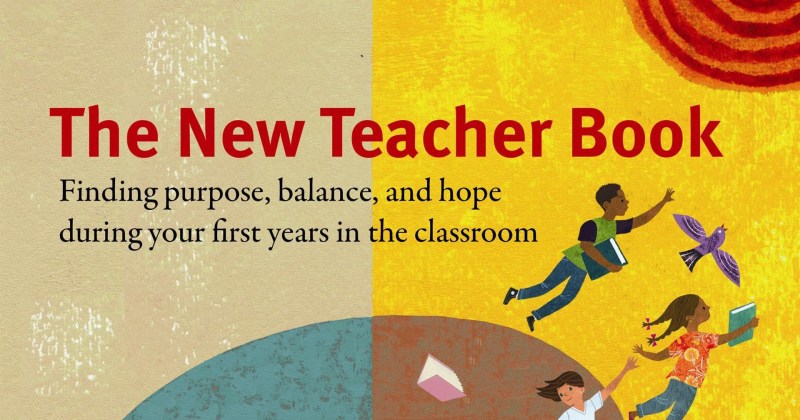
The New Teacher Book

Rethinking Schools has just published the newly revised and expanded third edition of The New Teacher Book: Finding Purpose, Balance, and Hope During Your First Years in the Classroom. 

The book grew out of Rethinking Schools workshops with early career teachers. It offers practical guidance on how to flourish in schools and classrooms and connect in meaningful ways with students and families from all cultures and backgrounds.

There is a huge difference between having lots of book knowledge about a given area — literature, history, math, science — and knowing how to translate that knowledge into lessons that help students learn. All teachers — new and veteran — need skills to develop curriculum that celebrates the delightful aspects of our students’ lives. And we need strategies that address the tragedy of some students’ lives and the tragedy that the world delivers — misogyny, racism, homophobia, poverty, war. We need to discover ways to weave these into our curriculum.

That kind of connection intention takes time and practice and The New Teacher Book from Rethinking Schools can help you get there.
>> Learn more and purchase

Teach Gender Equality in the Classroom

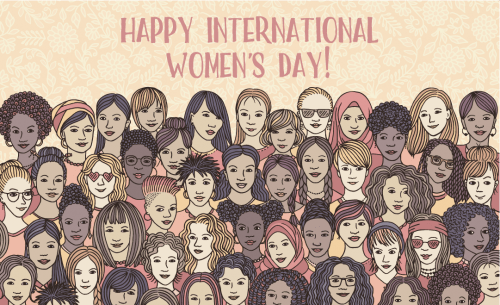
Today is International Women’s Day (IWD).  A day to celebrate the achievements of women in history and advocate for a gender-balanced world. This year’s theme is  #BalanceforBetter. March is Women’s History Month – commemorating and encouraging the study, observance, and celebration of the vital role of women in American history.  The theme for 2019 is “Visionary Women: Champions of Peace & Nonviolence.”

International Women’s Day and Women’s History month provide us the important opportunity to educate and inspire students about the role of women in society.  To not only recognize and honor the battles that have been won by women, for women but also to continue to challenge the gender stereotypes and biases that continue to drive inequality today. 

“Here’s to strong women, may we know them, may we be them, may we raise them.”

~ Unknown

Classroom education about gender equality is the most grassroots difference anyone can make to advance women’s rights. Research shows that gender bias at primary school can have long-lasting implications for pupils, and children as young as three years old already become aware of gender differences and absorb stereotypes about the activities, toys or traits and skills that are associated with each gender.

Check out the following resources to help champion women’s rights in your classroom:

Rethinking Ethnic Studies

Rethinking Ethnic Studies is an essential guide for the revitalization of ethnic studies in K-12 classroom.

It brings together many of the leading teachers, activists, and scholars in this movement to offer examples of Ethnic Studies frameworks, classroom practices, and organizing at the school, district, and statewide levels.

Built around core themes of indigeneity, colonization, anti-racism, and activism, Rethinking Ethnic Studies offers vital resources for educators committed to the ongoing struggle for racial justice in our schools.

>> Learn more and purchase

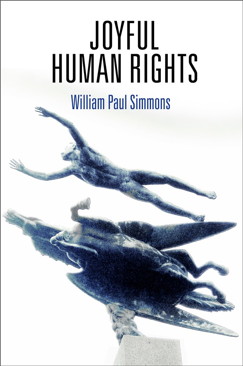
New Book: Joyful Human Rights

Joyful Human Rights by William Paul Simmons and Semere Keseste (Jan. 2019) is “a pioneering work that thoughtfully explores human rights in the context of the most joyful of human experiences, Joyful Human Rights disrupts current human rights thinking and practice and leads us to challenge the foundations of human rights afresh.  The term “human rights” is now almost always discussed in relation to its opposite, “human rights abuses.” Syllabi, textbooks, and academic articles focus largely on abuses, victimization, and trauma with nary a mention of joy or other positive emotions. Focusing on joy shifts the way we view victims, perpetrators, activists, and martyrs. Importantly, focusing on joy mitigates our propensity to express paternalistic or salvatory attitudes toward human rights victims.”

>> Learn more and purchase

The World’s Largest Lesson – Teaching the SDGs

The Sustainable Development Goals ( SDG’s) are a set of 17 targets set up by the UN, in which 193 countries pledge to make real, impactful change in the world by 2030. The World’s Largest Lesson has taken on the role of bringing these goals and targets to children and young people everywhere and unites them in action.

They produce free and creative resources for educators to teach lessons, run projects and stimulate action in support of the Goals. At the heart of their resources are animated films written by Sir Ken Robinson, animated by Aardman and introduced by figures students know and respect, like Emma Watson, Serena Williams, Malala Yousafzai, Kolo Touré, Neymar Jr, Hrithik Roshan and Nancy Ajram. The films establish a context for the Goals and inspire students to use their creative powers to support and take action for them.

>> Learn more

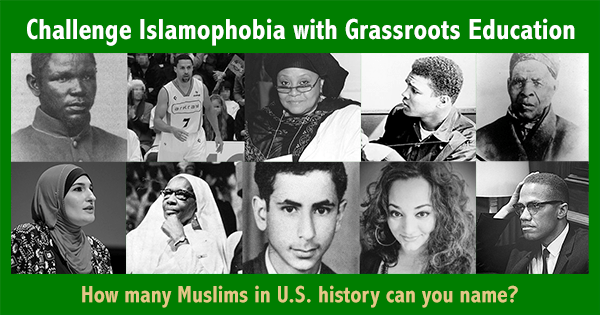
Islamophobia: A People’s History Teaching Guide

Islamophobia is getting worse. The number of anti-Muslim hate groups has grown exponentially. Anti-Muslim hate crimes increased another 15% and the bullying of Muslim children in schools is on the rise. If we want to reverse these trends, we need to challenge Islamophobia with educational resources that raise consciousness and move people to action.

Teaching for Change has created a seven-lesson curriculum called “Islamophobia: A people’s history teaching guide.” The lessons teach us to rethink what we know about the history of Muslims in the U.S., including the fact that Islamophobia is rooted in a history of racism. In addition to narrative-changing content and inclusive teaching strategies, our lessons elevate the voices of activists building justice. Each lesson includes detailed teaching directions, participatory activities, and multimedia teaching resources.

In 2018, Teaching for Change introduced the lessons to nearly 400 teachers who impact 60,000 students.  The lessons are in the final stage of development and will be available in early 2019.

>> Learn more and support the curriculum

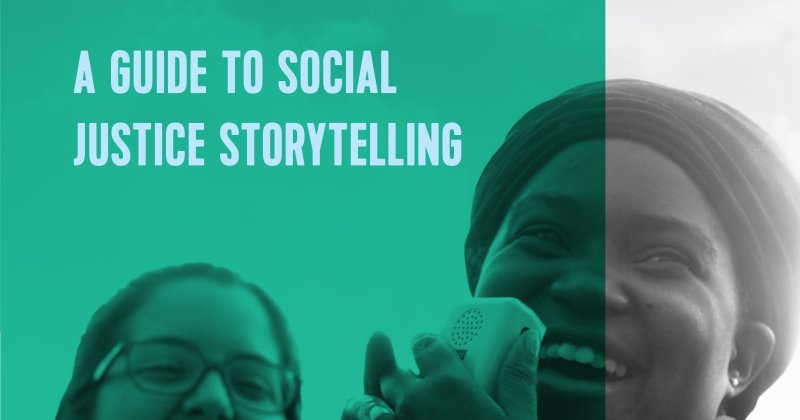
Say it Forward: A Guide to Social Justice Storytelling

This new guide by Voice of Witness provides strategies and resources for creating justice-driven oral history projects.

Oral history is a universal form of storytelling. For many years Voice of Witness has shared powerful stories of people impacted by injustice with a broad audience of readers.

Say It Forward extends this work, offering a DIY guide for social justice storytelling that outlines the critical methodology at the core of Voice of Witness’s evocative oral history collections.

What’s Inside?

  • Information, strategies, and steps to address power discrepancies, awareness of cultural norms, insider/outsider dynamics, self-care for interviewers, and more
  • An extensive resource section for oral history, community storytelling, media options for sharing stories, community-organizing resources, and clinical psychology resources related to traumatic stories and self-care
  • Field reports exemplifying how to harness the power of personal narrative to expose larger issues of inequality

>> Learn more and purchase

NCSS 2019 Conference – Call for Proposals

The theme of this year’s NCSS conference is “Informed Action: Agency, Advocacy, Activism.” The conference will be held November 22-24 in Austin, Texas.

NCSS is partnering with the National Council for Geographic Education and the Texas Council for the Social Studies to create an expansive professional learning experience for social studies, social science, and geographic educators and stakeholders.

2019 Call for Proposals now open! 

Proposal Deadline: March 3, 2019

>>  Submit a proposal
>> Learn more

Black Lives Matter at School

Mark your calendars! The Black Lives Matter at School week of action will be held from February 4-8, 2019.

Black Lives Matter At School is a national committee of educators organizing for racial justice in education.  BLM at School encourage all educators, parents, students, unions, and community organizations to join the annual week of action during the first week of February each year.

There are many ways to participate in Black Lives Matter at School week. Some educators teach BLM lessons every day of the week, wear their Black Lives Matter At School t-shirt, organize after-school rallies, facilitate their students entering the creative challenge, develop curriculum, post on social media, and rally at the school board meeting. One easy way for everyone to participate is to sign the petition endorsing the week of action

The important thing is that you act in some way to join this movement to bring down the structures of anti-Blackness in education and affirm the lives of Black students in your classroom. 

Email BlackLivesMatterAtSchool If you or your organization would like to support or endorse the week of action.

>> Learn more 
>> More Teach BLM Resources


Happy Human Rights Day

Today, Monday, December 10th marks the 70th ANNIVERSARY of the Universal Declaration of Human Rights. A milestone document in the global history of human rights that is as relevant today as it was when drafted seven decades ago.  

Although the UDHR is not in itself legally binding, it has become the procreator of modern international human rights law, providing safeguards – and sometimes lifelines – for thousands of people from all walks of life when national laws fail them. It has parented 16UN human rights treaties that are legally binding, including the twin UN Covenants spanning economic, social and cultural and civil and political rights respectively, plus a host of regional treaties in Africa, the Americas, and Europe.

We now take for granted that such human rights standards can be used to hold our governments to account, but just 70 years ago there were no internationally recognized human rights norms at all. The very fact that the UDHR has stood the test of time is a testament to the enduring universality of its perennial values of equality, justice, and human dignity.

The promise of the UDHR, however, has yet to be fulfilled because, as all advocates know, human rights are not a given but rather require a continuous struggle to get and once that has been achieved to keep. In other words, it is down to us to promote its ethical vision as new forms of nationalism and populism threaten to challenge our world.  

At HRE USA we believe human rights education is key to ensuring a future in which all people’s rights are respected, protected, and fulfilled. Please consider supporting HRE-USA by making a tax-deductible contribution on our behalf to our fiscal sponsor, the Center for Transformative Action, a 501(c)3organization. Your donation will allow us to continue to advocate for and further develop programming that supports human rights education across the United States.

In honor of the 70th Anniversary and to help everyone celebrate the gift of the UDHR, HRE USA has created this online resource kit. You can also join the international campaign to #Standup4humanrights. 

 HAPPY HUMAN RIGHTS DAY