Children’s Human Rights in the USA: Virtual conference

REGISTER HERE!

The registration is open for the June 22-24, 2022 conference on Children’s Human Rights in the USA.  It is a virtual zoom conference with over 50 speakers that is sponsored by the Center for Childhood & Youth Studies at Salem State University, with co-sponsors such as Human Rights Educators USA, the Hope for Children CRC Policy Center, UNICEF USA, Child Fund Alliance, Child Welfare League of America, and others. This is a free conference via zoom but you must register.

Topics include safety, trauma, resilience, participation, health, education, law, mental health, gun control, special needs children, environment, and much more. For more information on the speakers and schedule: https://www.salemstate.edu/academics/centers/center-childhood-and-youth-studies/childrens-human-rights-usa

Continuing Education Credits are available.

To learn more about the importance of children’s human rights, please review the Children’s Human Rights Resource, Networking, and Learning Library: https://canvas.instructure.com/enroll/GLKDXX

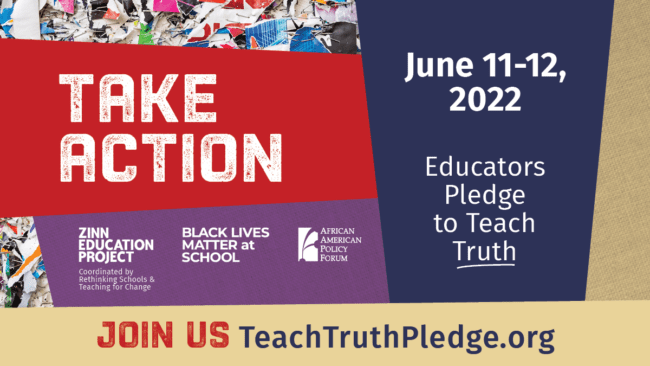
Zinn Education Project:Teach Truth Days of Action: June 11–12, 2022

It’s time to take action… again.

Last summer, teachers rallied across the country at historic sites to speak out against anti-history education bills and to make public their pledge to teach the truth. These actions, on June 12 and in August of 2021, have been the only national protests of this dangerous legislation.

The teacher-led rallies received national media attention, providing a valuable counter narrative to the oversized coverage of anti-CRT protests at school board meetings.

One year later, we invite educators, students, parents, and community members to rally across the country and pledge to #TeachTruth on June 11 and 12, 2022.

>> Learn more and sign up

HHREC Memory Keepers Story Hour

Joseph Kaidanow

Generations Forward 

Wednesday, June 8th, 2022

6:45 PM Gathering for Family and Friends

7:00 PM Program

REGISTER HERE

Joseph’s parents, Ellen and Jerry, are both Holocaust survivors. Joseph will share his father’s story. Jerry was born near the town of Krivitchi, Poland in what is now Belarus. His story involves the struggle to survive after his parents perished during an “action” in the town as his remaining family fled to the woods of the Naroch forest and eventually immigrated to the U.S., settling in the Bronx.

Joseph and his wife Ellen actively support the mission of the Holocaust & Human Rights Center, as Joseph is the Immediate Past Chairperson who currently serves on the HHREC Board of Directors, and Ellen is a member of the HHREC Memory Keepers GenerationsForward Speakers Bureau.
These stories offer a unique opportunity to hear from a very special group of Survivors and next generation family members about the consequences of hate, and the power of hope, as they help people reflect and realize that their choices matter, and that one person can make a difference.
We are eternally grateful for the contributions from the courageous men and women who share their stories of survival from the Holocaust, and to their children, grandchildren, and great grandchildren who continue to pass them on.

Governments Harm Children’s Rights in Online Learning

Governments of 49 of the world’s most populous countries harmed children’s rights by endorsing online learning products during Covid-19 school closures without adequately protecting children’s privacy, according to the recently released report by Human Rights Watch.

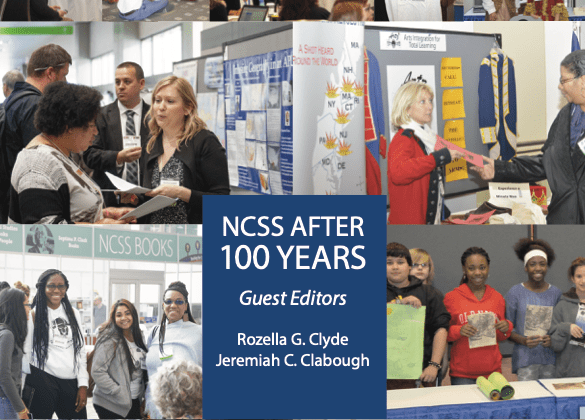
A History of NCSS Involvement in Human Rights (Social Education: NCSS After 100 Years, November/December 2021, Vol. 85, No. 6)

A History of NCSS Involvement in Human Rights By Rosemary Ann Blanchard (pp. 364–365)

Active support for human rights education and for the human rights dimension of civic engagement has long been an integral part of CSS’s values, policies, and practices. This commitment was made official in 2012 with the estab­lishment of an NCSS Human Rights Community.

The term “Human Rights” has come to encompass under­standings of the rights of individuals within all societies (previously expressed with phrases such as the “rights of man,” or “natural rights”). The term itself, however, is largely a product of the twentieth century. Indeed, it took atrocities on a global scale for the phrase “Human Rights” to come into common usage.

In his 1941 State of the Union address to Congress, President Franklin D. Roosevelt referenced the universal­ity of human rights: “Freedom means the supremacy of human rights everywhere.” The phrase is repeated in the UN Declaration of 1942 (the main treaty of the World War II allies), in the preamble to the UN Charter (1945), and, of course, in the 1948 Universal Declaration of Human Rights.

In 1945, CSS participated in the development of a state­ment entitled “Education for a Free Society,” under the aus­pices of the Liaison Committee for International Education and its International Education Assembly.2 The statement enunciated core values for education in a democratic soci­ety-values that today reflect many of the characteristics we would today identify as educational ideals that are friendly to human rights (e.g., equal education for all, freedom to learn and learning for freedom, and education to enrich the full human personality). NCSS shared these visions with its members in the February 1945 issue of Social Education.

In 1948, NCSS, in conjunction with the Committee on International Education of the National Education Association (NEA) and the Association for Supervision and Curriculum Development (ASCD), issued a statement entitled “Education for International Understanding in American Schools.”3 The EA/ ASCD/NCSS statement-developed and issued as the UN Commission on Human Rights was negotiating the final language for the Universal Declaration of Human Rights-both anticipated and endorsed the ideals of the nascent UDHR. It urged that programs of education for international understand­ing be directed toward preparation of “the World-Minded American” whose values and actions would reflect those ideals:

II. The world-minded American wants a world at peace m which liberty and justice are assured for all.
III.The world-minded American has a deep concern for the wellbeing of humanity.

History is fickle, of course, and the “World-Minded American,” social studies educators and their national council soon had to contend with domestic accusations that world­ mindedness was the equivalent to being “soft on communism,” unpatriotic, or worse.

NCSS did not, however, aban­don its incipient commitment to preparing human rights awareness. By 1968, the 20th anniversary of the Universal Declaration of Human Rights, President Lyndon Johnson joined the UN General Assembly in officially declar­ing 1968 Human Rights Year. In 1969, NCSS published Bulletin 43, A Guide to Human Rights Education (Paul D. Hines and Leslie Wood), with an introduction by Chief Justice Earl Warren.4 Warren’s introduction, from a speech delivered to the President’s Commission for the Observance of Human Rights Year, made clear that the work of upholding human rights was a domestic challenge as well as a global one:

[l]n recent years the fabric of our society has come per­ilously close to the tearing point because of a failure to live by that principle [of equality]. The potential for strife is great when some men will not deal with others as equals worthy of dignity and respect and fairness ….

let us not forget the threat which may be the gravest of all … because it threatens us as … moral beings-and that is the threat of ourselves-the threat that we may cease to be an outward going, freedom loving, and tol­erant people. The threat that we may destroy our own democratic institutions through malice or inadvertence (p. 7).

Hines and Wood, in their discussions of teaching for the promotion of human rights, stressed both the teaching of con­tent and the creation of opportunities “to develop the attitudes and qualities of mind necessary to the successful promotion of human rights.”5

The importance of incorporating reaching about human rights and teaching through practices friendly to human rights continued to be reflected in , CSS publications, and presenta­tions at CSS conferences throughout the latter third of the twentieth century. William Fernekes was the founding chair­person of the International Human Rights Education Special Interest Group within NCSS (1985-1992) and contributed to several NCSS publications throughout the 1990s on the need to incorporate the human rights perspective into teaching about children’s rights, genocide, Indigenous Peoples, natural disasters, and global citizenship education. Kristi Rudelius­-Palmer, Nancy Flowers, Fernekes and others worked with NCSS on the development of the national Human Rights USA Resource Center around the 50th Anniversary of the UDHR (1998) and on presentations and publications tied to that landmark.

The twenty-first century is on its way to becoming the Century of Human Rights Education within CSS. The first decade saw an increase in HRE-related contributions to NCSS publications. More recently, the American Red Cross contrib­uted to a special section within Social Education devoted to exploring International Humanitarian Law, a dimension of human rights practice which is too often omitted from general discussions of HRE.6

The HRE Community does nor and must not assume that this current period of “belonging” within the social studies family is a given. In preparation of chis report, I learned of the establish­ment and subsequent demise of an NCSS special interest group on International Human Rights Education. Nationalist and racist ideologies that considered extinguished in the American psyche have recently demonstrated their persistence. Respect for LGBTQ equality has moved forward to an encouraging degree, but, again, those gains exist against a background of intimidation and threat. Anti-immigrant/anti-migrant rhetoric and legally enforced policies are undermining fundamental principles of human rights and rights of children and families. We CSS members share a common human destiny. Our val­ues are only as enduring as our success in transmitting them to future generations.


Note: Dr. Glenn Mitoma, the HRE Community Scholar Presenter in 2018, greatly assisted with thi.s overview.


Notes

  1. The Social Studies in Secondary Education. Bulletin 28 (Bureau of Education Department of the Interior, 1916)
  2. James Quillen. “The Role of the Social Studies Teacher in the Postwar World.” Social Education 9, no. 1 January, 1945): 9-12.
  3. “Education for International Understanding in American Schools” (National Educauon Association, 1948)
  4. Paul D. Hfnes and Leslie Wood, A Guide to Human Rights Education, Bulletin 43 (NCSS, l969)
  5. Hines and Wood. 59
  6. Exploring Humanitarian Law. Social Education 74, no. 5 (October 2010).
Expert Roundtable Discussion with UN Special Rapporteur in Cultural Rights

Mon, 30 May 2022, 14:00 – 16:30 BST

REGISTER HERE

Professor Alexandra Xanthaki convenes a panel of experts in her role as UN Special Rapporteur to discuss Sustainable Development and Cultural Rights, in this special online roundtable open to public viewing.

Dr Margot Salomon is Associate Professor at LSE Law School and Director of the multidisciplinary Laboratory for Advanced Research on the Global Economy at LSE Human Rights

Professor Azza Karam serves as the Secretary General of Religions for Peace – the largest multi-religious leadership platform with 92 national and 6 regional Interreligious Councils.

Hélène Papper is Director of Global Communications and Advocacy at the International Fund for Agricultural Development (IFAD). The division is responsible for IFAD’s global internal and external engagement and positioning, communications and advocacy strategies and operations.

Joshua Castellino is Executive Director at Minority Rights Group, where he regularly engages with multilateral organizations, Law Societies and NGOs in Europe, Asia, the Middle East and Latin America, on issues of human rights advocacy and public international law.

Edna dos Santos-Duisenberg is an economist and became well-known for her pioneering work in shaping the research and policy agenda around the creative economy and its development dimension.

Henry McGhie has an international profile, reputation and network for work on museums, climate change and sustainability (notably with climate change and the Sustainable Development Goals).

Dr Jenny Newell is Curator of Climate Change Projects at the Australian Museum. Jenny works on the cultural dimensions of climate change, focusing on communities in Australia and the Pacific. She aims to increase engagement in environmental stewardship through the medium of museums.

Francesca Thornberry is a human rights and development specialist with over 20 years’ experience in UN, NHRI and NGO contexts.

Lucia Vasquez Garcia is an Agenda 2030 Consultant and Project Coordinator of the Culture and Sustainable Development Program carried out by the United Nations Sustainable Development Solutions Network (SDSN), a nonprofit made by the United Nations in 2012 to advance the Sustainable Development Goals.

Hosted by Dr Meredith Jones, Director of the Institute of Communities and Society at Brunel University London

International Seminar series: Access to Social and Cultural Rights


Date and time

Wed, 25 May 2022, 06:00 – 08:00 CDT

REGISTER HERE

This seminar is part of the School for Policy Studies – International Seminar Series 2021-2022

Access to Social and Cultural Rights, will focus on children’s, young people and family’s access to social and cultural rights including to family life, cultural activities, play and inclusion into a national community.

Professor Zsuzsa Millei, Reflections on methodological nationalism in migration research concerning children

Professor Debbie WatsonVR Dance: young people at risk of criminalisation accessing cultural rights

Dr Jon SymondsNegotiating rights to family life when parents separate

________________________________________

Reflections on methodological nationalism in migration research concerning children

This presentation considers the intersections of migration research in early childhood /education, and nationalism. I analyse selected articles addressing migration and inclusion in the Nordic states from the perspective of methodological nationalism. The aim is to demonstrate why migration researchers need to apply a critical lens to evaluate the inherent methodological nationalism some migration research can be ‘guilty’ of. I especially highlight the need to rethink the categorizations migration research operates with that keep reifying exclusions based on national grounds and which, with an extension, antithetical to children’s right to non-discrimination and right to identity.

Professor Zsuzsa Millei, University of Tampere, Finland

Zsuzsa is a Professor of Early Childhood Education at the Faculty of Education and Culture, Tampere University, Finland. Her research addresses child politics by exploring how politics (power, government, nationalism, and ideology) intertwine with childhood and children’s everyday life in child institutions, and more recently reconfigured within the Anthropocene. Her comparative studies of nationalism and explorations of childhood memories of (post)socialist societies use post-qualitative and artistic methods and reveal complex matrices of power and seek to decolonize the research imagination and knowledge production. Her special issue on ‘Banal and Everyday Nationalisms in children’s mundane and institutional lives’ is published in 2021 in the journal of Children’s Geographies.

VR Dance: young people at risk of criminalisation accessing cultural rights

In this presentation Debbie will present a current funded project working in partnership with East London Dance company. This is a project working with vulnerable young people in two East London Boroughs where we have combined intensive hip hop workshops with avatar creation and virtual reality to enable alternative narratives of risk and resilience and hopefully have impacts on their overall subjective wellbeing. The programme enables access to cultural activities for young people and provides an experimental methodological space to reimagine their identity in a low-risk virtual world. The presentation will include some film outputs from the project to date.

Professor Debbie Watson, School for Policy Studies, University of Bristol

Debbie is Professor of Child and Family Welfare in the School for Policy Studies, University of Bristol and the School Research Director. Her research interests focus on identity and wellbeing for children and families in adverse circumstances including poverty and where children are in state care or adopted. All her research is interdisciplinary, co-produced and she engages with a wide range of creative, arts based and digital research approaches.

Negotiating rights to family life when parents separate

In this presentation, Jon will present current research he is conducting with colleagues that focuses on the experiences of family members when parents have separated. The project draws on ethnographic methods by providing family members with digital cameras to create their own accounts of the separation and of the support they received from services. Combined with interviews, this data will help to build a rich picture of the ways that families navigate their ways towards family life beyond separation and the findings will feed into policy developments to improve both family support services in both the community and the family courts in England and Wales.

Dr Jon Symonds, School for Policy Studies, University of Bristol

Jon is a Senior Lecturer in Social Work with Children and Families in the School for Policy Studies. His research interests focus on social work with parents, particularly with fathers, and where there are concerns related to children’s welfare. He uses a variety of qualitative research methods including the analysis of audio and video recordings of professional practice, and videos made by members of families where the parents have separated.

Human Rights & STEM Education to Inspire Youth-Led Environmental Action

Sat, May 28, 2022 , 10:00 AM – 11:00 AM CT

Online event, REGISTER HERE

Explore and participate in a growing movement to integrate STEM and human rights education to empower young leaders to tackle global issues

This interactive webinar explores paths to increase youth leadership and participation in a growing movement to integrate STEM education with human rights to inspire environmental action.

The first portion of this webinar will be an overview of the benefits of integrating STEM and human rights education through the lens of inspiring youth action on global environmental issues and paths to increase youth participation. The second portion of the webinar will be an interactive discussion where participants will share their views and ideas on integrating STEM and human rights education and methods to increase youth participation in environmental action throughout the process of developing STEM educational programs that inspire youth-led change.

Participants will leave the webinar with an increased understanding of how STEM and human rights education can be used to involve young leaders in addressing environmental issues.

This webinar is coordinated by STEM for Human Rights, a Human Projects program helping to build the next generation of diverse, globally aware leaders in STEM by integrating human rights education with STEM curricula. The Human Projects is a global youth-run nonprofit working through an international network of schools, clubs, nonprofits, and volunteers to build and rapidly scale human rights educational programs that empower young people to make a difference.

This event will be led by Alexandria Brady-Mine, Executive Director and Founder of the Human Projects. Her expertise spans both the human rights and STEM educational sectors. In addition to leading the Human Projects, Alexandria is a mechanical engineering student and was recently selected as a Goldwater Scholar, the most prestigious undergraduate award in the United States for scientific research.

The Human Projects: https://www.thehumanprojects.com

STEM for Human Rights: https://www.stemforhumanrights.com