
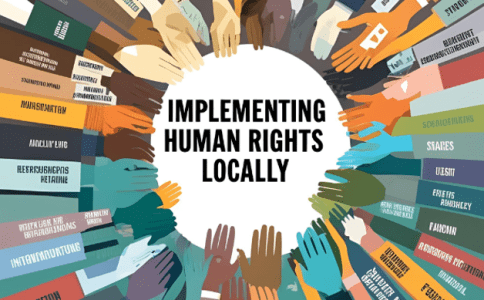
HREA: Online course Implementing Human Rights Locally

HREA is offering a new online course Implementing Human Rights at the Local Level from September 10 -October 21. A half hour information session with course instructor Corey Barr will take place on Wednesday, June 25th at 9:30 am EDT. Register here for a Zoom link or to have future access to the recording. 

The course is designed to equip municipal leaders, local human rights commissions, CSOs and community advocates with knowledge and tools to implement international human rights law and a human rights-based approach at the local level. Learners will develop an action plan for advancing human rights in their own community.

For more information, including fees and how to register, visit here. The enrollment deadline is September 1st. Queries can be directed to learning@hrea.org. You are warmly welcomed to participate!

The HREA Team
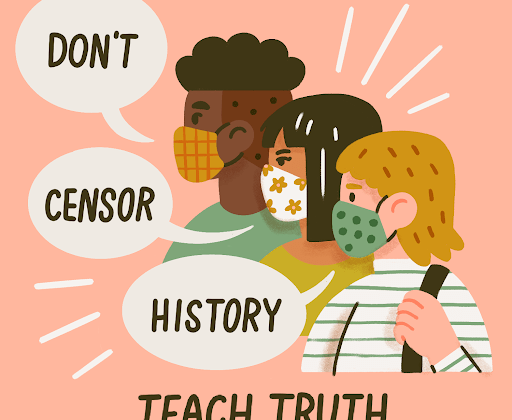
Teach Truth Day of Action Briefing 

The Zinn Education Project, in conjunction with more than 80 prominent racial and social justice organizations, will hold a national briefing on Tuesday, June 3, 2025, to discuss the growing chorus of diverse voices speaking out against the state and federal attack on students’ freedom to learn and educators’ freedom to teach.

For the past four summers, educators, students, parents, and allies have joined across the country to speak out against politicians attempting to restrict the freedoms of educators and students. This year, from Puerto Rico to Alaska, and many towns and cities in between, organizers will host more than 160 events on Saturday, June 7 and beyond. The goal is to raise awareness about how anti-history education laws and book bans — and their chilling effect — threaten any chance of an informed and engaged democracy. View a list of locations and activities.

What: Day of Action to Teach the Truth Briefing, June 3 (The Day of Action is on June 7.)

When: Tuesday, June 3, 2025, 1:00 pm – 1:50 pm EST

Where: Via Zoom.  

Why:  To draw attention to the chilling effects the restrictive laws introduced or passed that restrict, ban, or censor what educators can teach and what their students can learn about history, LGBTQ+ rights, race, and gender, among other topics.

>> Learn more and RSVP

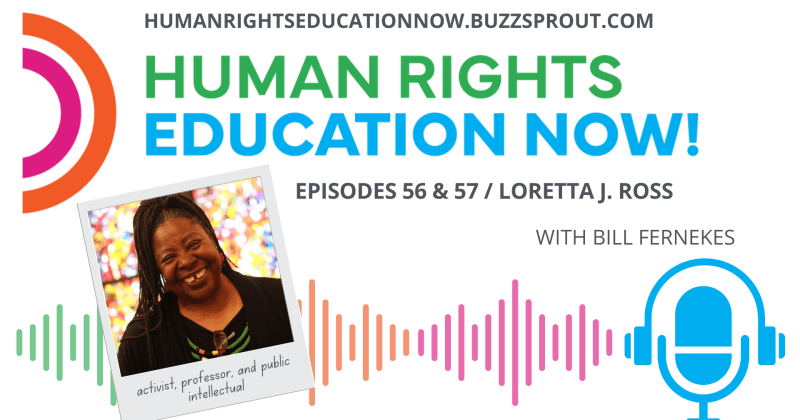
Episodes 56 & 57 with Loretta J. Ross

We are pleased to announce the availability of our latest installment of podcast episodes in Human Rights Education NOW! Episodes 56 & 57 feature conversations with Loretta J. Ross.

Loretta J. Ross is a Professor at Smith College in the Program for the Study of Women and Gender, where she teaches courses on white supremacy, human rights, and calling in the calling-out culture. A lifelong activist and scholar, she co-created the theory of Reproductive Justice and has led national movements for over five decades, including organizing the 2004 March for Women’s Lives and serving as the director of SisterSong from 2005 to 2012. Loretta has held leadership roles in organizations such as the National Black Women’s Health Project and the D.C. Rape Crisis Center, where she was one of the first African American women to serve as director. She is a MacArthur Fellow (Class of 2022), a 2024 National Women’s Hall of Fame inductee, and the author of multiple books on reproductive justice and social change, including Calling In. A survivor of rape, incest, and sterilization abuse, Loretta continues to inspire through her resilience, scholarship, and commitment to justice. She is also a mother, grandmother, and great-grandmother.

Episode 56:  Loretta J. Ross, Part One

In this episode, Loretta J. Ross reflects on her lifelong commitment to human rights education (HRE), inspired by leaders like Shulamith Koenig and Dr. Martin Luther King Jr.’s vision of a “Triple Revolution” toward a human rights movement. She shares how she’s infused HRE into her work since the 1990s, including founding the National Center for Human Rights Education, which trained activists and promoted widespread distribution of the Universal Declaration of Human Rights (UDHR). Loretta discusses her work on the 14th Amendment, highlighting its importance for reproductive rights and immigrant justice. She also outlines the founding of SisterSong, a reproductive justice collective built on shared values across political divides, emphasizing bodily autonomy and family rights. Finally, she describes her current teaching at Smith College and her focus on transforming “call-out culture” into compassionate, effective activism—a theme explored in her latest book.

Topics Discussed:

  • Human rights journey: Inspired by Shulamith Koenig and Martin Luther King, Jr.’s vision of a human rights revolution
  • HRE activism: Creation of the National Center for Human Rights Education; UDHR advocacy; “human rights cities”
  • 14th Amendment: Advocacy for inclusive application to immigrants, women, and marginalized groups
  • SisterSong: Co-founding, core principles of reproductive justice, bridging pro-life and pro-choice dialogues
  • Teaching approach: Addressing call-out culture with compassion; promoting constructive activism over cancel culture
  • Final reflections on sustaining change and mentoring youth activists

Full topic listing available for PDF download HERE.

Listen on our Buzzsprout podcast website HERE

Episode 57:  Loretta J. Ross, Part Two

Loretta J. Ross discusses her approach to teaching about white supremacy, framing it as both an ideology and a social construct tied to identity. She emphasizes the importance of truth, evidence, and history in defending academic freedom—especially in the face of authoritarian practices like those seen during the Trump administration. Loretta offers strategic recommendations for institutions under attack, advocating a “Block and Build” approach and urging Diversity, Equity, and Inclusion (DEI) efforts to align with the legal and moral power of human rights. She highlights human rights education as an accessible, non-threatening tool rooted in dignity and justice, especially important for marginalized communities. Loretta underscores the need for children to learn the Universal Declaration of Human Rights (UDHR) and credits Shulamith Koenig and Maya Angelou as key influences in her work.

Topics Discussed:

  • Teaching white supremacy: Ideology vs. Identity; combating fascism through academic freedom
  • Institutional strategy: “Block and Build” approach; pivot DEI to human rights framework
  • Human rights education: Universal, legally grounded, and dignity-centered; critical for underserved communities
  • Historical advocacy: Raising the minimum wage and expanding the definition of human rights beyond civil/political rights
  • Role models: Influence of Shulamith Koenig and Maya Angelou’s legacy
  • Education reform: Advocacy for including UDHR in K–12 public education
  • Final reflections on lasting emotional impact over words

Full topic listing available for PDF download HERE.

Listen on our Buzzsprout podcast website HERE.

Thank you for supporting the Human Rights Education NOW! podcast!

Informed Engagement: Using Experiential Learning and Case Studies to Empower and Inspire Students

Join this collaborative webinar from the Center for Civic Education and History UnErased to explore how experiential civic learning and case studies can equip students with the knowledge, skills, and confidence to advocate for issues they care about. This session features practical tools and lessons from Project Citizen and the primary source-based teaching materials from History UnErased’s Intersections & Connections US History, Civics, and Social Studies supplemental curriculum to help you guide your students in developing and presenting policy proposals and historical insights in public forums.

June 3, 2025, 7:00-8:30 pm EST, virtual

>> Register

Advanced Training Course on International Criminal Jurisdiction and Children in Armed Conflict

The Secretariat Universities Network For Children in Armed (UNETCHAC) will be holding its Advanced Training Course on International Criminal Jurisdiction and Children in Armed Conflict. The course will take place both in person at the University Niccolò Cusano in Rome and online, from 9 to 13 June 2025. This intensive five-day program offers a multidisciplinary perspective on the protection of children in armed conflict and the role of international justice in addressing grave violations.

Sessions will be conducted in English, June 9–13, 2025 from 9:30 am to 1:00 pm CET.

In addition, two interactive afternoon sessions from 2:30 pm to 4:30 pm CET will be dedicated to two thematic workshops.

Participants will receive a certificate of attendance upon completion.

Here is the link to the application form that can be filled out online: Application Form

Full details on the course structureand registration proceduresare available at: https://www.uninetworkforchildren.org/advanced-training-course-2025

If you want more the course email addressunetchacadvancedcourse@gmail.com

Human Rights MA continuing education master’s program at University of Vienna

The one-year (60 ECTS Credits) hybrid continuing education master’s program “Human Rights” of the University of Vienna has a jurisprudential profile. The program will provide insights to theoretical legal questions and also convey practical skills that are necessary for working in the field of human rights. Admission requirements are:

  • University degree in Legal Studies or University degree particularly in Economic, Natural, Social Sciences or Humanities (min. 180 ECTS Credits)
  • Sufficient English skills to follow and participate in lectures (B2)
  • Cost:  EUR 7,350 per semester (duration 2 semesters). 

You can learn more about at https://www.postgraduatecenter.at/en/programs/law/human-rights/

June 29, 2025. Webinar on Disability!   

The Global Forum for Teacher Education will be holding its Global Interactive Inclusive Summit on Sunday, 29th June 2025 at 3:00 PM (UK time)

LIVE on the Global Forum for Teacher Educators’ Facebook Page https://www.facebook.com/GlobalTeacherForum/


World-renowned speakers will deliver keynote speeches, including:

Marcie Roth, Executive Director and CEO, World Institute on Disability

The Commissioner of the Commission for the Rights of Persons with Disability, Malta

Dr. Yvonne Vissing, Professor at Salem State University

Professor Vemel Resh Ramasamy

The summit will also feature a panel discussion, a film screening, and a workshop on inclusive filmmaking.You can follow them online at Facebook  https://www.facebook.com/GlobalTeacherForum/ to learn more about their events and resources!

Order Free Educational Materials Today! 

Woven Teaching is now offering printed copies of our materials free-of-charge to educators in the United States! To request lessons and curricula, please complete this order form.

Some of our materials include:Are We Responsible? Responsibility to Protect in the Age of Atrocity
Consider where responsibility lies for preventing or stopping global atrocities, as well as the potential challenges faced by international actors when making decisions about intervention.Defending Democracy: Lessons for Building Resilience and Taking Action
Engage with 15 lessons inspired by Timothy Snyder’s On Tyranny: Twenty Lessons from the Twentieth Century. Students develop knowledge about civic engagement and global citizenship while developing critical thinking, media literacy, and community-building skills.Free & Equal: Human Rights Around the World
Learn about international human rights standards and stories of real people who have had their rights violated and have defended their rights or the rights of others. Students explore the Universal Declaration of Human Rights and the framework it provides in the struggle for human rights around the world.Liberty or Death: Exploring the Haitian Revolution
Explore the history of the Haitian Revolution, a crucial event in our study of world history. Students will also learn about Haiti’s “Double Debt”–the price that France forced Haiti to pay for its freedom.Neutralizing the Revolution: The Black Panther Party and the FBI
Analyze primary sources from the Black Panther Party, Chairman Fred Hampton, and the Federal Bureau of Investigation’s COINTELPRO operation (1956-1971). The lesson includes a discussion guide for the film Judas and the Black Messiah.Stages of Genocide: A Toolkit for Educators
Explore Dr. Gregory Stanton’s “Ten Stages of Genocide” and examine case studies of historical genocides.Uncovering Misinformation: Expression, Propaganda, & Human Rights
Understand freedom of expression as a basic human right, misinformation, the role of the media, and propaganda.

Request Materials

You can also download these resources and many more at WovenTeaching.org.