We are excited to share resources for educators going back to their classrooms. All of these materials are free and downloadable at woventeaching.org.
Defending Democracy: Lessons for Building Resilience and Taking Action Based on the framework of Professor Timothy Snyder’s New York Times book, On Tyranny: Twenty Lessons from the Twentieth Century, the lessons of Defending Democracy highlight ways that young people can take action to protect democracy and fight authoritarianism. Highlights of Defending Democracy:An emphasis on critical thinking, media literacy, and collaboration, and community buildingHighly accessible, practical, and action-orientedAdaptable and created for either high- or low-technology environmentsGlobal and US-based examples, as well as historical and contemporary case studies. Download Defending Democracy
Human Rights Education Implementation Toolkit Responding to recent threats and uncertainty about the future of democratic institutions and non-profits in the U.S. and globally, Woven Teaching is currently focusing on the dissemination and implementation of our human rights education materials across a wide network of educators.We believe strongly that community power and education are the best tools available to promote and protect human rights. Because of this, we have created a Human Rights Education Implementation Toolkit. The goal of this is to be able to quickly provide schools and organizations with the resources, tools, and support needed to implement Woven Teaching’s resources–curricula, trainings, and other materials–in order to meet the needs of their communities. Toolkit
Free Printed Materials We are now offering printed copies of our materials free-of-charge to educators in the United States! To request lessons and curricula, please complete this order form.
For more information about other Woven Teaching materials and resources, please visit woventeaching.org/resources.
William R. “Bill” Fernekes taught social studies and Spanish from 1974-1987 at Hunterdon Central Regional HS in Flemington NJ, later serving as supervisor of social studies from 1987 to his retirement in 2010. He has been a consultant to the U.S. Holocaust Memorial Museum, the New Jersey Commission on Holocaust Education, and numerous other scholarly institutions. He is a recipient of the Mel Miller Award from the National Social Studies Supervisors Association as the outstanding social studies supervisor in the U.S., the Distinguished Service Award from the Rutgers Graduate School of Education Alumni Association and the Lifetime Achievement Award in Human Rights Education from HRE USA.
Episode 60: Bill Fernekes, Part One
In Part One, Bill Fernekes shares his journey into human rights education, beginning with his early exposure to Holocaust education and activism through organizations like Amnesty International and Facing History and Ourselves. He reflects on how these experiences shaped his teaching practice and views on the need for early, comprehensive human rights education, especially as a more inclusive alternative to traditional U.S. civics frameworks. As a founding member of Human Rights Educators USA, Bill discusses the organization’s growth and potential areas for expansion. He highlights the power of storytelling and testimony in Holocaust education, the challenges of teaching sensitive topics like LGBTQ+ inclusion, and the growing threats to democracy and human rights in schools. He also addresses the gap between human rights education and policy, citing Bernie Sanders as an example of rights-based political discourse. The episode closes with a preview of Part Two.
Topics Discussed:
Early influences: Holocaust education, Amnesty International, and teaching integration
Education & human rights: Need for early, holistic, and inclusive human rights education
HRE USA: Founding, achievements, and growth opportunities
Teaching challenges: Using testimony, LGBTQ+ inclusion, and community resistance
Policy & advocacy: Bridging education with rights-based policymaking
Preview of Part Two and closing acknowledgements
Full topic listing available for PDF download HERE.
In Part Two, Bill Fernekes emphasizes the need to balance theory and practice in human rights education (HRE), advocating for curriculum transformation grounded in dignity and decolonization. He explores the link between human rights, public policy, and poverty, highlighting programs like the California Task Force and Human Rights Close to Home. Bill stresses that HRE should empower—not indoctrinate—students. He critiques the U.S. for not ratifying the UN Convention on the Rights of the Child and envisions its integration into education. Looking ahead, he supports expanding the podcast’s scope with new hosts and more youth involvement. He honors role models Nancy Flowers and Paul Robeson, emphasizing the power of lived values and universal advocacy. Bill calls for mandatory human rights education in all teacher licensure and professional training programs, closing with gratitude and reflections on the importance of resisting injustice.
Topics Discussed:
Balancing HRE theory and practice; curriculum transformation and dignity
Decolonizing education and connecting HRE to public policy and poverty
Advocacy vs. indoctrination in educational settings
UN Convention on the Rights of the Child: U.S. resistance and educational potential
Podcast future: Dialogues, youth voices, and expansion beyond K–12
Role models: Nancy Flowers and Paul Robeson’s lasting influence
Key recommendation: Require HRE in all teacher licensure and training programs
Final reflections and closing acknowledgments
Full topic listing available for PDF download HERE.
OPEN CALL FOR APPLICATIONS: Join the official Preselection Committee for the 14th Annual SIMA Awards, celebrating the finest in documentary and XR impact storytelling from 140 countries. Our committee brings together filmmakers, editors, producers, curators, journalists, human rights advocates, social justice innovators, and postsecondary students.
As a committee member, you’ll have the exclusive opportunity to screen up to 100 documentary films (features and shorts) submitted to SIMA, using our evaluation tools and metrics to assess each project. This entirely virtual experience runs from September to December, allowing you to participate at your own pace.
By joining, you’ll gain unparalleled insight into groundbreaking independent filmmaking, earning a certificate of completion for your CV, and deepening your perspective on the world through these compelling stories. We’re looking for candidates with a strong passion for human rights, social justice, and social innovation who are studying or working in media, communications, journalism, international development, or human rights.
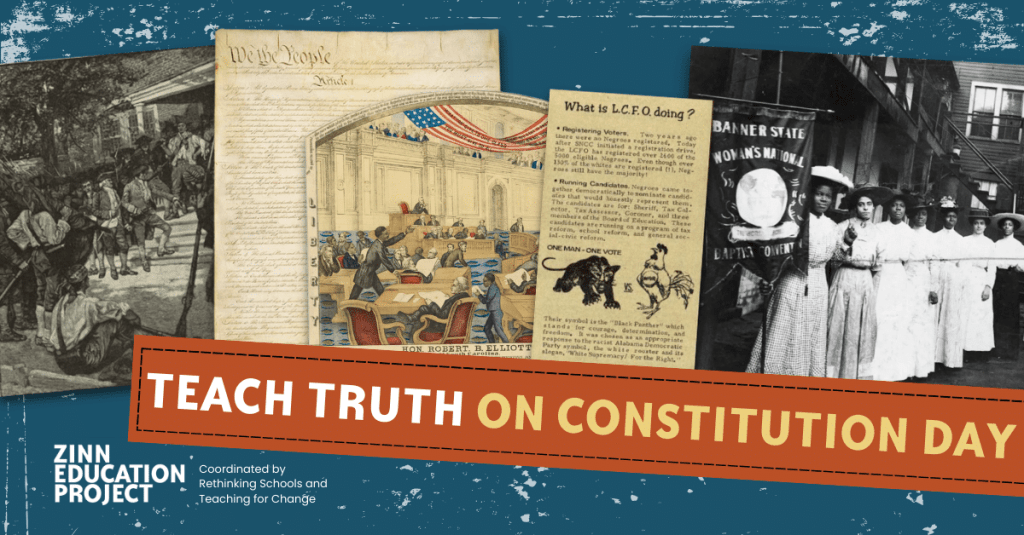
For the 5th annual Teach Truth Day of Action, Seven Stories Press, Haymarket Books, and One Signal Publishers donated books on the theme of education censorship. These titles are offered in support of teachers who insist on their students’ right to study history and contemporary issues. The right seeks to indoctrinate students with a whitewashed narrative of history. Our goal is for young people to engage in intellectual inquiry, to pursue real questions about history, and to apply historical insights to contemporary issues.
Please share stories about the impact of anti-history education laws, executive orders, the chilling effect in your school or school district, and whether or how educators and communities are resisting this repression. This will help the wider public understand how education is being censored and how some school districts are responding by defending the freedom to learn.
To request one of the books, provide a full paragraph response to the question on the form linked on the button below. Note, we can only ship to addresses in the United States.
As long as you meet the criteria and respond to the questions, you will receive one of the books. The Voices of A People’s History titles will be shipped by the publisher and the other titles will be sent from the Zinn Education Project office. Other than with the publisher, we do not share your contact information.
Join us in supporting this year’s Training As Action Series (TAAS) by co-sponsoring the 2025–26 sessions! We have 9 sessions planned, starting September 13.
Ways to contribute:
Online: Via our fiscal sponsor atEvery.org(we’ve recently transitioned from GiveGab to Every.org)
Electronic Transfer: To our fiscal sponsor, the Center for Transformative Action
Check: Payable to Center for Transformative Action. Mail to: Center for Transformative Action, Attn: HRE USA, P.O. Box 760, Ithaca, NY 14851
We are happy to provide an invoice for processing your contribution.
If you have any questions, please contact TAAS at TAAS@hreusa.org.
2025–26 TAAS Overview (tentative schedule)
Module 1: Defending Democracy through Human Rights Education 🗓️ September 13, 2025 11am-12:30pm ET
Module 2: Protecting Civic Space and Civic Power: Mobilizing for Rights and Democracy 🗓️ September 29, 2025. 7PM-8:30PM ET
Module 3: Climate Justice, Action, and Human Rights: Protecting People and Planet in a Time of Crisis 🗓️ October 13, 2025 7PM-8:30PM ET
Module 4: Freedom, Facts, and Filters: A Dialogue on Misinformation 🗓️ October 27 or November 1, 2025 – 7PM-8:30PM ET
Module 5: Human Rights Education as a Response to Polarization 🗓️ November 10, 2025 7PM-8:30PM ET
Module 6: Intersectional Democracy: Race and Migration 🗓️ January 26, 2026 7PM-8:30PM ET
Module 7: Intersectional Democracy: Gender and Disability rights 🗓️ February 9, 2026 7PM-8:30PM ET
Module 8: Digital Rights and Democracy: Navigating AI, Surveillance, and Privacy 🗓️ March 9, 2026 7PM-8:30PM ET
Module 9: Action Lab: Strategies for Defending Democracy and Human Rights 🗓️ April 13, 2026 7PM-8:30PM ET
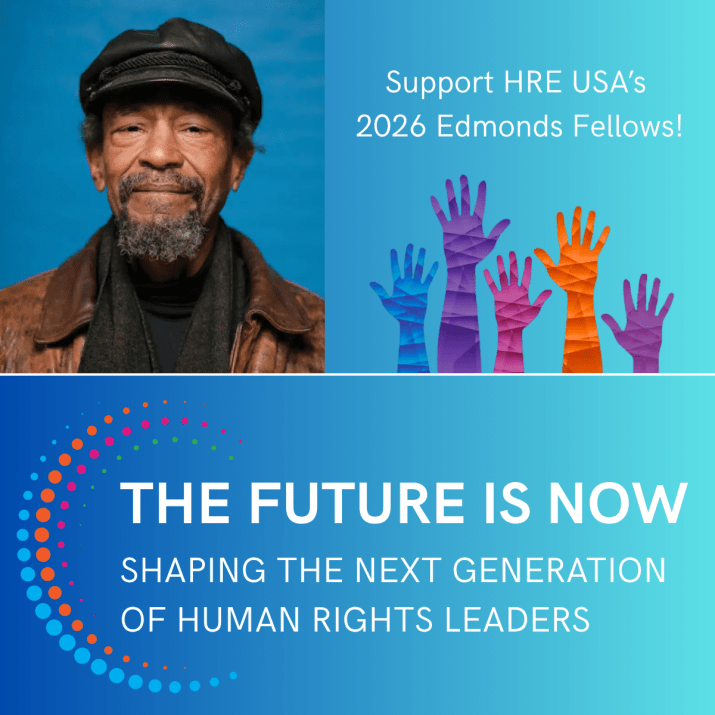
My name is Areianaz (Ara) Eghbali, and I was honored to serve as the 2024-25 Fundraising Strategy and Sustainability Edmonds Fellow with HRE USA. I recently graduated from UC Berkeley, where I studied Psychology, Public Policy, and Journalism, and focused on youth advocacy, education equity, and community health during my time as an undergrad.
As a Fellow, I supported the development of fundraising strategies, conducted donor and foundation research, and contributed to efforts aimed at sustaining and expanding access to human rights education. The experience deepened my understanding of how nonprofits can advance justice not only through direct advocacy, but also through long-term organizational sustainability.
The Edmonds Fellowship shaped the way I think about systems change. It strengthened my commitment to working at the intersection of education, health, and human rights, and gave me both the skills and confidence to continue that work beyond the fellowship. Since then, I’ve contributed to public health research, designed student-centered programming, and supported initiatives grounded in equity and youth leadership.
I’ll soon be starting a full-time role in healthcare technology, with plans to continue deepening my work at the intersection of health, education, and justice. The Edmonds Fellowship continues to shape the lens I bring to all my work – one grounded in justice, collaboration, and the belief that human rights education is essential for building a more equitable world.
Kara Anderson, 2023 Edmonds Fellow
Hello, I’m Kara Anderson from Lansing, Michigan. I worked on the Training As Action Series as a 2023 Edmonds Fellow and a 2024 Fellow Supervisor and Research Scholar. Working with HRE USA allowed me to gain hands-on experience in the human rights field—building my confidence as a human rights advocate and equipping me with lifelong skills and connections. These helped me greatly this past year as I applied for law school, and this fall I will be attending the University of Michigan Law School as a part of the Class of 2028. I plan to use the law to continue advocating for human rights locally and around the world.
Hallie McRae, 2022 Edmonds Fellow
My name is Hallie McRae, a 2022 Kirby Edmonds Fellow Alum who worked on the Community Engagement and Development project. During my fellowship, I worked alongside my mentors Kristi Rudelius-Palmer and Kristina Eberbach to strengthen connections with HRE’s nationwide member base, fundraise for future generations of fellows, and highlight the crucial work of HRE USA and those who comprise the network. This fellowship was a stepping stone for integrating my passions for human rights advocacy, youth activism, and widespread human rights education into a national nonprofit setting. My time learning under Kristi and Kristina was truly grounds for the continuation of my passion for HRE on a bigger scale, and the mentorship I received from them impacts me to this day— so much so that I have continued my journey with HRE USA as a Steering Committee member and an Edmonds Fellowship Supervisor for the past two years. I graduated from UC Berkeley last year with a degree in Political Science, Human Rights, and Public Policy, and since then, I have worked on a successful political campaign and worked at a Preschool while studying for the LSAT exam, hoping to pursue a journey as a human rights lawyer. I will be continuing with HRE USA while returning to my advocacy roots as a Youth Advocacy Assistant for Human Rights Watch Student Task Force in Los Angeles this year.
Veronica Bido, 2022 Edmonds Fellow
Hi, I’m Veronica Bido, and I was a Kirby Edmonds Summer Fellow in 2022, based in Baltimore, Maryland. With my co-intern, we focused on strengthening HRE USA’s outreach and communications strategy—interviewing members across the country and developing storytelling tools to support grassroots organizers. The fellowship grounded me in the belief that human rights education isn’t just theory—it’s a tool for movement-building, helping young people understand their power, challenge systems, and imagine new possibilities. It taught me the importance of making advocacy accessible and culturally relevant. I’m currently based in Charlotte, North Carolina, working at the intersection of entrepreneurship and social impact.
Natalie Roach, 2022 Edmonds Fellow
During my 2022 Edmonds Fellowship, I supported efforts to assess and strengthen the HRE-USA Regional Representative community by cultivating key data on needs and priorities of current serving regional representatives and developing a plan for continued, sustainable opportunities for collaboration, learning and fellowship. Through this experience, I got to know human rights advocates across the country and gained an understanding of the human rights education landscape in different regions. It was wonderful to have such supportive mentors and advocates that I looked up to and learned from. I carry my Edmonds Fellowship experience with me wherever I go, whether that’s working on equitable access to public spaces in New York City or improving climate justice outcomes in the D.C. region.
Julie Rinker, 2022 Summer Intern
My name is Julie Rinker, and I interned with Human Rights educators during Summer 2022. During this time, I reviewed the resources provided in the K-12 Human Rights Educators’ library to improve the teacher interfacing experience. In the years since my internship, I have enjoyed opportunities to learn from other teachers who are finding creative ways to demand dignity and rights for all of their students. I am currently studying special education and advocating for the end of the death penalty. In the future I would like to continue working to incorporate human rights education into reading interventions for 13-23 year old students.
We are pleased to announce the availability of our latest installment of podcast episodes in Human Rights Education NOW! Episodes 58 & 59 with Kristina Eberbach!
Kristina Eberbach is a consultant specializing in human rights and education programming. She works as a strategy and curriculum specialist for the Human Rights Close to Home Program at the University of Connecticut. She teaches human rights at both the University of Connecticut and Columbia University. Kristina serves on the steering committee of Human Rights Educators USA and co-founded the University and College Consortium for Human Rights Education. Previously, she served as Deputy Director and Director of Education at Columbia’s Institute for the Study of Human Rights, where she developed numerous human rights programs and workshops. Her international work spans research, advocacy, and education in countries such as Colombia, Iraq, Kenya, Myanmar, and South Africa. She is currently pursuing a doctorate at Utrecht University, with a focus on critical human rights education in transitional contexts. Kristina holds a Master’s in International Affairs from Columbia University and a Bachelor’s in Foreign Service from Georgetown University.
Episode 58: Kristina Eberbach, Part One
Kristina Eberbach shares her journey into human rights and human rights education, shaped by her international studies and activism. She reflects on the risks of political manipulation in human rights work and her experience collaborating with law faculties in Myanmar, emphasizing the need for long-term projects to track progress. At Columbia University’s Institute for the Study of Human Rights, she highlights achievements such as developing internships and funding for students, while advocating for a critical approach that balances content knowledge with skills, dispositions, and pedagogy. Kristina also discusses her current consulting work with the Human Rights Close to Home project, which centers student voices, fosters intergenerational learning, and supports teachers in integrating human rights education across curricula.
Topics Discussed:
Origins: Her interest in human rights and human rights education
International impact: Overseas study, activism, and Myanmar law faculty partnerships
Long-term projects: Importance of documenting change and growth
Columbia Institute work: Achievements, challenges, critical approaches, and student support
Current consulting: Human Rights Close to Home; intergenerational focus and student voice
Curriculum development: Helping teachers integrate HRE across subjects
Full topic listing available for PDF download HERE.
Kristina Eberbach discusses the limited knowledge many U.S. students have about human rights and the importance of understanding human rights language to address justice and equity issues effectively. She connects human rights education (HRE) to social justice movements, emphasizing its legal foundations and its role in envisioning and creating a more just world. Kristina highlights the need to focus on achieving human rights goals, especially in advancing women’s rights, rather than debating who deserves rights. She emphasizes the importance of education in fostering equal opportunity and references Arendt’s idea of “the right to have rights.” Inspired by Human Rights Educators USA, colleagues working under authoritarian regimes, and Dr. Martin Luther King Jr.’s words, she calls for broadening public discourse on human rights beyond classrooms to make it central in society.
Topics Discussed:
Student understanding: Limited knowledge of human rights language and concepts
HRE & social justice: Legal connections, strategic choices, and envisioning a just world
Women’s rights: Focus on achieving rights, not debating their validity
Education’s role: Advancing equity and justice through human rights education
Role models: HRE USA network, advocates in authoritarian contexts, MLK Jr.’s teachings
Key recommendation: Expand human rights discourse beyond schools into public life
Full topic listing available for PDF download HERE.
The 2025 O’Brien Awards recognize an individual and an organizations that has made a significant contribution to human rights education in the United States.
To encourage a new generation of human rights activists, the 2025 Youth in Action for Human Rights Awards recognize youth leaders, one individual and one group, whose work explicitly or implicitly reflects and promotes human rights values. Because young activists must nominate themselves for the awards, HRE USA urges adults familiar with their work to urge them to apply.