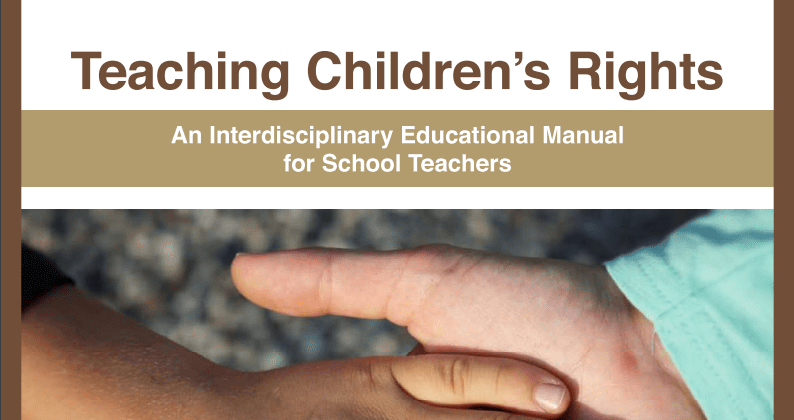
Human rights education is increasingly acknowledged as an essential part of building a human rights culture. But does it work? This brief by the Danish Institute for Human Rights reviews existing literature on human rights education for children, presenting an overview of findings on the outcomes of human rights education.
The studies include academic articles, book chapters and evaluation reports from the period 2000-2020. Methods for measuring human rights education outcomes include quantitative surveys; qualitative interviews, focus groups; observations; and document collection. The studies vary from small-scale ethnographic studies involving a few dozen people to large-scale surveys including 100,000 respondents.
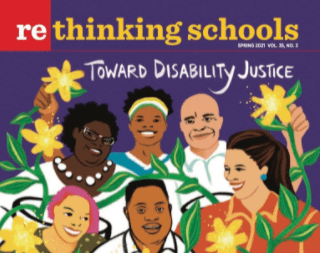
We know white supremacy is woven into the fabric of American culture and society. It’s also woven into our education system. The Spring 2021 issue of Teaching Tolerance magazine, traces some of the threads of white supremacy through classrooms and schools—and how students, educators, and others are working to break those threads.
Read this issue for stories about how white supremacy appears in curricula and policies, even in teacher training programs. Learn how educators and students are working to dismantle it in their communities.
Ending slavery in America required so much more than official declarations and battlefield victories.
Freedom gets built up over time—through a billion tiny, everyday acts. It’s there in the chance to enlist and fight for a cause. It’s there in the effort to reunite families torn apart by the cruelty of slave trading. It’s there in the right to learn to read or found a church or decide how you want to make a living. And it’s there in the insistence on the legal recognition of the right to do all these things.
That’s the freedom you’ll hear about on this podcast, and you’ll hear about it directly from the people who seized it. All of the stories on this show are drawn from archives of voices from American history that have been muted time and time again.
Date: Friday, April 16, 2021 Time: 1 – 2 pm ET Location: Virtual Webinar Cost: FREE
Presenter:Justin Hansford, Executive Director, Thurgood Marshall Civil Rights Center, Howard University.
Description: Justin Hansford will discuss his experience in community-based legal advocacy and address how he incorporates his practitioner experience into his teaching and scholarship. Hansford worked to empower the Ferguson community through community based legal advocacy. He co-authored the Ferguson to Geneva human rights shadow report and accompanied the Ferguson protesters and Mike Brown’s family to Geneva, Switzerland, to testify at the United Nations. He has served as a policy advisor for proposed post-Ferguson reforms at the local, state, and federal level, testifying before the Ferguson Commission, the Missouri Advisory Committee to the United States Civil Rights Commission, the President’s Task Force on 21st Century Policing, and the Inter-American Commission on Human Rights.
The Robert F. Kennedy Human Rights video and music contest deadlines have been extended! You still have time to use art as a tool for community building, self-expression, and collective transformation.
Music Contest Students create a song that uses their own voices and perspectives to take a stand against human rights abuses. Their music can contribute to creating meaningful change on any pressing human rights issues such as racial justice, the right to health care, domestic violence, or criminal justice. The contest, presented in partnership with the GRAMMY Museum, is open to any genre of music, and entries will be judged by a panel of GRAMMY-nominated artists. The grand prize winner will perform at a GRAMMY-related event and participate in a virtual student showcase.
Music Contest Deadline:Monday, May 17 at 11:59 p.m. EDT.
Video Contest The Speak Truth video contest invites students to make a three- to five-minute video that uses creative storytelling to teach people about a human rights issue through the work of a human rights defender. This is an opportunity for students to share their thoughts on what is happening in the world around them in a creative and original way. The format is open to documentary, stop-motion, narrative, or other innovative explorations. The grand prize-winning film will premiere at the Tribeca Film Festival in New York City.
Video Contest Deadline: Monday, April 26 at 11:59 p.m. EDT
Date: Friday, April 2, 2021 Time: 4 – 5 pm ET Location: Virtual Cost: FREE
In the first few months of 2021 alone, trans youth have been the target of efforts to restrict or eliminate LGBTQ rights. Whether it’s banning trans athletes from competing in school sports or prohibiting gender-affirming health care, these bills have brought the culture wars to our classrooms like never before and send a dangerous message to trans and nonbinary kids who have long struggled to find acceptance and understanding to live as their authentic selves.
Ahead of Transgender Day of Visibility next week, RFK Human Rights and the Human Rights Campaign have launched a new trans rights lesson plan that provides teachers with the compelling material they need to help students become better allies of and co-conspirators with the LGBTQ community.
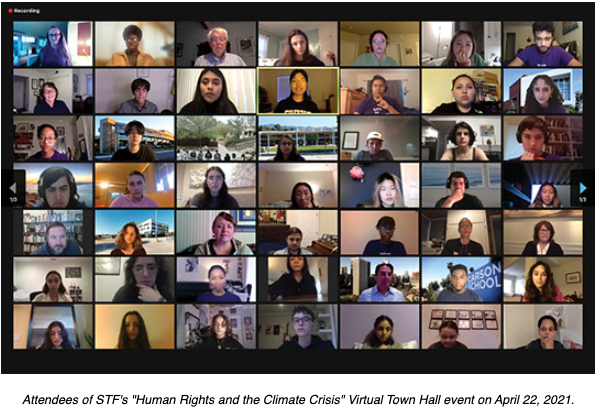
Join them on April 2 for a deeper dive into the need for trans rights education during a virtual panel event featuring a host of activists and educators. Panelists will discuss the urgent need for trans rights education that centers and celebrates LGBTQ lives and how we can equip educators and students to become better advocates for this community through resources, empowerment, and support.
It’s been 3 years since the March For Our Lives and the work to end gun violence is as relevant today as ever with 9 mass shootings in the past week – a painful reminder that we don’t have the luxury to celebrate progress.
Today March for a Lives is a powerful movement that continues to fight to end gun violence, with an expanded view of how we achieve a better world.
Learn how you can get involved – join an open call with March for Our Lives at 8PM ET tonight on Twitter and Facebook to look at how far we’ve come, and talk about what’s coming next.
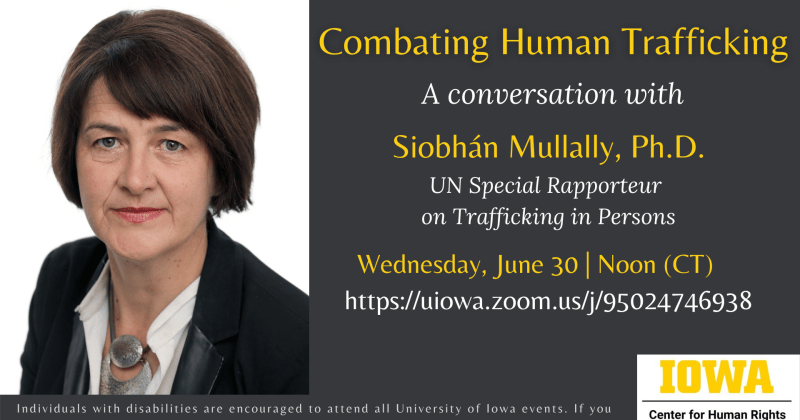
Description: In celebration of Women’s History month, CGS-Minnesota presents this uplifting program featuring women and girls dedicated to empowering women to achieve their full potential. Speakers include:
Melissa Nambangi is recognized as a community leader through her strong advocacy on behalf of African women. Originally from Cameroon, she speaks French and English fluently and understands the struggles that African females face in acculturating to American society. She was a renowned journalist/news anchor on Cameroonian television and a Hubert Humphrey International Fellow at the U. of M. She earned her Master’s Degree in Mass Communication and Journalism with a minor in Women’s Studies from the University of Minnesota. After serving as a Women’s Advocate in shelters for victims of domestic violence around the Twin Cities, she created the Minnesota African Women’s Association, MAWA, in 2002.
Javaria Tareen is a Communications Specialist, Journalist, Legal Expert and Social Activist from Balochistan Pakistan. She has Master’s Degree in Mass Communication, International Relations and, is also a Law graduate. She is also a recipient of 3 Fulbright scholarships. Currently CEO of the BIRD, and serves on several significant official Pakistan government Task Forces and Agencies, such as Technical Advisor to Chief Minister Balochistan, Chairperson of Trade Corporation of Pakistan, Balochistan Programme Coordinator for the Prime Minister’s Task Force on the Knowledge-Economy
Coco Leonard is a high school junior and the co-founder of the nonprofit Dynamic Champions of Sisterhood nonprofit, which strives to foster girls to be the empowered leaders of our future and to change how they feel about themselves so that we can solve the issues of today. Coco has been a Youth in Government’s Model Assembly appoint official for three consecutive years, and participating in Model United Nations for three years.
Sunny Leonard is a young activist who is passionate about women’s empowerment, the environment, and mental health issues. She is co-founder of the nonprofit Dynamic Champions of Sisterhood nonprofit, a virtual book club that empowers girls to change the world.
Daisy Leonard is co-founder of the Dynamic Champions of Sisterhood nonprofit and holds leadership positions involved in human rights, activism, interfaith, and female empowerment. Her ultimate goal is to empower young girls worldwide to have the skills, confidence, and ability to join the world’s conversations and create a long-term impact in their own communities. Daisy speaks English and Chinese.
EVENT DETAILS: When: Monday, April 19, 2021 Time: 4:30 – 5:30 pm ET Where: Zoom Cost: FREE
Presenter: Kaylee Bradford, Columbia University
Description: This presentation will discuss how preservice HRE is currently being taught in the United States and to what extent these courses incorporate ‘good practices’ recommended in the field. It will also elaborate on current opportunities and challenges for HRE integration into teacher education programs. Following the presentation, there will be an open discussion with the purpose of identifying our next steps to equipping future teachers with HRE competencies.