
Order your copies of the Convention on the Rights of the Child (CRC) and Universal Declaration of Human Rights (UDHR) at our shop!


Order your copies of the Convention on the Rights of the Child (CRC) and Universal Declaration of Human Rights (UDHR) at our shop!

For over a decade, the Speak Truth to Power video contest has empowered students to use filmmaking as a tool for social change. Screened at the Tribeca Film Festival, these films shine a light on pressing human rights issues, celebrate the defenders working to create change across the nation, and drive real action and advocacy.
Students from all backgrounds can participate in the contest by submitting short three- to five-minute videos—whether they be documentaries, narrative films, or experimental—without needing expensive equipment or prior video editing skills.
Students interested in participating should submit their films for consideration by May 3, 2026.
LEARN MORE AND SUBMIT TO THE CONTEST →
Students should follow the guidelines for their category, grades 6-12 or College Guidelines. Submissions are judged by a panel of film industry experts, actors, and educators.
Questions? Email Benjamin Higgins at Higgins@rfkhumanrights.org.

GENEVA – The United Nations Human Rights Council today called on the United States to resume its cooperation with the Universal Periodic Review (UPR), a mechanism that calls for each UN Member State to undergo a peer review of its human rights record every five years. In its decision, the Human Rights Council also announced that it would reschedule the UPR of the U.S. for 2026, while leaving open the possibility for it to be scheduled sooner. Read more
Recording of the Information Meeting on the UPR process in the United States of America
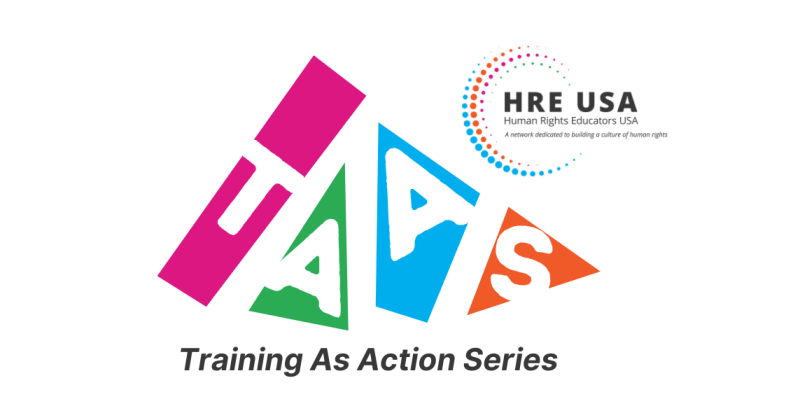
Monday, November 10th, 7 pm ET
This module explores how Human Rights Education (HRE) equips educators and organizers to address controversial issues while promoting dialogue and free expression. Participants will learn strategies to engage diverse perspectives, mediate conflict, and create safe spaces for open discussion. The module highlights how HRE can reduce polarization, foster empathy, and encourage constructive civic engagement.
Register here
Human Rights Educators USA’s annual Training as Action Series (TAAS) is a virtual training series focused on bridging personal and collective action on some of the most critical human rights issues of today. TAAS creates an educational space to connect and collaborate with others in human rights education and training. It also gives participants the skills and information needed to take action on rights issues in their communities.
The 2025–2026 Training as Action Series will center on the theme, “Defending Democracy and
Human Rights in a Changing World.” This year’s sessions will explore urgent issues such as misinformation, protest rights, climate justice, and digital surveillance, highlighting how human rights education can equip communities to respond with clarity, courage, and collective action. Those who attend six or more sessions will receive a certificate from HRE USA. 2025-26 TAAS Flyer
HRE USA is a project of the Center for Transformative Action.
International Association for Human Rights Education
3rd International Conference: IAHRE 2026
Re-imagining Human Rights Education in a Turbulent World
26-27 May 2026
Venue: Zfsl Münster
Germany
Conference Announcement and Call for Papers
Abstract Deadline Extended until 17 November 2025
The International Association for Human Rights Education (IAHRE) was established in 2023 at the 15th International Conference for Education and Democratic Citizenship (ICEDC) hosted by Sutherland School of Law at University College Dublin, Ireland. IAHRE’s goal is to support the development of human rights education research, scholarship and practice. IAHRE’s scholarly journal is the award-winning Human Rights Education Review founded in 2018 and published by Taylor and Francis.
The IAHRE Conference is a meeting place for scholars, researchers, graduate students, education policymakers, and civil society activists from across Europe and internationally. It builds on the work of the WERA International Research Network on Human Rights Education, coordinated by Professors Audrey Osler and Hugh Starkey. It provides a unique opportunity to present and discuss current research and policy relating to human rights education and questions of human rights within education. There is an expectation that presenters will submit their final revised conference papers to Human Rights Education Review.
Call for papers
We invite papers for the 2026 IAHRE Conference Re-imagining Human Rights Education in a Turbulent World. IAHRE 2026 is an interdisciplinary conference, and we welcome scholars fromsociology, education, law, history, politics, geography and other relevant disciplines. Papers should review and critically reflect on human rights education policy and practice, child rights education and the wider area of education and human rights. NGO colleagues who have case studies of campaigns are likewise invited. We welcome contributions from researchers at all stages of their careers.
IAHRE 2026 is taking place in a world that is increasingly unstable, with growing authoritarianism and challenges to human rights and democratic values in all regions. Climate change, disinformation, terrorism, war and conflict, hate speech and xenophobia confront us in the starkest terms. Educators and activists are working in an unstable world where human rights and international standards are called into question and increasingly derided by political leaders from both right and left.
In many democratic countries the public is ill-informed about human rights standards and their relevance to our daily lives. Human rights educators need to be creative in their efforts to ensure that both teachers and students know their rights and are ready to defend the rights of others. In selecting our IAHRE 2026 theme – Re-imagining Human Rights Education in a Turbulent World –we are mindful of both the challenges and the opportunities that educators in varied contexts face.
Human rights education (HRE) is supported by UN Sustainable Development Goal 4. HRE has a vital role in maintaining hope and enabling people of all ages to reimagine a positive future. Children and young adults frequently struggle to make their voices heard and children face barriers to democratic participation since they are excluded from formal political mechanisms and decision-making processes. HRE has a key role to play in addressing and challenging intergenerational justice.
Any vision of a sustainable future necessarily includes ‘sustainable lifestyles, human rights, gender equality, promotion of a culture of peace and non-violence, global citizenship and appreciation of cultural diversity and of culture’s contribution to sustainable development’ (SDG 4.7). IAHRE 2026 invites contributions that build on these themes and includes but is not limited to papers addressing:
Abstracts of no more than 300 words including paper title, your name, institutional affiliation and contact email should be sent, no later than Monday 3 November 2025 to: Professor Frauke Matz frauke.matz@uni-muenster.de
All abstracts will be peer reviewed by members of the IAHRE Conference Steering Committee. Please indicate whether you would prefer to give an oral or a poster presentation. Applicants will be informed of the outcome of the review by the end of November 2025.
A full draft of accepted papers should be submitted by 30 March 2026. Your revised paper should be submitted to Human Rights Education Review by 6 July 2026.
Registration will open in October 2025
Conference fees:
IAHRE Annual Members should pay or renew their membership for 2026 (£65 GBP) prior to registration to benefit from IAHRE member conference rates
Earlybird rates (registration by 4 March 2026)
IAHRE members £295 (GBP)
Non-members £395
A limited number of bursaries may be available for unwaged/ low-waged PhD candidates who are IAHRE members and whose proposal (poster/oral) is accepted for presentation.
Standard rates (after 4 March 2026)
IAHRE members £395
Non-members £495
Conference Steering Committee:
Professor Frauke Matz Conference Co-Director, University of Münster
Professor Audrey Osler Editor-in-Chief Human Rights Education Review, University of Leeds
Professor Hugh Starkey IAHRE Treasurer+ corresponding committee member for academic questions, University College London h.starkey@ucl.ac.uk
Dr David Rott Conference Co-Director, University of Münster


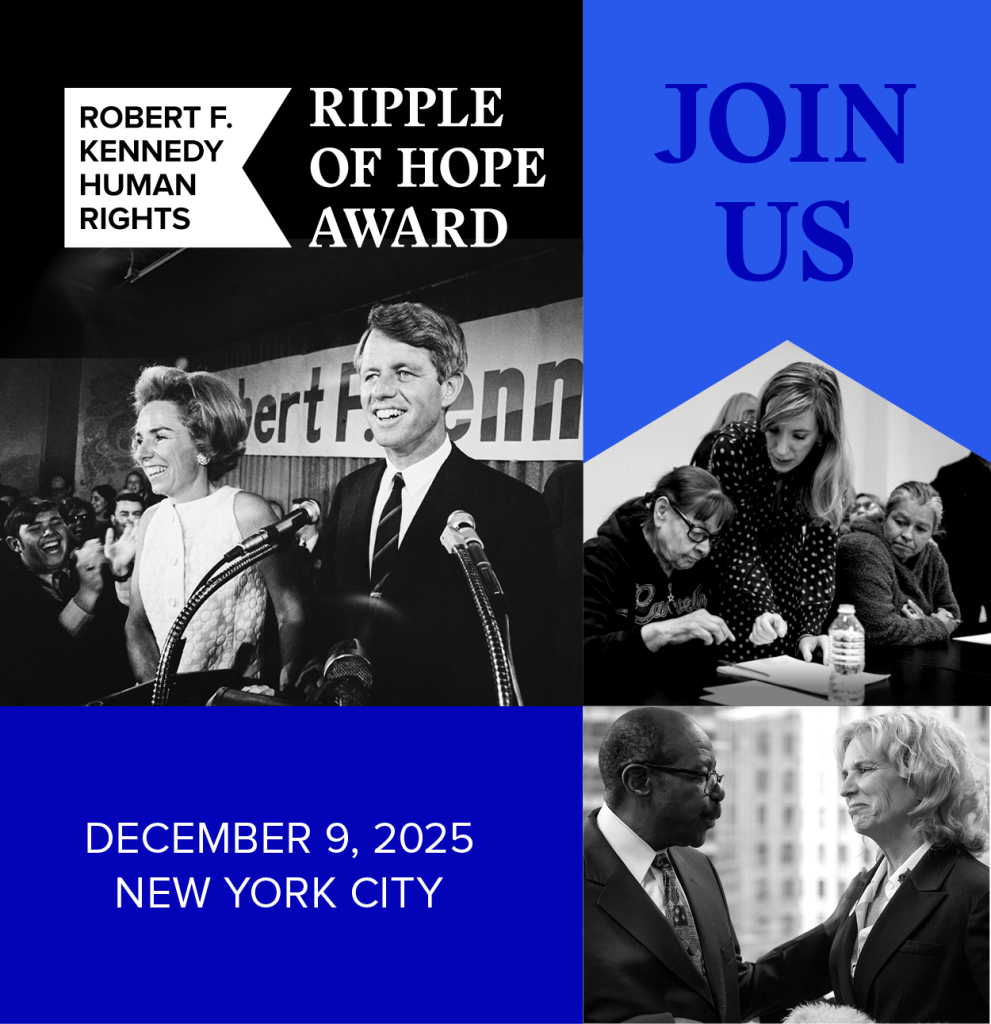
This year’s laureates—Martin Cabrera, Jr., Stephen Colbert, Earvin “Magic” Johnson, Stefano Lucchini, and Darren Walker—will be honored at the annual Ripple of Hope Gala on December 9 in New York City.
Press Release: Robert F. Kennedy Human Rights Names 2025 Ripple of Hope Award Recipients

1-3pm EST, Tuesday November 11, 2025
This event reaffirms our commitment to international cooperation and processes that support the progressive realization of human rights within the United States and throughout the world. At the time of this event, the United States government should be undergoing its fourth Universal Periodic Review (UPR), a process in which all United Nations Member States reflect on a country’s progress towards realizing human rights and have an opportunity to ask questions and make recommendations. The United States government withdrew from the UPR process in August, making it the first country to refuse to take part in this peer review. This event is being held to provide a space for advocates and organizations working within the U.S. and internationally to reflect on concerns and opportunities for advancing the right to food at this moment. We will review progress towards realizing the Right to Food in the United States and discuss priorities for next steps. Participants will have the opportunity to:
– Hear from members of the National Right to Food Community of Practice who have been engaging with the Universal Periodic Review process this year;
– Build connections and solidarity with others working to advance the right to food in the United States and internationally;
– Contribute to strategies for next steps towards realizing the right to food.


Election season offers a dynamic opportunity—and a few challenges—for both educators and students. It is an ideal time to explore core democratic principles, such as the consent of the governed, the rule of law, and federalism. Expand your civic education toolkit by diving into the Center’s voting and elections resources. This curated collection includes four civics inquiry lessons that guide students through primary source investigations with questions like “Do we need a constitutional amendment to protect voting rights?” and “Is the Electoral College still necessary?” These student-centered inquiries not only encourage critical thinking but also strengthen foundational knowledge of the Constitution and its role in our democracy.

Human Rights Education Now! Episodes 66 & 67 with youth advocates are live!
Jude Armstrong is a writer and abolitionist from New Orleans, Louisiana. They organize alongside queer youth to protest anti-LGBTQ+ legislation and advocate for social justice. Their poetry has appeared in The Amistad, Palette Poetry, and Bottlecap Press, with recognition from Adroit Journal, YoungArts, and Teen Sequins. Jude is currently studying Human Rights and English at Columbia University.
Jaya Field is a senior at the University of Washington, double majoring in International Studies and Law, Societies & Justice. Her work explores how international legal systems impact marginalized communities. She has presented research internationally and gained field experience through study abroad programs in Perú and Italy, focusing on queer, migrant, Indigenous, and disability rights.
Ella Henry is an 18-year-old Mexican Samoan student from Boise, Idaho, and a sophomore at Columbia University majoring in Race and Ethnicity Studies. She serves as Advocacy Coordinator for the Housing Equity Project, volunteers as a Spanish interpreter for asylum seekers, and interns at the ACLU of Idaho, focusing on immigrant rights and outreach.
Episode 66
In episode 66, hosts Ava Kreutziger and Elizabeth Schwab speak with youth advocates Jude Armstrong, Jaya Field, and Ella Henry about how education shapes their understanding of human rights. They share experiences with Eurocentric and exclusionary curricula, the absence of marginalized voices, and how these gaps motivated their activism. Ella discusses her “Know Your Rights” trainings for immigrant communities, while the group reflects on censorship through omission and the need for inclusive, truth-based education that connects classroom learning to real-world justice movements.
Episode 67
In episode 67, hosts Ava Kreutziger and Elizabeth Schwab continue the conversation with Jude Armstrong, Jaya Field, and Ella Henry, focusing on global perspectives, intersectionality, and creative activism. Jaya discusses her comparative research on queer rights in Sweden and Poland; Jude explores poetry and abolition as tools for liberation; and Ella reflects on cultural shifts toward inclusivity. The guests share strategies for resisting censorship, promoting restorative justice, and incorporating lived experiences into education. They conclude by envisioning a future where empathy, representation, and critical thinking are central to all learning environments.
Buzzsprout, Spotify, Apple Podcasts, Google Podcasts, Deezer, PlayerFM, Pocket Casts, and the HRE USA website,
HRE USA would love to learn how listeners are using episodes in their classrooms and with their communities. Please send comments and ideas for classroom use to kristi@hreusa.org.
Thank you for supporting the Human Rights Education NOW! podcast!
 HRE USA