Episodes 23 & 24 with Sandra Sirota are available on Human Rights Education NOW!

We are pleased to announce the availability of our latest installment of podcast episodes in Human Rights Education NOW! Episodes 23 & 24 feature conversations with Sandra Sirota, EdD. Sandra Sirota, EdD is Assistant Professor in Residence in Human Rights and Experiential Global Learning and Director of Dodd Impact’s program, Human Rights Close to Home (HRCH), at the University of Connecticut. Her work explores human rights and social justice education in the United States and South Africa. Her current research focuses on how students and teachers conceptualize and actualize human rights in conjunction with HRCH. Sandra’s recent articles have appeared in Comparative Education Review and the International Journal of Human Rights Education. She co-chairs the University and College Consortium for Human Rights Education. Sandra earned her doctorate from Columbia University.

Episode 23: Sandra Sirota, Part One

In Episode 23, Sandra Sirota shares her early interest in human rights and human rights education, her work with Human Rights Watch, the creation of the Advocacy Lab, and the Connections Project at Cornell University. Next, she discusses the Human Rights Close to Home Program, the importance of civic engagement for students, and the challenges of implementing human rights education (HRE) in schools. Furthermore, Sandra elaborates on Tibbitts’ three models of HRE, the importance of diverse approaches to HRE in varied communities, and research with the Social Justice Project in New London, Connecticut schools. Sandra then explains the challenges and strategies for educating pre-service and veteran teachers about HRE, resistance to HRE implementation in schools, and approaches to civic engagement with HRE. Lastly, Sandra highlights the importance of intergenerational collaborations, and the significance of peer support that strengthens solidarity among students. 

Topics discussed:

  • Early interest in human rights and human rights education (HRE)
  • Human Rights Watch
  • Advocacy Lab
  • Connections Project at Cornell University
  • Human Rights Close to Home Program
  • Importance of civic engagement 
  • Challenges to implementing HRE in schools
  • Tibbitts’ three models of HRE
  • Importance of diverse approaches to HRE 
  • Research with the Social Justice Project 
  • Challenges and strategies for educating pre-service & veteran teachers 
  • Importance of intergenerational collaborations 

Full topic listing available for PDF download HERE.

Listen on our Buzzsprout podcast website HERE.


Episode 24: Sandra Sirota, Part Two

In Episode 24, Sandra Sirota describes the influence of Paulo Freire’s work, the  significance of structured dialogue in social justice pedagogy, and the role of emotions in the classroom. Next, she discusses the changing public human rights discourse in the USA; the power of human rights language; and using tools from peace, anti-racist, and social justice education. She then shares her thoughts on using human rights education (HRE) to advance the rights of children, and how expanding HRE into new places has the potential to impact cultural values and laws by changing patterns of thinking, and how young people educated in HRE can act as change agents. Sandra elaborates on her concerns over rising authoritarianism and the importance of using global HRE during these times as well as increasing opportunities for teacher and teacher educator training in HRE. Lastly, Sandra highlights the ways Dr. S. Garnett Russell and Jane Goodall have been influential role models for her work in HRE, and one critical change which she views would advance HRE in the US.

Topics discussed:

  • Influential work of Paulo Freire
  • Dialogue in social justice pedagogy
  • Role of emotions in the classroom
  • Changing public discourse around HRE in the USA
  • Power of human rights language
  • Using tools from peace, anti-racists, and social justice education
  • Human rights education as a way to advance childrens’ rights
  • Potential of HRE to impact cultural values, laws, patterns of thinking 
  • Young people in HRE as change agents
  • Rising authoritarianism and importance of global HRE
  • Teacher training and HRE
  • Dr. Garnett Russell and Jane Goodall as influential role models
  • One idea for critical change to advance HRE in the U.S. 

Full topic listing available for PDF download HERE.

Listen on our Buzzsprout podcast website HERE.

Civic Learning Week National Forum 

Tuesday, March 12, 2024 | George Washington University and National Archives, Washington D.C.

2024 and Beyond: Civic Learning as a Unifying Force

Register to Attend    Register to Watch

U.S. Supreme Court Justices Sonia Sotomayor and Amy Coney Barrett will join the Civic Learning Week National Forum on March 12, 2024, livestreamed from Washington, D.C. Showcasing the Justices’ shared commitment to high-quality civic education, the featured conversation will be moderated by Eric Liu, co-founder and CEO of Citizen University, and address student questions about the judicial system and civic engagement, as well as the Justices’ legal career paths. The discussion will highlight the civic knowledge, skills, and dispositions gained through civic education, and why civics is essential to sustaining and strengthening constitutional democracy in the United States.

The forum will also include panel discussions and research presentations on Information Literacy, Bridging the Divide, and Elections as a Teachable Moment, concluding with a Fireside Chat between Archivist of the United States Colleen Shogan and Secretary of Education Dr. Miguel Cardona (tentative). View full schedule and ticketing options.

New Manual: Human Rights and Social Justice: Social Action and Service for the Helping and Health Professions

An Instructor’s Manual has recently been released for the third edition of Dr. Joseph Wronka‘s book Human Rights and Social Justice: Social Action and Service for the Helping and Health Professions (Cognella, 2023).

The manual consists of PowerPoints with corresponding notes; additional questions for discussion and social action activities (already in the book); and a test bank, consisting of both objective and essay questions.

If you would like a personal copy – or a free examination copy as an instructor – go to https://titles.cognella.com/human-rights-and-social…. You can get a digital or hard copy at a 20% discount by entering Wronka20 at checkout.

Dash-Muse Teaching Fellowship: The Georgetown Law Human Rights Institute (HRI) is seeking a legal teaching fellow

HRI is recruiting for the 2024-2026 Dash-Muse Teaching Fellow!

Deadline: February 25, 2024

The Georgetown Law Human Rights Institute (HRI) is seeking a legal teaching fellow for a two-year appointment beginning in July 2024. The position is designed for a Georgetown Law J.D. or LL.M. graduate with human rights experience, an interest in teaching, and a commitment to a career in human rights.

The Dash-Muse Teaching Fellow will work closely with HRI faculty to develop, teach, and supervise students in the year-long Human Rights Advocacy in Action Practicum. Practicum projects are co-designed with human rights NGOs and seek to advance human rights at the domestic or international level. The fellow, faculty, and students travel during Week One in January to conduct in-country fact-finding or other fieldwork.

The fellow will also collaborate with HRI leadership on Institute programs and events, including by: developing the 1L Human Rights Associates Program; providing academic and career advice to students interested in human rights; organizing human rights conferences and events; supporting the campus human rights community; engaging with the Institute’s human rights alumni network; maintaining strong ties to human rights practitioners; and supporting the Institute’s efforts to create human rights fellowship opportunities for graduating students. Additional responsibilities may be determined based on the fellow’s specific background and interests, as well as the Institute’s needs.

This fellowship is open to Georgetown Law graduates (J.D. and LL.M.) with at least two years of experience, preferably in human rights or international law. The annual salary is $70,000 for the first year and $75,000 for the second year; the fellow will also receive full LL.M. tuition and fees as well as health and dental benefits. In addition to the responsibilities described above, during his/her first year, the fellow pursues a program of graduate study through a seminar course on clinical pedagogy, taught by the Georgetown clinical faculty. The fellow may also audit regular law school courses. Upon successful completion of the fellowship, the fellow is awarded an LL.M. degree in Advocacy. For more information on fellowship benefits, please visit: https://www.law.georgetown.edu/experiential-learning/clinics/clinical-teaching-fellowships/fellowship-applications/.
Zinn Education Project: Everyday Solidarity: Interracial Organizing Stories from The Sum of Us

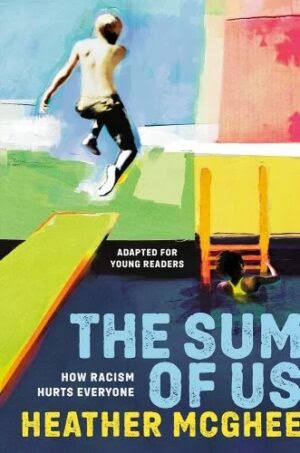
On Monday, February 5, 2024, policy advocate Heather McGhee will discuss The Sum of Us: How Racism Hurts Everyone, the young readers’ edition of her bestselling book and the podcast companion series.

Heather McGhee is distinguished lecturer of urban studies at CUNY School of Labor and Urban Studies. In addition to testifying before Congress, drafting legislation, and developing strategies for organizations and campaigns, McGhee is chair of the board of Color of Change.

McGhee will be in conversation with Jesse Hagopian and Cierra Kaler-Jones. Jesse teaches Ethnic Studies and is the co-adviser to the Black Student Union at Garfield High School in Seattle. He is an editor for Rethinking Schools, the co-editor of Teaching for Black Lives, editor of More Than a Score: The New Uprising Against High-Stakes Testing, and on the leadership team of the Zinn Education Project. Cierra serves as the executive director of Rethinking Schools. Cierra is also on the leadership team of the Zinn Education Project, and is a teacher, a dancer, a writer, and a researcher. She previously served as director of storytelling at the Communities for Just Schools Fund.

Monday, February 5, 2024 at 4pm (PT)/7pm (ET), virtual

>> Learn more and register

Dartmouth: Assistant Director of the Native American Program (NAP)

Dartmouth believes that a 21st century liberal arts education integrates respect for, and understanding of, the unique and essential benefits of living, learning, and engaging in an inclusive global community. The Native American Program (NAP) supports the well-being and success of Indigenous students at Dartmouth. The NAP’s core work includes: advising and engagement, leadership and community development; education and training; and, advocacy.

Under the direct supervision of the Director of the Native American Program (NAP), the Assistant Director works collaboratively with departments and on committees to provide anchors of support to Native and Indigenous students. This is accomplished through the primary responsibilities: 1) Student Group Advising 2) Orientation Program Management 3) Professional Development 4) Advocacy, Consultation, and Intentional Collaboration, and 5) Assessment and Administration.

The Assistant Director provides event support to the Program Coordinator of Community and Leadership Development.

>> Learn more

  • 100% remote, U.S. based team
  • Firmwide in-person engagements a few times a year
  • Telework subsidy
  • Professional development stipend
  • 20 PTO days, 11 holidays and biannual firmwide shutdown weeks
  • Medical, dental, vision and life insurance
  • 401(k) match
  • Sales bonus eligibility

>> Learn more

Teaching for Change: Social Justice Books for All Ages on Palestine

Below are recommended titles for pre-K-12 and adults on Palestine. This list is important for children of Palestinian heritage to see themselves represented in the curriculum. Also, as FAIR explains:

Many children in the United States will never meet a Palestinian in person, and if they do, they may need to overcome the negative images and stereotypes that pervade popular culture: terrorist, religious extremist, misogynist, etc. For this reason, books are a critical if underused opportunity for kids to learn about the people of Palestine.

At our Zinn Education Project (with Rethinking Schools) we offer a collection of resources for teaching and learning about the current crisis in Palestine and Israel, through the lens of history.

The titles with reviews are noted with an asterisk (*). Some titles are recommended with a caveat. At the end of this page, we provide a list of titles on this theme, with reviews, that we do not recommend.

See related titles on these lists: Arabs and Arab Americans and Muslims.


>> Elementary | Middle School | High School | Adult | Learn More

>> Access resource

Black Lives Matter at School Week of Action

From February 5–9, 2024, educators and community allies will participate in the Black Lives Matter at School Week of Action.

This week of action is part of the Black Lives Matter at School Year of Purpose campaign to promote a set of national demands based in the Black Lives Matter 13 Guiding Principles that focus on liberation and racial justice in education for Black youth, educators, and all youth of color.

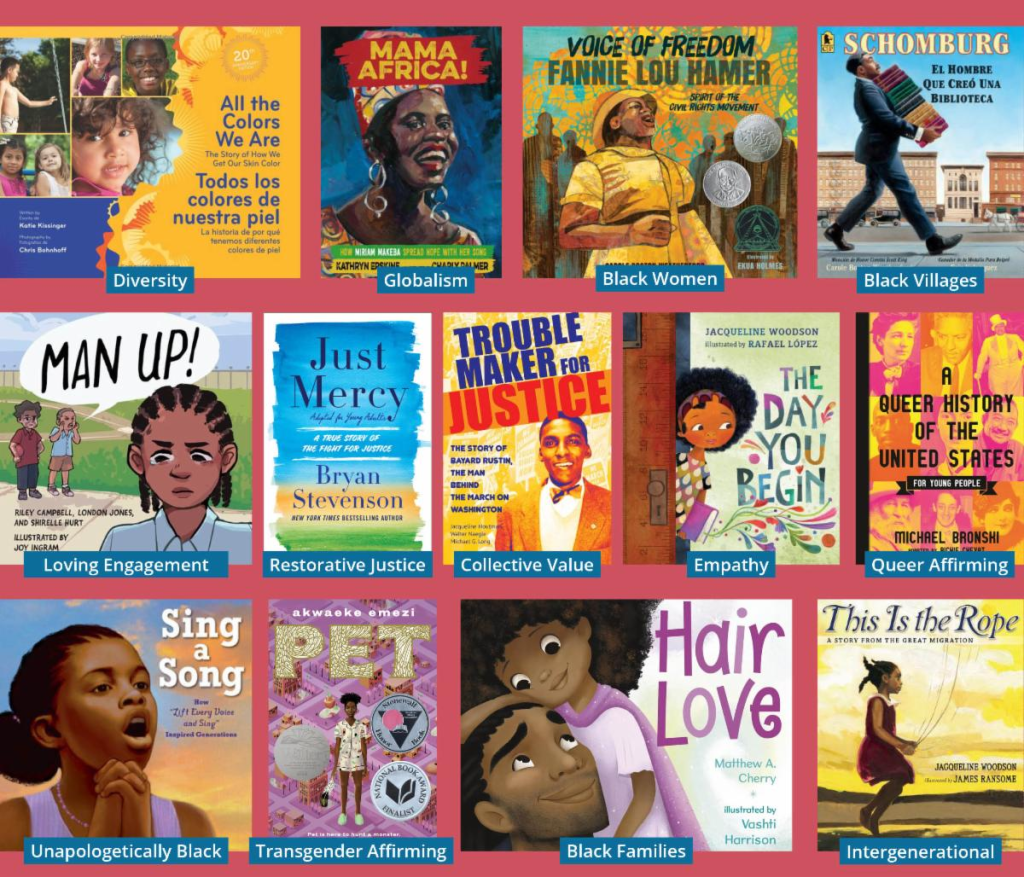
At Social Justice Books, you’ll find a growing list of recommended titles that center each of the Black Lives Matter 13 Guiding Principles, as well as additional recommended booklists.

Booklists