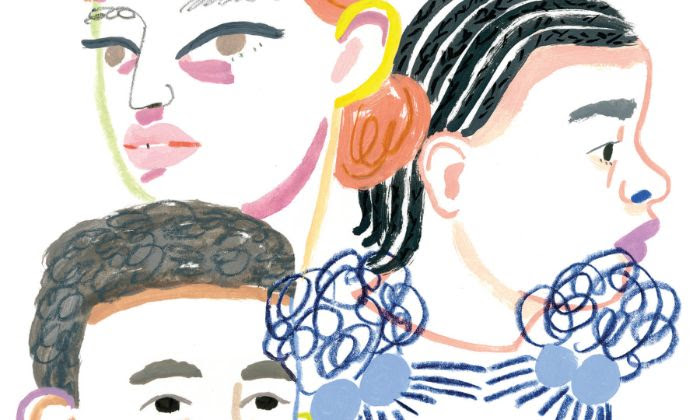
From a policy banning swim caps designed for natural Black hair to a ruling that several Black women can’t compete because of naturally high testosterone levels, some Olympic policies reflect stereotypes and discriminatory dress codes that many Black girls and women face in schools. As you prepare for next school year, check out these resources from Learning for Justice to help you assess your school’s dress code, advocate for inclusion, and check that you don’t reinforce harmful stereotypes about women and women athletes.
Are you looking for a curated summer reading list that celebrates diversity, inclusivity, and intersecting identities?
Each year, the We Are Kid Lit Collective produces a wonderful summer reading list. They select books by and about IPOC (Indigenous and People of Color). Chosen books are thoroughly selected, discussed, and vetted by two or more members.
The We Are Kid Lit Collective’s work is premised upon the principles of social justice, equity, and inclusion and centers IPOC voices in children’s literature in order to identify, challenge and dismantle white supremacy and both internalized and systematic racism.
By Keith C. Barton, Professor of Curriculum and Instruction at Indiana University from Social Education 83(4), p. 212–216
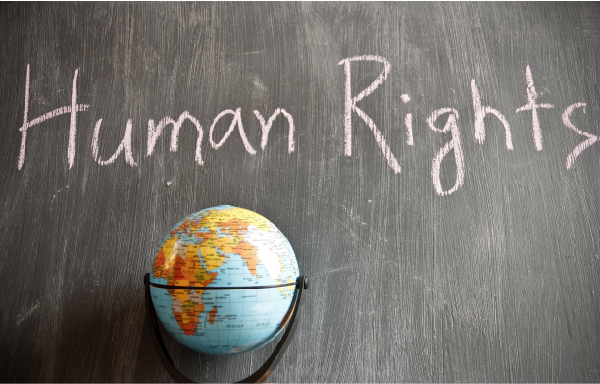
Educators around the world have advocated for human rights to become a core element of students’ social and civic learning. Although constitutional rights are typically the foundation for social studies and related subjects, human rights represent a universal and cosmopolitan vision, one that applies to citizens and non-citizens alike and is not restricted by national boundaries. Studying human rights can highlight our responsibilities to all fellow humans, not only those with whom we share national citizenship.
Human rights also point to a more stable foundation for safe, secure, and fulfilling lives. Constitutional protections can change with shifting political winds, and rights that once seemed secure can disappear when overturned in court, when leaders choose to interpret them in new ways, or when governments are overthrown. Although human rights have evolved over time (and continue to do so), and although their enforcement usually has less authority than national law, they nonetheless provide a societal vision that is more stable than the changing arena of national politics.
A new lesson, entitled “Digital Rights”, was added to HRE USA’s Curriculum Integration Guide. The lesson was prepared by Karen Hopkins and Shabnam Mojtahedi, HRE USA members in Washington DC and field-tested by HRE USA member and social studies teacher Jake Torsiello with students at Randolph HS in Randolph Twp. NJ.
As of August 1, 2021 John Terry, the NJ/PA regional representative for HRE USA, will assume the coordinator role for the Curriculum Integration Project as HRE USA Steering Committee member Bill Fernekes, moves on to other human rights-related projects.
Bill Fernekes
A tribute from John Terry on Bill Fernekes work… It was in 2014 that I was first introduced to Bill Fernekes and a working group of educators he had assembled at the Rutgers Graduate School of Education. I was an early career educator who had limited working knowledge of human rights but was passionate about developing quality and meaningful lessons for students in my social studies classes. Despite this background, Bill had invited me to develop a lesson plan that would model how to integrate human rights content and principles into a lesson for a history class I was teaching. Thus, with the guidance of Bill and my colleagues in this group, I had a crash course introduction to the world of human rights education. I found an affinity with this group of educators in that they were academically and professionally focused, while also dedicated to a shared set of principles and values, and I responded to Bill’s subsequent invitations to contribute to this group’s work.
In the years since, I have contributed model lesson plans to HRE USA’s Curriculum Integration Guide, served as a peer reviewer for other lesson plan contributors, and provided professional development based on the lessons I and others have contributed to the Guide. In addition, I also assembled a Service Learning for Human Rights Education Guide, which was published on HREUSA.org alongside the Curriculum Integration Guide’s lesson plans and other materials on HREUSA.org. If it was not for my work with this particular project in human rights education, I do not know if I would be the same practitioner of and advocate for human rights education that I am today. Last year, I was honored when Bill called upon me to serve as a Regional Representative for HREUSA.org, and this year, I intend to deepen my role as a volunteer for the organization by taking on responsibility for overseeing the open-ended work of developing the HRE USA Curriculum Integration Guide and making it come alive for the educators who may benefit from its existence.
HRE USA wants to thank Bill Fernekes for his vision, mentorship, and significant contribution to the development and implementation of this HRE USA initiative for the past six years!
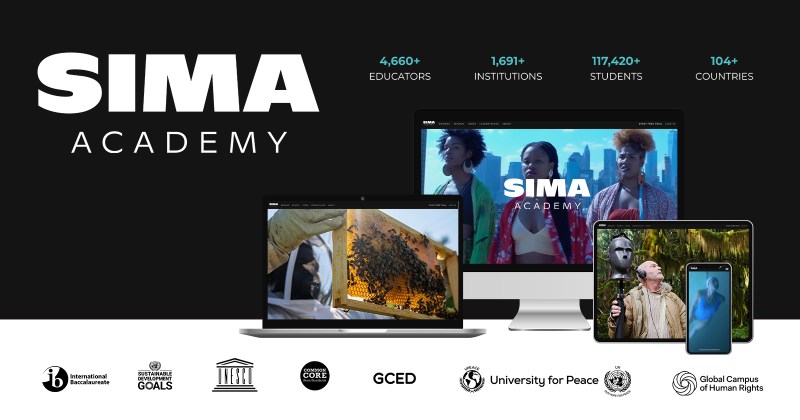
SIMA Academy is an award-winning collection of expert vetted short documentaries that inspire a more just, inclusive and sustainable world. Sourced from 140 countries by the annual international Social Impact Media Awards, the streaming platform is the“Netflix for Changemakers”, empowering educators and students in over 100 countries to advance Global Citizenship, Media Literacy, Diversity, Equity and Inclusion. Experience unprecedented insight into today’s global challenges and the social innovations addressing them through the personal stories of those on the frontlines.
Access to public education is a right afforded to all children, regardless of a child’s or guardian’s citizenship, immigration status, or English language proficiency. These rights were upheld by the U.S. Supreme Court in its landmark 1982 decision in Plyler v. Doe.
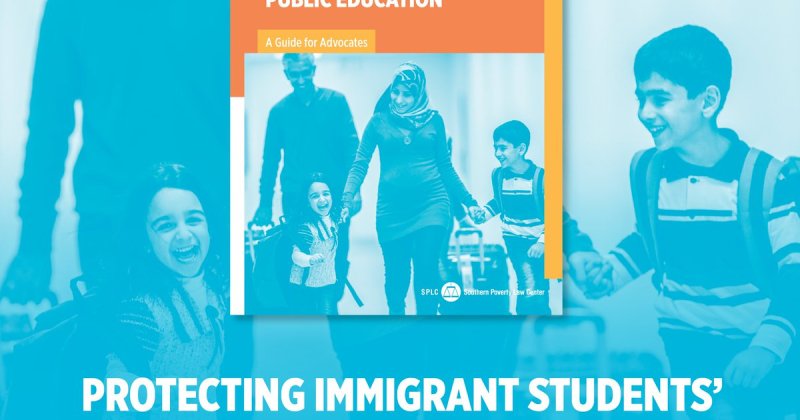
This new guide from the Southern Poverty Law Center, Protecting Immigrant Students’ Rights to a Public Education: A Guide for Advocates, offers information and recommendations that educators, caregivers, and other trusted adults can use to ensure that their school or district is meeting its legal responsibility to ELLs and immigrant students and families.
Designed to share with families and available in multiple languages, an accompanying pamphlet offers overviews of this information, easy-to-use reference lists, and links to further resources. You can check out all of the new resources for educators and caregivers here.
Roots & Shoots was founded by Jane Goodall, DBE in 1991, with the goal of bringing together youth from preschool to university age to work on environmental, conservation, and humanitarian issues. Educators can join their Roots & Shoots global community, and get access to a variety of resources to nurture the next generation of compassionate change-makers and leaders with 21st-century learning skills such as critical thinking, problem-solving, empathy, and collaboration. The Roots & Shoots model and curriculum guides students through the 4-Step Formula to identify projects, grow compassionate traits, and teach skills to cultivate a generation of change-makers. The program also offers From mini-grants and online courses for teachers.
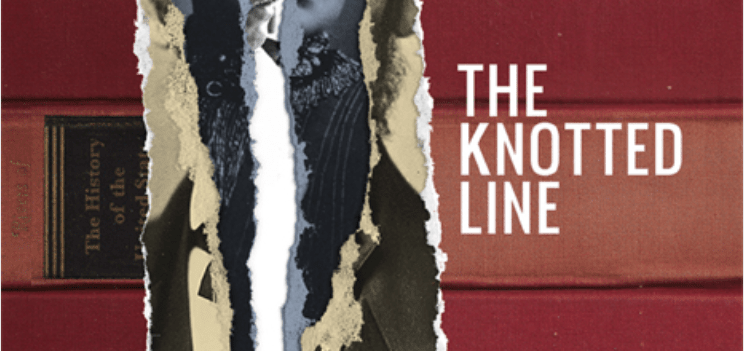
The Knotted Line is an interactive, tactile laboratory for exploring the historical relationship between freedom and confinement in the geographic area of the United States. With miniature paintings of over 50 historical moments from 1495-2025, The Knotted Line asks: how is freedom measured? Just as importantly, The Knotted Line imagines a new world through the work of grassroots movements for self-determination. This project has three major components:
Website – a collection of media and resources. Their online Timeline also has pages with more information on every historical moment in The Knotted Line.
EVENT DETAILS: When: July 13-15 Time: 11:30 – 4:30 ET Where: Live Stream Cost: $50
Description: This summit organized by Facing History and Ourselves aims to support educators and school leaders both individually and collectively as they move to culturally inclusive and equitable practices where all students can find their voice, become critical thinkers, and are fully engaged in their education.
Across the country, educators and administrators are acknowledging that schools themselves—both the practice of schooling and the outcomes students are achieving—are not equitable across lines of race and class. Facing History and Ourselves has designed a professional development model to help educators address these troubling and historically rooted disparities.
Through interactive and critically conscious pedagogy, educators will examine the history of American education, current systems of inequity, and gain the tools necessary to address these barriers to equity. This summit will feature a live keynote presentation by Dr. Gholdy Muhammad, author of Cultivating Genius, focusing on culturally and historically responsive literacy.
Participants will receive 15 professional development hours.
EVENT DETAILS: When: Tuesdays, July 20, July 27, and August 3, 2021 Time: 12pm – 2pm Where: Online Cost: FREE
Description: The free weekly workshops, led by Cymone Fuller and Sia Henry of the Restorative Justice Project at Impact Justice, will explore how educators can bring restorative justice practices and human rights principles into the classroom—modeling alternatives to punishment, including mediation and agreement, that allow students to develop deeper empathy, patience, active listening skills, ownership over their learning environment, and responsible decision making to support their social-emotional wellbeing for years and decades to come.
The three-part training series will feature local community leaders and human rights defenders who have put these principles into practice in their work to combat racial and ethnic disparities inside the classroom and in their communities. Educators will learn how restorative justice practices can be applied to end the school-to-prison pipeline and improve community well-being.
You can choose to attend one or more of the upcoming sessions:
July 20, 2021: 1st session – Restorative Justice Frameworks and Paradigms July 27, 2021: 2nd session – Building a Restorative Space in Your Community and School August 3, 2021: 3rd Session – Stories of Human Rights Defenders Impacted by Restorative Justice
For more information on the restorative justice training series, visit RFKHumanRights.org or email osterndorf@rfkhumanrights.org.






 HRE USA