Do you know someone who has made a difference through Human Rights Education?
Do you know someone who has made a difference through Human Rights Education?
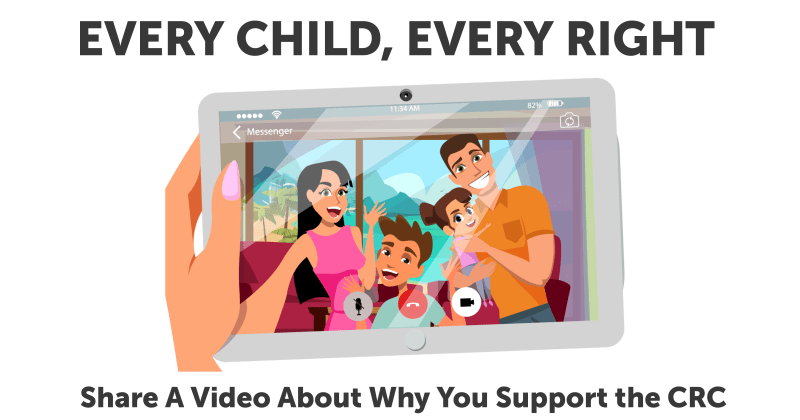

As part of the Every Child, Every Right Campaign in celebration of the 30th anniversary of the Convention on the Rights of the Child (CRC), HRE USA invites you to upload and share a short video answering the question:
Please share any thoughts, actions, or ideas that will inspire others to promote children’s rights! Videos should be no longer than 2 minutes.

The Convention on the Rights of the Child is 30! Find ways to celebrate, advocate, teach, and more!
Thirty years ago, on November 20th, world leaders adopted the UN Convention on the Rights of the Child (CRC) an international agreement on childhood. Now the most ratified of all international treaties, this historic commitment to the world’s children has radically transformed young lives across the globe. It sets out the rights that must be realized for children to develop to their full potential.
But still not every child gets to enjoy a full childhood. Still, too many childhoods are cut short. It is up to our generation to demand that leaders from government, business and communities fulfill their commitments and take action for child rights now, once and for all.

In honor of the 30th Anniversary, HRE USA has dedicated its latest edition of Human Rights Here and Now to the Convention on the Rights of the Child (CRC). We have also created an online toolkit of ready-to-use resources entitled, Every Child, Every Right! to help anyone learn and teach about the CRC!
To advocate for the rights of the child in the United States, HRE USA is also galvanizing support for U.S. ratification of the CRC through our CRC in the USA Campaign.
When: Thursday, October 17, 2019
Time: 7:00 pm EST
Where: Online Webinar
Cost: FREE
With more than 250 million migrants around the globe, including more than 65 million refugees, migration has sparked intense partisan debate, inspired advocacy, and changed the face of cities, neighborhoods, and schools.
Join Facing History and Ourselves, Write the World, and Share My Lesson for a FREE webinar that will explore powerful human stories behind this global trend in conversation with Sonia Nazario, the Pulitzer Prize-winning journalist and author of Enrique’s Journey: The True Story of a Boy Determined to Reunite with His Mother. Years after his mother left him behind in Honduras to seek work in the United States, Enrique embarked on a harrowing odyssey to find her. Join us to discuss the importance of stories in addressing today’s challenges of borders and belonging, and learn about Facing History and Ourselves’ extensive resources for teaching about immigration in social studies and literature classrooms.
Participants will receive access to Facing History’s study guide for the YA version of Enrique’s Journey, along with current events lessons and other multimedia resources.
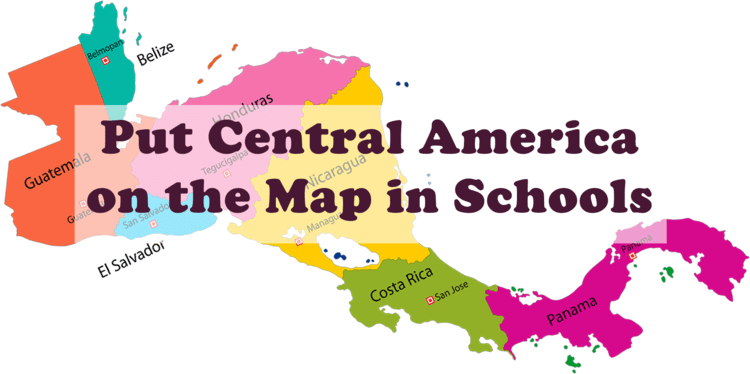
More than four million Central Americans reside in the United States and migration from the region is headline news. However, most schools teach very little about Central America, including the long history of U.S. involvement in the region. Central America is too-often portrayed as simply a strip of land on a map connecting North and South America. Students are left to imagine that their Central American heritage, or that of their peers, is insignificant. Teachers have learned little of the history themselves and there is a scarcity of literature in the school libraries.
To help fill this gap, Teaching for Change has launched the #TeachCentralAmerica campaign. The goal of the campaign is to encourage and support teaching about Central America in K-12 schools so that students can learn about this region, which has many ties to the United States through foreign policy, immigration, commerce, and culture.
This Friday, October 4th, HRE USA will be at the National Progressive Education Network Conference in Minneapolis, MN.
Please stop by our booth, check out our free resources, see the winning art from our national UDHR poster contest, and learn more about how you can get involved in HRE USA.
This year’s conference theme is “Educating for Democracy: Navigating the Current and Channeling the Future of Progressive Education.” The conference will be jam-packed with energetic workshops led by passionate educators who are ready to engage with colleagues from all around the country to introduce, renew, affirm and create progressive practices – creating a mighty current that will transform education.
We hope to see you there!
The Convention on the Rights of the Child is 30! Find ways to celebrate, advocate, teach, and more!

EVENT DETAILS:
When: Wednesday, September 4
Time: 11:00 AM – 12:00 PM PDT
Where: Online Webinar
Cost: FREE

Join USHRN for their fifth Webinar Wednesday on the UPR process to answer the questions:
“How do I submit a stakeholder report?”
“What are the deadlines involved in stakeholder reporting?”
In May 2020, the United States will undergo a “Universal Periodic Review” (UPR) of its domestic human rights record at the UN Human Rights Council. The UPR is an exciting and tangible advocacy opportunity for US-based NGOs to engage the UN on strengthening human rights in the United States. The UN UPR Working Group will review the United States in April-May 2020.
Final stakeholder reports by NGOs on the human rights records of the US are due at the end of September 2019. The US Human Rights Network is facilitating issue-based working groups who will draft and submit stakeholder reports to USHRN by September 20, 2019.
Join the USHRN webinars to find out more about the process and the opportunity to hold the US. government accountable to its human rights obligations.
Save the Date! Upcoming Webinars:
If you have any questions regarding the Webinar Wednesdays series or the Universal Periodic Review, please contact USHRN Deputy Director Salimah Hankins: shankins@ushrnetwork.org.
Please click the link below to join the webinar:
https://zoom.us/j/688087460
Or iPhone one-tap:
US: +16699006833,,688087460#
or +19292056099,,688087460#
Or Telephone:
US: +1 669 900 6833
or +1 929 205 6099
Webinar ID: 688 087 460
International numbers available: https://zoom.us/u/ad95Zbkz2

The amount of mass shootings across the U.S. so far in 2019 has outpaced the number of days this year, according to a gun violence research group. This puts 2019 on pace to be the first year since 2016 with an average of more than one mass shooting a day.
We all want to be safe and secure, and to live without fear, and that’s a human right that we all have. But in the U.S., gun violence is an epidemic that directly threatens these rights.
Other than the use of a gun, the common denominator linking all such attacks is glaringly obvious and yet worryingly absent from much of our discussion about gun violence. This common denominator applies to all but three of the more than 150 mass shootings in which four or more people in the US were killed in public between 1966 and earlier this year. The perpetrators are not all white nationalists, but they are almost all men.
When you look at the pattern among many of the men who have committed some of the most heinous acts of violence in our nation’s recent history, they frequently share a common trait of hating, and perpetrating violence against, women. A 2017 HuffPost investigation found that in 59% of mass shootings between 2015 and early November 2017, the suspected shooter had a history of domestic violence and/or killed an intimate partner or family member in the shooting. According to a systematic analysis of 22 mass shootings by Mother Jones, there is “a strong overlap between toxic masculinity and public mass shootings.” Virtually all of them also suffer some form of aggrieved entitlement—“an existential state of fear about having my ‘rightful place’ as a male questioned…challenged…deconstructed.” In addition to high-profile mass shootings that make national headlines, many everyday incidents of gun violence in the United Statesinvolve domestic abuse.
So while stricter gun laws seem like a no brainer, we can’t just focus on symptoms. We also need to attack this problem at its source, which is toxic masculinity. As prominent feminist Jessica Valenti puts it: “The longer we ignore the toxic masculinity that underlies so many of these crimes, the more violence we’re enabling.”
SO WHAT CAN WE DO AS EDUCATORS?
“In an article for Teaching Tolerance entitled, Toxic Masculinity Is Bad for Everyone: Why Teachers Must Disrupt Gender Norms Every Day, Colleen Clemens writes, Toxic masculinity, the idea that there is only one way to ‘be a man’—strong, tough, unfeeling and aggressive—is a double-edged sword. First, it harms the boys and men who fail to live up to gendered expectations of who they should be. Then, sometimes, these men perpetrate violence in response, leaving innocent victims in their wake. Because gender expectations amount to a moving target that no one can hit, no matter how hard they try, toxic masculinity is always a losing game. A vacuum is created when we tell a boy over and over that he is “not a man,” that he needs to “man up” or “grow a pair.” What if that vacuum is filled by a need to prove his power? What if the proof is violence?
As educators, it is time we decouple sex from gender and talk about how this twisted brand of cultural masculinity—not biological maleness—plays a role in creating violence in our classrooms, hallways, workplaces, and sanctuaries. Once we shift the discussion away from sex and biology and toward gender and culture, then we can begin to work toward solutions.”
To get started, check out the following resources on how you can promote healthy masculinity early and teach boys and young men to recognize, reject, and challenge toxic masculinity.
>> LIVERESPECT: Coaching Healthy and Respectful Manhood (Educator Guide)
>> NYT Lesson: Boys to Men – Teaching and Learning about Masculinity in an Age of Change
>> ADL Lesson: The Trap of Masculinity: How Sexism Impacts Boys and Men
>> Teaching Tolerance Resources on Toxic Masculinity
>> Jackson Katz TED Talk – Violence Against Women – it’s a Men’s Issue
>> Article: Challenging toxic masculinity in schools and society
>> Article: 6 Harmful Effects Of Toxic Masculinity
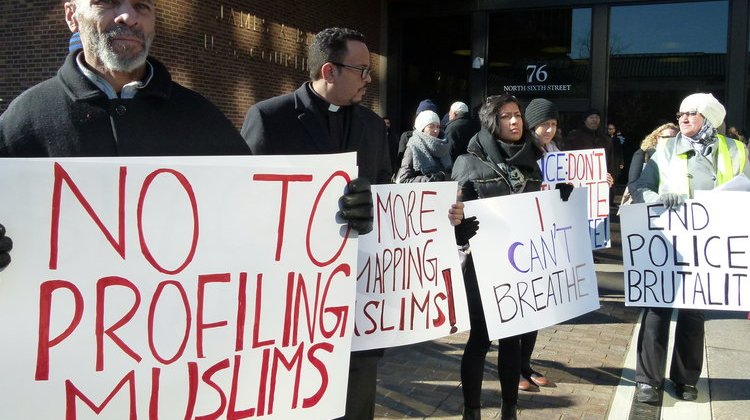
Most teaching resources and teacher workshops about Islam and Muslims focus on increasing knowledge of religious texts, beliefs, and rituals rather than addressing the root causes of Islamophobia. This project addresses that gap by placing Islamophobia firmly within a U.S. context and shared cultural history.
The lessons are designed to avoid the need for a facilitator with specialized knowledge in Islamic studies. The lessons do not teach the details of Islamic faith and practice because Islam is not the root of Islamophobia. Our lessons invite learners to think differently by investigating Islamophobia as a form of racism born from empire.
Challenge Islamophobia is a project of Teaching for Change.
 HRE USA