Episodes 29 & 30 with Dr. Lina Lenberg are available on Human Rights Education NOW!

We are pleased to announce the availability of our latest installment of podcast episodes in Human Rights Education NOW! Episodes 29 & 30 feature conversations with  Dr. Lina Lenberg. Dr. Lina Lenberg has been an educator for over 20 years. Lina  works as a middle school classroom teacher and a part-time professor in the  International and Multicultural Education Department at the University of San  Francisco. Lina serves on the editorial board for the International Journal of  Human Rights Education. Lina wrote her dissertation on the Uyghur genocide in  East Turkestan and the Uyghur diaspora’s resistance to Chinese state violence. Her latest project is the Uyghur Genocide Online Resource Center. Her publications include the article Uyghur Diaspora Activism in the Face of Genocide; a book review (from 2017): Human Rights and Schooling: An Ethical Framework for Teaching Social Justice

Episode 29

In Episode 29, Lina Lenberg shares her origins of interest in human rights and human rights education, and how she sees herself as an educator/activist. She then reflects on the influences of her family’s exile experience on her HRE work, and the importance of identifying and confronting biases and celebrating universal human attributes. Next, Lina discusses how she integrates HRE curricula and pedagogy into her daily teaching, and about the formation of a human rights club and developing volunteer opportunities for students. Lina then describes how she helps teachers Include HRE content and strategies in their daily practice, and seeks to center the voices of marginalized groups in her daily teaching. She then highlights her work with graduate students in HRE at University of San Francisco. Next, she explains her doctoral study work of the Uyghur genocide and her public advocacy work on behalf of the Uyghur community. She emphasizes how little has been done to hold China accountable for their genocidal policies against Uyghur communities. She concludes by discussing her work as an editor of the International Journal of Human Rights Education


Episode 30

In Episode 30, Lina Lenberg discusses bridging the gap between Holocaust/genocide studies and human rights education and the importance of addressing genocide as embodying many human rights violations. She then shares her ideas around the conceptualizing links between HRE and social justice. Next, Lina explains how it requires a concerted and consistent effort to create the conditions to envision and develop a just world, and how a universal ethos of care is needed. She then describes deploying HRE to address human rights violations against children in the USA and the importance of recognizing threats to the rights of children and encouraging activism. Lina recounts ways to advance HRE in an environment of rising authoritarianism and underlines the importance of incorporating HRE within teacher preparation and professional development programs. She also shares how she finds strength in networks like HRE USA where there is a collective of individuals focused on social change, and the critical importance of making HRE an institutional priority in educational policy-making. Lastly, Lina speaks of Monisha Bajaj as her most significant role model for HRE, as well as the work of bell hooks. In conclusion, she provides an influential quote and a recommendation for the HRE movement.

Educators at all levels and in varied settings can use these episodes to inform their work in HRE by downloading and sharing them with colleagues and students along with developing lesson plans and activities using episode content.  

All episodes of Human Rights Education Now! are available on:

Buzzsprout, Spotify, Apple Podcasts, Google Podcasts, Deezer, PlayerFM, Pocket Casts, and the HRE USA website
HRE USA would love to learn how listeners are using episodes in their classrooms and with their communities. Please send comments and ideas for classroom use to kristi@hreusa.org.

📢 For Listeners: Moved from Google Podcasts to YouTube Music in April

  • Google Podcast was discontinued on April 2, 2024.
  • We moved all our episodes onto YouTube Music. 
  • All previously published episodes will remain available on Apple Podcasts,Spotify, Overcast, Pocket Casts, Deezer, and PlayerFM. 

Thank you for supporting the Human Rights Education NOW! podcast!
National Women’s Law Center: Teacher Survey Request

Teachers in your state are invited to participate in a research project about the experiences of K–12 teachers. The National Women’s Law Center (NWLC) is partnering with researchers at PI-Opinion to organize 45-minute conversations with teachers in select states from now through mid-May.
Conversations are informal. No preparation needed. In appreciation, those who are eligible and complete interviews will receive a $75 retail gift card. Importantly, all participants will have the option for the conversation to be confidential. 


This is a chance to make your views heard! Please complete a short form, which should take about 5 minutes. Apply by May 1st to be eligible to participate. If selected, you will receive a confirmation email from admin@pi-opinion.com with booking information. (Direct any questions about participating to that same email address.)

Apply Today

Master of Arts in Gender and Development

Are you interested in an international career and learning more about the relationship between gender and development? Apply now for the UPEACE – UNITAR Master of Arts in Gender and Development.This Master of Arts, jointly offered by the UN Mandated University for Peace (UPEACE) and the United Nations Institute for Training and Research (UNITAR) on Gender and Development, allows students to develop critical knowledge in gender studies in its intersections with development studies. In addition, this programme equips students with the required soft skills for a successful international career in this field.

Explore

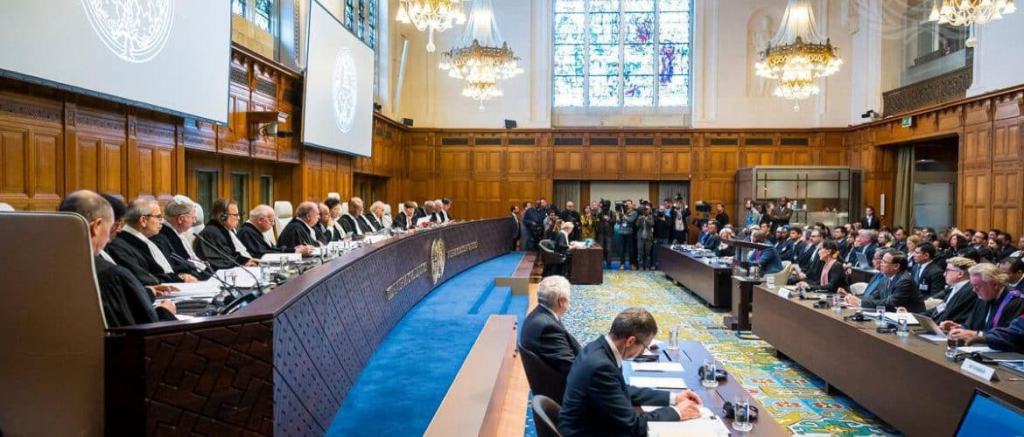
Genocides on Trial – Israel, Russia, China, Myanmar, and Serbia

Tuesday, May 14, 7:00 – 8:30pm CT

Allegations of genocide are being brought against a number of countries at the International Court of Justice in The Hague, Netherlands. This webinar, with speaker Dr. Ellen J. Kennedy, Executive Director, World Without Genocide, examines the apparent impunity of China, and charges against Israel, Russia, and Myanmar in a precedent set years ago in a case against Serbia.

REGISTER HERE

Co-sponsors:

  • Children of Holocaust Survivors Association in Minnesota
  • Citizens for Global Solutions – MN
  • Federal Bar Association, Minnesota Chapter
  • Lutheran Church of the Redeemer, St. Paul
  • Minnesota Association of Black Lawyers
  • Mitchell Hamline School of Law
  • Minnesota Council of Churches
  • Minnesota Nurses Association
  • Mount Zion Temple
  • Shir Tikvah Congregation
  • The United Nations Association of Minnesota

Register by Tuesday, May 14 at 5:00 pm CT

Admission:

  • $10 general public; $5 seniors and students (over age 13, please).
  • $25 for 1.5 CLE credits for Minnesota lawyers.
  • ‘Clock hours’ for teachers, social workers, and nurses.
  • Mitchell Hamline students free – diversity credits are available.
  • Qualifies as a University of St. Thomas Law Mentor Externship experience.

New issue of the International Journal of Human Rights Education (IJHRE) Volume 8 available now!

📖 Full issue at: https://bit.ly/USF-IJHRE

📑 Volume 8 Contents

📄 Original Articles
“Mapping Our Dreams and Rooting our Futures: Possibility Trees as Essential Pedagogy and Praxis in Peace, Social Justice, and Human Rights Education” by Maria Hantzopoulos & Monisha Bajaj

“A Human Rights Education Analysis of the ‘Know Your Rights Camp’” by Jason Seals

“UNRWA and the Education of Palestinian Refugees: An Interview with Anne Irfan” by Monisha BajajJazzmin Gota, and David Tow

“Basic Needs Insecurity in U.S. Colleges: Human Rights Unfulfilled” by Sarita Cargas & Tammy Thomas

“Critical Language Education for Peace: On the Significance of Communicative Agency for Education for Human Rights, Peace, and Sustainable Development” by Frauke Matz and Ricardo Römhild

“Curriculum Development in Human Rights Education: Teacher Candidates and Faculty Members’ Views” by Faramarz Yaşar Abedi and Seval Fer

📝 Pedagogy, Community, Praxis Commentaries

“Making Curricular Space for Critical Media Literacy and Human Rights Education in the United States” by Mischa G.

“The view from Norge: Rights-based discourse and Human Rights Education in Norway” by David Tow

“Hopelessly AroAce: An Exploration in the Margins” by Shruti Sheshadri and Agharsh Chandrasekaran

“Learning Stories and Children’s Rights: Reimagining Assessment in Early Childhood Education” by Claire Boss

“In Memoriam: Betty Reardon, Ian Harris, Johan Galtung, and J. Paul Martin” by Nancy Flowers, Edward J BrantmeierMonisha Bajaj, and Frances Vavrus

📚 Book Reviews

Unsettling Settler-Colonial Education: The Transformational Indigenous Praxis Model, by Cornel Pewewardy, Anna Lees, and Robin Zape-tah-hol-ah Minthorn (Eds.), Review by Jamal Epperson

Punished for Dreaming: How School Reform Harms Black Children and How We Heal, by Bettina L. Love, Review by Brian Davis

The Human Rights Imperative in Teacher Education: Developing Compassion, Understanding, and Advocacy, by Gloria T. Alter & William R. Fernekes (Eds.), Review by Cristian Aguilar Valverde, M.A.

Emancipatory Human Rights and the University: Promoting Social Justice in Higher Education, by Felisa Tibbitts and André Keet (Eds.), Review by Megan Patterson

Teaching for Peace and Social Justice in Myanmar: Identity, Agency, and Critical Pedagogy, by Mary Shepard Wong (Ed.), Review by Jennifer Thomas

Editor-in-Chief: Dr. Monisha Bajaj, Professor, USF
Managing Editors: Jazzmin Chizu Gota, Doctoral Student, USF; David Andrew Tow, Doctoral Student, USF
Book Review Co-Editors: Dr. Susan Roberta Katz, Professor Emerita, USF; Dr. Dr. Michiko Kealoha, Part-Time Faculty, USF
Assistant Managing Editors: Dr. Rachel Brand, EdD, Post-Doc, Santa Clara Univ.; Brian Davis, Doctoral Candidate, USF; Femi Higgins, Doctoral Student, USF; Megan Patterson, MA recipient, USF; Lori Selke, Doctoral Candidate, USF; Shruti Sheshadri, Doctoral Candidate, USF

CGS-MN Presents: Human Rights Forum: Information Commnication Technology in the Humanitarian and Development sector

When: Tuesday, April 23, 2024

Time: 7 – 8 pm Central time (GMT -5)

Where: Zoom Webinar

Register here

Speaker: DUAA SHAALAN is a Fulbright Humphrey Fellow scholar at the University of Minnesota. Originally from Jordan, Ms. Shaalan has a Bachelor degree in Computer engineering, a Masters degree in Enterprise System Engineering. She is experienced in international development and humanitarian organizations, adept at deciphering user behavior and optimizing digital platforms for user engagement.

Description: Join us at our upcoming event dedicated to exploring the intersection of Information Communication and Technology (ICT) in the humanitarian and development sector. This dynamic gathering will delve into the transformative role ICT plays in implementing diverse programs aligned with the United Nations’ 17 Sustainable Development Goals (SDGs). This event offers a unique platform to discuss and explore innovative ICT solutions, share best practices, and foster collaboration among stakeholders. Join us in shaping the future of humanitarian and development programs to achieve the SDGs through the strategic integration of Information Communication and Technology.

The event aims to unravel the multifaceted impact of ICT practices on the efficiency, scalability, and overall effectiveness of humanitarian and development programs. Discover the ways in which ICT can catalyze positive change across various sectors.

Teaching Climate Change in the Classroom and in Your Community

Register now for the 2024 Summer Institute for Climate Change Education! This three day institute during the week of July 15 – 19 will bring together formal and non-formal educators from across North America for workshops, hands-on activities, and other experiential learning sessions about Climate Change Education. This year’s theme is Change Makers in Action. 

REGISTER FOR THE INSTITUTE

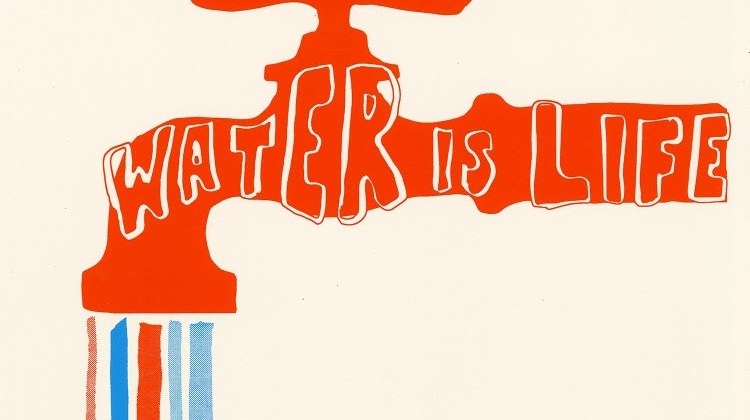
Earth Day 2024: Water and Environmental Racism (Middle/High School Lesson)

The Flint water crisis is one of the most egregious examples of environmental racism in recent memory.
Flint is not unique. Throughout the country, poor people and people of color are disproportionately burdened by environmental contamination — in their neighborhoods, schools, and homes.Drawing from three recent real-world case studies (Flint, Michigan; Newark, New Jersey; and Jackson, Mississippi), we offer a mixer activity (suitable for middle and high school students) that surfaces both the causes and consequences of environmental racism.

This lesson, by Matt Reed and Ursula Wolfe-Rocca, is described in Rethinking Schools magazine.
Download Lesson

Find many more lessons and teaching stories on environmental justice in the Rethinking Schools publication, A People’s Curriculum for the Earth.