Partners for Dignity & Rights: Assemblies as a Tool for Just Democracy

Assemblies—gatherings where large numbers of people come together to deliberate and make collective decisions—are a powerful tool for democratic governance and movement-building. As the U.S. and countries around the world struggle to meet people’s material needs, reduce extreme concentrations of wealth and defeat right-wing racist and xenophobic authoritarian threats, assemblies and other models of collaborative governance hold potential to help reverse the tide. In this webinar, we’ll talk with Ben Palmquist, author of a new report on assemblies, about how different forms of assemblies including people’s movement assemblies and civic assemblies are reshaping governance across the U.S. and around the world. And we’ll hear from Just Futures in Washington State and the Northwest Bronx Community and Clergy Coalition about how they’re using assemblies and building community-government collaboration to support community-led visioning and power-building for equity and justice for all.

Featured speakers:

  • Kesi Foster, Co-Executive Director, Partners for Dignity & Rights (moderator)
  • Evan Casper–Futterman, Northwest Bronx Community and Clergy Coalition
  • Katherine Mella, Northwest Bronx Community and Clergy Coalition
  • Esther Min, Front and Centered
  • Lindsay Morgan Tracy, Washington Economic Justice Alliance, Washington State Department of Social and Health Services
  • Ben Palmquist, Partners for Dignity & Rights, New Social Contract

Tuesday, September 9, 2025, 9am PT / 12pm ET / 6pm CETvirtual (available in English with Spanish interpretation)

>> Register

Transformative Skills Guide: Expanding the Definition of Climate Literacy


This guide to transformative skills for climate action expands climate literacy to encompass those inner skills, qualities and capacities that help translate scientific understanding into transformative shifts in the way we do things, individually and collectively. The hope is that this guide will help educators, communicators and practitioners equip the whole of society with these essential resources. Download the free PDF her

Save the Date: The People’s UPR

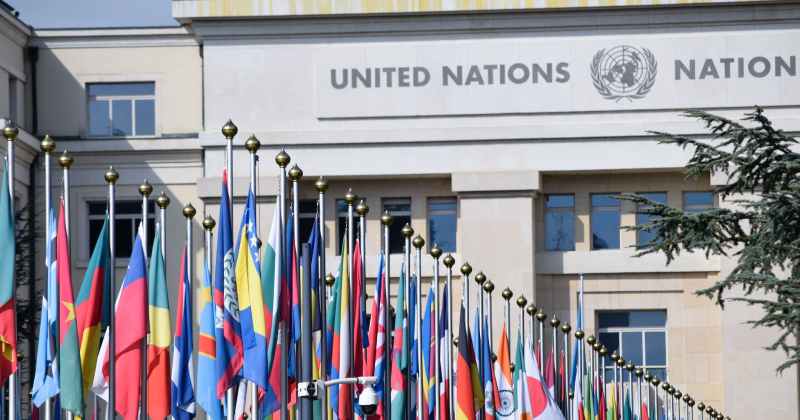
Thursday, October 23, 2025, starting at 12noon, at the Church Center of the United Nations, 777 United Nations Plaza, in New York, NY. Lunch will be served. 
The event will also be livestreamed for those who wish to view from afar.

The Fourth Universal Periodic Review (UPR) of the United States has been set to take place in November 2025. The UPR is a unique United Nations Human Rights Council process that allows all United Nations Member States to undergo a peer review of their human rights records every 4.5 years. So far this year, the United States government is refusing to participate in this process. Nonetheless, U.S. civil society will mobilize to ensure that people’s voices are heard through important testimonies to build a record toward addressing human rights violations here in the United States. As part of those efforts to build a record, a People’s UPR is being organized as a side event during the Third Committee Session at the United Nations Headquarters in New York, NY.  We hope that the People’s UPR will be attended by United Nations, Country Mission, and Embassy staffers both in NY and in Geneva (via zoom).

There will be opportunities for directly impacted persons (a ‘directly impacted person’ is someone who is personally and directly affected by the law, policy, practice, act or omission by the government) to testify in-person during the People’s UPR regarding human rights issues in the United States. The event will be livestreamed but there will be no opportunities for persons to testify live via the web. Instead, we will play prerecorded testimony received via video ahead of time from persons who cannot attend in-person.

Tentative Schedule for People’s UPR:

12-2pm Testimony from Directly Impacted Persons 

2-3pm Q&A

4pm Press Conference


>> Sign up here to receive information regarding the People’s UPR as it is available.

Episodes 62 & 63 with Zeynep Karatas, Eugenia Ricciotti, and Tata Varadashvili are available on Human Rights Education Now!

We are pleased to announce the availability of our latest installment of podcast episodes in Human Rights Education NOW! Episodes 62 & 63 feature conversations with Zeynep Karatas, Eugenia Ricciotti, and Tata Varadashvili.

Zeynep Karatas

Zeynep Karatas is a recent graduate of University of California – Irvine (UCI), where she studied Political Science and International Studies in the honors program. She gained experience with several international human rights organizations, including The Borgen Project, Lawyers Without Borders, the United Nations Association of the USA, and The Advocates for Human Rights. On campus, she held multiple leadership roles in student government, teaching, and event planning. Her honors thesis on the European Court of Human Rights examined the protection of rights amid democratic erosion, presented at three conferences. Recognized with awards such as UCI’s Outstanding Undergraduate Award, the Phi Beta Kappa Graduate Study Award, and the Order of Merit, she aspires to pursue graduate school and a career in international human rights law.

Eugenia Ricciotti

Eugenia Ricciotti is a law graduate from the University of Trento, Italy, currently pursuing a Master’s in Human Rights and Sustainability at the OSCE Academy in Bishkek, Kyrgyzstan. She previously interned with The Advocates for Human Rights, contributing to advocacy campaigns, women’s rights initiatives, and the Beijing+30 project, which documents the 1995 Beijing Conference on Women. With interests in minority rights and gender equality, she hopes to build a career as a researcher and advocate in human rights.

Tata Varadashvili

Tata Varadashvili, based in Vienna, Austria, is a graduate of Central European University with a degree in Political, Legal, and Governmental Studies and will soon begin her LL.M. in Human Rights. She has served as First Vice Chair of the Student Union and participated in numerous human rights initiatives during her studies. Currently interning with the WAVE Network, she aims to pursue a career specializing in women’s rights and international criminal law.

Episode 62, Zeynep Karatas, Eugenia Ricciotti, and Tata Varadashvili – Part One

In Episode 62, three young feminists—Zeynep Karatas, Eugenia Ricciotti, and Tata Varadashvili—share how personal experiences shaped their interest in human rights and women’s rights. Zeynep by the femicide of Özgecan Aslan in Turkey, Eugenia was influenced by The Handmaid’s Tale and abortion restrictions, and Tata by her mother’s warnings about rights being taken away, drawing parallels to Iran. They highlight the 1995 Beijing Conference on Women as a turning point, though one not widely known until recent years, emphasizing the need to raise awareness and integrate women’s rights into education.

They compare feminist struggles from 1995 to today, noting persistent restrictions on reproductive health and education, the rise of authoritarian regimes, and slow progress, though today’s feminism is more intersectional. The digital era provides new platforms for activism, but also creates risks of misinformation and harassment. The guests outline key challenges facing young feminists: systemic perceptions of women as inferior, lack of funding, backlash against feminism, misrepresentation in media, not being taken seriously, and burnout from unpaid labor. The episode closes with reflections on sustaining feminist activism amid these challenges.

Topics discussed:

  • Personal motivations: Influences of literature, femicide, and family warnings on feminist awareness
  • Beijing 1995 legacy: Need for more awareness and integration in curricula
  • Then vs. now: Continued barriers to women’s rights; slow progress; rise of authoritarianism; growing intersectionality
  • Digital activism: Opportunities for mobilization but risks of harassment and misinformation
  • Challenges for young feminists: Funding gaps, institutional sexism, media misrepresentation, backlash, and burnout
  • Closing reflections on sustaining feminist struggles

Full topic listing available for PDF download HERE.

Listen on our Buzzsprout podcast website HERE

Episode 63, Zeynep Karatas, Eugenia Ricciotti, and Tata Varadashvili – Part Two 

In Episode 63, Zeynep Karatas, Eugenia Ricciotti, and Tata Varadashvili reflect on feminist movements past and present, drawing inspiration from earlier thinkers and organizers while emphasizing the need for intersectionality, self-care, and adaptation to today’s digital and media landscapes. Zeynep, Eugenia, and Tata highlight the importance of centering historically silenced groups, resisting hierarchy within feminism, and framing women’s rights as human rights. They discuss patriarchy as a system that harms all genders and note the persistence and courage modeled by past movements.

The 1995 Beijing Conference on Women is revisited as a pivotal global moment that fostered transnational feminist networks and coalition building, with today’s context marked by democratic backsliding and disinformation. The conversation then turns to sustainability strategies, stressing self-care, mutual aid, and viewing activism as a lifelong commitment. Zeynep, Eugenia, and Tata imagine what a global feminist conference today might address, including cultural relativism, child marriage, economic justice, and climate change as a feminist issue. They also examine how austerity policies, unpaid care work, and far-right backlash continue to challenge progress, while offering intergenerational advice for feminist resilience.

Topics discussed:

  • Feminist inspirations: Intersectionality, self-care, lessons from collective organizing, centering marginalized voices
  • Women’s rights as human rights: Challenging patriarchy and identity politics; persistence from past movements
  • Beijing 1995 legacy: Global networks, coalition building, responding to disinformation and democratic erosion
  • Sustainability strategies: Self-care, mutual aid, and imagining a modern global feminist conference
  • Key issues today: Cultural relativism, child marriage, economic justice, climate justice
  • Ongoing challenges: Austerity, unpaid care labor, far-right backlash
  • Intergenerational advice and closing reflections

Full topic listing available for PDF download HERE.

Listen on our Buzzsprout podcast website HERE.

Thank you for supporting the Human Rights Education NOW! podcast!

Online course on Monitoring & Evaluation in the NGO Sector

HREA is offering an online course “Monitoring, Evaluation and Learning in the NGO Sector from October 1 – November 11. There are still spots available!

This course will introduce key M&E concepts, methods and strategies, including theories of change, logical frameworks, measurement and preparation of research findings. Learners will explore participatory methods and the human rights-based approach and develop an initial M&E plan.

The course will be taught by Dr. Felisa Tibbitts who has over 30 years’ experience as an evaluation specialist and done studies for the UNOHCHR, UNDP, UNICEF and the OSCE/ODIHR as well as for civil society organizations such as Amnesty International. She has taught monitoring and evaluation at Columbia University and trained adult learners in development, humanitarian and human rights organizations throughout the world.

For more information, including fees and how to register visit https://www.hrea.org/courses. The enrollment deadline is September 22nd. Queries can be directed to learning@hrea.org.

With best wishes

Teach Truth on Constitution Day: Sign Up and Add Your City to the Map

Schools that receive federal funding are mandated to teach about the Constitution on Constitution Day (September 17). So, let’s do that. Let’s engage young people in an active study of the Constitution.
Join our campaign to Teach Truth on Constitution Day. We offer free resources to do one or all of the following:Teach honestly about the Constitution. Why it is worded the way it is, how it has been amended, and what it allows/denies to the public.  Make sure students know their rights under the Constitution. These include the right to remain silent, the right to read and the choice of what to read, freedom of speech, and equal protection of the law — which applies to everyone, documented or not. Emphasize that rights are not fixed or guaranteed. Rights must be championed and protected by each new generation, in and beyond the Constitution.
Community members can play a critical role in defending the freedom to learn. For example, they can propose that their school district adopt a Freedom to Learn resolution or host a gallery walk on Ten Ways to Rethink the Constitution in a public space.

Sign up to show that you are committed to teach truthfully about the Constitution on Constitution Day and all year long. 

Learn More and Sign Up

The 2025-2026 TAAS: Module 1: Defending Democracy through Human Rights Education

Saturday, September 13th, 11 am ET
Module 1: Defending Democracy through Human Rights Education

This module explores how HRE can help defend democracy in the face of current global and local challenges. Participants map threats and reflect on civic roles.

Flyer
Register here

Human Rights Educators USA’s annual Training as Action Series (TAAS) is a virtual training series focused on bridging personal and collective action on some of the most critical human rights issues of today. TAAS creates an educational space to connect and collaborate with others in human rights education and training. It also gives participants the skills and information needed to take action on rights issues in their communities.

The 2025–2026 Training as Action Series will center on the theme, “Defending Democracy and
Human Rights in a Changing World.” This year’s sessions will explore urgent issues such as misinformation, protest rights, climate justice, and digital surveillance, highlighting how human rights education can equip communities to respond with clarity, courage, and collective action. Those who attend six or more sessions will receive a certificate from HRE USA. 2025-26 TAAS Flyer

HRE USA is a project of the Center for Transformative Action.

HREA: Online course Implementing Human Rights Locally

HREA is offering a new online course Implementing Human Rights at the Local Level from September 10 -October 21. A half hour information session with course instructor Corey Barr will take place on Wednesday, June 25th at 9:30 am EDT. Register here for a Zoom link or to have future access to the recording. 

The course is designed to equip municipal leaders, local human rights commissions, CSOs and community advocates with knowledge and tools to implement international human rights law and a human rights-based approach at the local level. Learners will develop an action plan for advancing human rights in their own community.

For more information, including fees and how to register, visit here. Queries can be directed to learning@hrea.org.

The HREA Team

Constitution Day Is Coming, explore materials for your classroom!

It’s almost Constitution Day, and the Center for Civic Education has the high-quality instructional materials you need to engage your classroom. Visit our Constitution Day page to get everything from our video series, The Constitution EXPLAINED, to deeper curricula, like our We the People resources, and free lessons for every age.

What Is Constitution Day?

September 17 is recognized in the United States as Constitution Day and Citizenship Day. On this day, we commemorate the creation and signing of the supreme law of the land and celebrate the privileges and responsibilities of U.S. citizenship, be it for native-born or naturalized citizens.

Federal law requires that all schools receiving federal funds hold an educational program for their students on September 17 of each year.