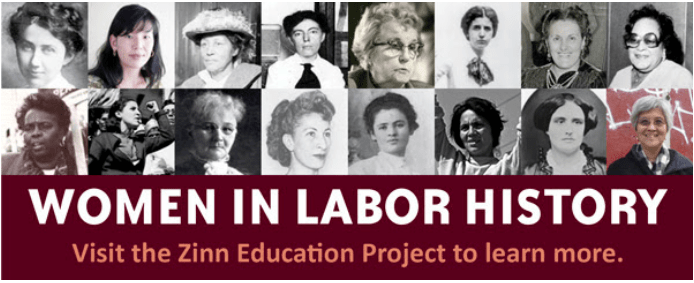
Women in Labor History

The impact women have made in labor history is often missing from textbooks and the media, despite the numerous roles women have played. From championing better workplace conditions to cutting back the 12-hour day to demanding equal pay across racial lines. Check out these profiles of women in labor history from the Zinn Education Project. 

>> View resource

NCSS – Call for Conference Proposals

NCSS invites you to submit a proposal to present at their 101st Annual Conference. The NCSS Annual Conference is the largest gathering of K-12 social studies classroom teachers, college and university faculty members, curriculum designers and specialists, district and state social studies supervisors, international educators, and social studies discipline leaders.

 Deadline extended: April 1, 2021

>> Learn more and apply

Happy Women’s History Month!

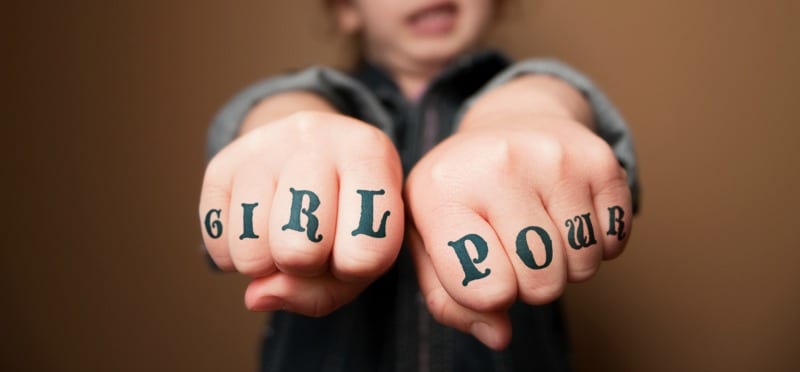
As we celebrate the tremendous efforts by women and girls around the world in shaping a more equitable future, let’s tap into that momentum to overcome the barriers women still face regarding equal economic opportunities, educational equity, women’s health, and an end to gender-based violence.

Check out these resources compiled by Human Rights Educators USA to teach about the issues that women and girls face around the world and how we can all work towards the realization of women’s empowerment and gender equality. 

>> View Resources

Also, check out these great resources on the fight for women’s equality from our partners: Learning for Justice, Teaching for Change, and the American Federation of Teachers.

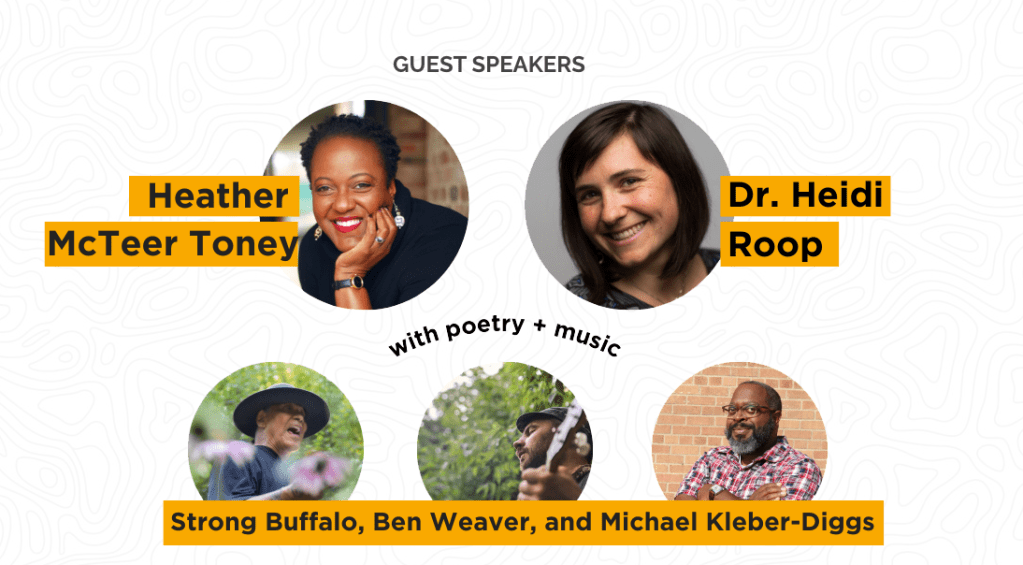
Talk Climate Institute

EVENT DETAILS: 
When: March 23 – 24, 2021
Time: 9:00 am – 4:00 pm CST
Where: Virtual
Cost: $200
Scholarships available

Description:
The Talk Climate Institute will deepen your understanding of climate change in an era of disinformation. This transformative two-day experience will take you beyond your computer screen for intentional reflection and active listening, tapping into creativity and building community together.

Teaching About Feminism

by Educators 2 Social Change

In simple terms, feminism is the advocacy for equal rights and opportunities for all genders. Women have been viewed by many as the “weaker” sex for hundreds of years, but over the past few decades, particularly the past five years, women have been fighting again for their voices to be heard. From the fight for women’s suffrage to women’s marches to the #MeToo Movement, progress has been made regarding treating all genders equally, but there is still a long way to go, as women are continuously paid less than their equal male counterparts and often ignored or silenced in cases of sexual assault and/or domestic violence. By teaching students about feminism, educators are not only promoting equal rights for all genders but are also debunking the idea that “feminism” is a bad word, or even controversial.

There are many valuable resources available online for teaching students about feminism and gender equality. Feminism is often given a negative connotation, but feminists are simply fighting for equality between men and women, which is long overdue. These resources compiled by Educators 4 Social Change will help you in your journey of teaching students about feminism, women’s rights, and equality.

>> See annotated resource list

Webinar: Black Women’s Fight for Labor and Voting Rights

EVENT DETAILS: 
When: Monday, March 22, 2021
Time: 7:00 – 8:30 pm EST
Where: Zoom
Cost: FREE

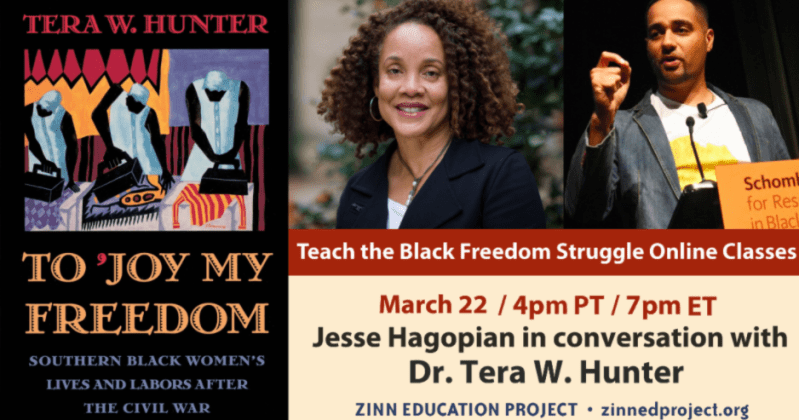
You are invited to join the Zinn Education Project for a free online class with Dr. Tera W. Hunter, history professor at Princeton University and author of To ‘Joy My Freedom: Southern Black Women’s Lives and Labors After the Civil War. In a conversation with Rethinking Schools editor Jesse Hagopian, Dr. Hunter will provide a historical context for the election victory in Georgia and share insights from her research into freed women’s lives. Hunter will focus on the 1881 Atlanta Washerwomen’s Strike, when 20 laundresses met in Atlanta to form a trade organization, the Washing Society. They sought higher pay, respect, and autonomy over their work and established a uniform rate at $1 per dozen pounds of wash. With the help of Black ministers throughout the city, they held a mass meeting and called a strike to achieve higher pay at the uniform rate. ASL is provided.

This event is one in a series of online classes that are part of the Zinn Education Project’s Teach the Black Freedom Struggle campaign.

Teaching about and for Immigrant and Refugee Rights

EVENT DETAILS: 
When: Friday, March 19, 2021
Time: 1:00 – 2:00 pm EST
Where: Zoom
Cost: FREE

Presenters:
– Mary Mendenhall, Associate Professor of Practice in International and Comparative Education, Teachers College, Columbia University
– Katherine Kaufka Walts, JD, Director of the Center for the Human Rights of Children, Loyola University Chicago.

Description:
The presenters will speak about teaching courses related to refugees and the right to education through different pedagogical, project-based, and interactive approaches. They will also share examples of ways to integrate refugees’ voices and experiences in the classroom and beyond, They will share how to reimagine immersive/experiential learning experiences for students under Covid-19, using the Immigration Detention Project at Loyola as a case study. This event, is part of a spring webinar series sponsored by the University and College Consortium for Human Rights Education (UCCHRE)

Webinar: Human Rights Education’s Curriculum Problem

EVENT DETAILS: 
When: Wednesday, March 17, 2021
Time: 1:00 – 2:00 pm EST
Where: Zoom
Cost: FREE

Presenter: Walter C. Parker, University of Washington, Seattle, USA 

Description: Does human rights education have a social justice mission? And if so, how much does knowledge matter in realising justice through education? In this session, Walter Parker articulates what he identifies as human rights education’s curriculum problem in schools and suggests strategies to solve it.  Employing a theoretical perspective from the critical sociology of education, he suggests the main problem is HRE’s lack of an episteme—a disciplinary structure created in specialist communities—and, related to this, the flight of scholars from the field of curriculum practice, redefining it away from subject matter. Parker asserts that the HRE curriculum remains scattered, ill-defined, and too variable to be robust. HRE advocacy is important but insufficient. He argues that a more robust HRE in schools will require a curriculum that teachers can adapt to local needs, constraints, and students. Knowledge matters. In this session he identifies a key challenge for researchers and policymakers: without knowledge work of this sort, it is difficult to claim that HRE has a social justice mission. Walter Parker’s full paper can be read here

This event is part of a the 2021 Research Webinar Seminar Series that runs from January-June 2021. Details of upcoming seminars can be found here.
Webinar – Pedagogy & Projects: Teaching about and for Children’s Rights

EVENT DETAILS: 
When: Friday, March 5, 2021
Time: 1:00 – 2:00 pm EST
Where: Zoom
Cost: FREE

Description:
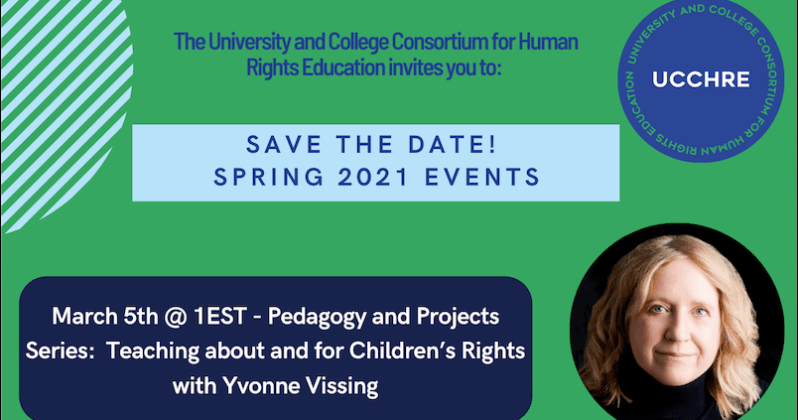
Dr. Yvonne Vissing will share her experiences of networking and research with scholars running child rights programs in the UK, Ireland, and Cyprus. The US is now the only UN state party not to have ratified the UN Convention on the Rights of the Child. What can we learn from our global child rights colleagues to integrate into our teaching about and for children’s rights in the United States? 

Yvonne Vissing PhD is a sociologist and Professor of Healthcare Studies and Founding Director of the Center for Childhood & Youth Studies at Salem State University.  Author of over a dozen books and hundreds of publications and presentations, she is an international expert in children’s human rights.  She is the US child rights policy chair for Hope for Children’s UN Convention on the Rights of the Child Policy Center, an international think-tank of child rights scholars located in Cyprus.  A former National Institute of Mental Health Post-Doctoral Research Fellow, she is on a variety of boards and committees, such as the Human Rights Council of the American Association for the Advancement of Science in Washington, American Sociological Association and HREUSA.  

This event, is part of a spring webinar series sponsored by the University and College Consortium for Human Rights Education (UCCHRE),

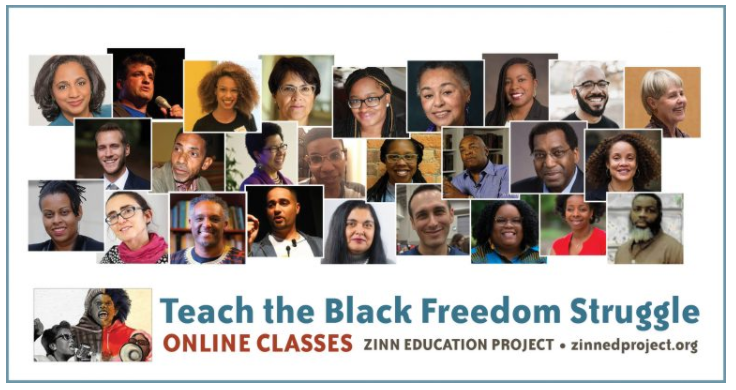
Teach the Black Freedom Struggle

EVENT DETAILS: 
When: Mondays January – May, 2021
Time: 7:00 pm – 8:30 pm EST  
Where: Live Stream
Cost: FREE

Description:
This series entitled, “Teach the Black Freedom Struggle” is hosted by the Zinn Education project and features leading historians from across the country. 

The classes are held at least once a month on Mondays at 4:00 pm PT / 7:00 pm ET for 75 minutes. In each session, the historian is interviewed by a teacher and breakout rooms allow participants (in small groups) to meet each other, discuss the content, and share teaching ideas.

Upcoming Sessions:

  • March 8, 2021: A Black Women’s History of the United States. 
  • March 22, 2021: The Atlanta Washerwomen’s Strike. 
  • April 26, 2021: The Carceral State
  • May 10, 2021: How the Word Is Passed: A Reckoning with the History of Slavery Across America