
Visit this page to get up to date on the latest HRE USA news.

Visit this page to get up to date on the latest HRE USA news.

Deadline for applications is extended until June 15, 2024
The Fellowship programme for people of African descent is an intensive human rights training for people of African descent, from the diaspora, who are engaged in promoting the rights of people of African descent.
It takes place once a year at the Office of the High Commissioner for Human Rights in Geneva.
The Fellowship programme provides the participants with the opportunity to:
The Fellowship Programme was initiated by the Anti-Racial Discrimination Section in 2011 and was further supported by General Assembly resolution on the Programme of activities for the implementation of the International Decade for People of African Descent (A/RES/69/16). The High Commissioner is the coordinator of the Decade.
The aim is to strengthen participants’ skills to contribute to the promotion and protection of civil, political, economic, social and cultural rights of people of African descent in their respective countries. The participants are equipped with the tools necessary to enhance the development of legislation, policies and programmes; to strengthen collaboration of civil society with governments; and to undertake local awareness-raising activities.
Read testimonies of former fellows in Voices of the Decade
Voices of the Decade features 11 stories of fellows of African descent, providing a snapshot of the important and inspiring work achieved to promote the human rights of people of African descent throughout the world. Voices of the Decade is a call, and a source of inspiration, for everyone to work together towards recognition, justice and development for people of African descent.
The candidate must be an individual of African descent living in the Diaspora.
Since 2011, 150 fellows from 46 countries have participated in the Fellowship programme including from Argentina, Australia, Barbados, Belgium, Belize, Brazil, Bolivia, Canada, Chile, China, Colombia, Costa Rica, Cyprus, Denmark, Ecuador, France, Germany, Guyana, Haiti, Honduras, Ireland, Israel, Italy, Iraq, Jamaica, Japan, Lebanon, Mexico, Moldova, Netherlands, Norway, Panama, Paraguay, Peru, Philippines, Poland, Portugal, Russia, Spain, Sweden, Switzerland, Trinidad and Tobago, United Kingdom, United States, Uruguay and Venezuela.
The Fellowship will be held from 11 November to 29 November 2024 in Geneva, Switzerland.
In addition, fellows are expected to dedicate a few hours to pre-online courses and preparatory assignments in the preceding two weeks.

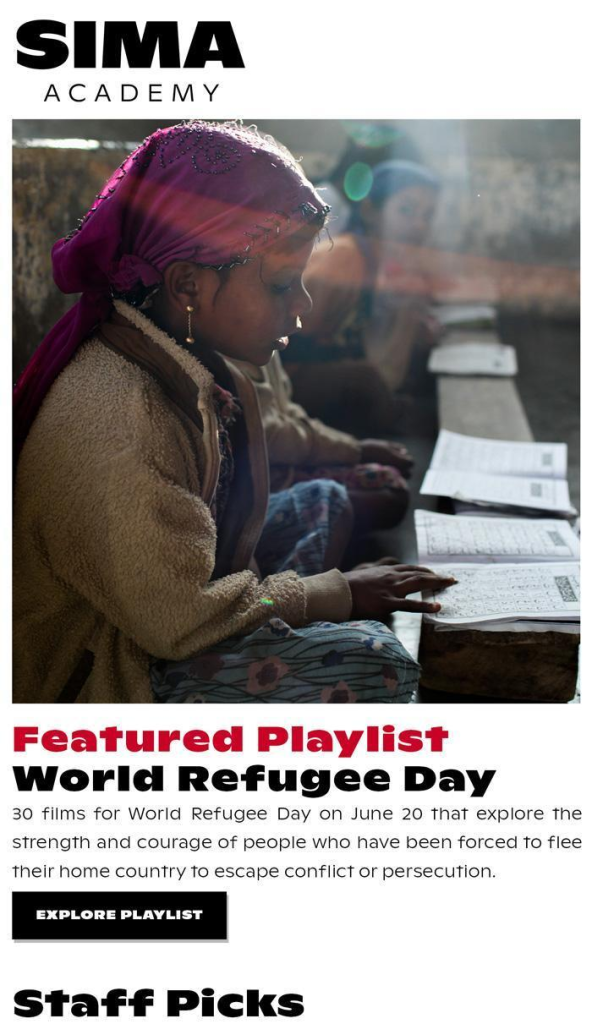
The films featured in the playlist explore the strength and the courage of people who have been forced to flee their home country to escape conflict or persecution. Explore playlist
Applications for the Online Master in International Affairs and Diplomacy offered by the United Nations Institute for Training and Research (UNITAR) and the Open University of Catalonia (UOC) are being accepted!
In an increasingly interconnected, globalized, and complex world, this innovative Online Master in International Affairs and Diplomacy, as well as the Specialization Diploma in Regional Studies and International Institutions, the Specialization Diploma in Multilateral Diplomacy and International Institutions, the Expert Diploma in Regional Studies, the Expert Diploma in Multilateral Diplomacy, and the Expert Diploma in International Institutions offered by the United Nations Institute for Training and Research (UNITAR) and the Open University of Catalonia (UOC), hold great significance.
These specially designed programmes are perfectly suited to the needs of students and full-time professionals interested in both developing essential knowledge about contemporary international affairs and strengthening their capacities in diplomacy to advance their careers.
The degree/certificates will enable diplomats, government officials, students, and other stakeholders to enhance their skills and knowledge with a formally recognized degree – combining a high-quality university education with executive training from the United Nations.
By the end of the programme, participants will:

Are you (or do you know) a high school student passionate about social justice, democracy, and creating positive change? If so, we have an exciting opportunity to tell you about!
Girls Learn International is hosting a virtual Summer Activist Training Camp (SATC) designed to empower the next generation of activists.
This free online program is open to high school and first-year college students of any gender who are eager to sharpen their advocacy skills. SATC runs on Tuesdays and Thursdays from July 9 to August 1, 2024.
At SATC, students will:
Applications are due June 25, 2024!
In a landscape where youth voter suppression persists, and women’s rights are under attack, it is vital for us to unite, educate, and amplify the voices of tomorrow. Please encourage any students you know to apply for SATC. This is their chance to join a community of motivated and passionate young activists, learn valuable skills, and contribute to shaping a brighter future.
Learn more and apply at bit.ly/2024satc.
The World Day Against Child Labor is taking place on June 14! Although significant strides have been taken in reducing child labor over time, recent years have seen global trends reverse, underscoring the pressing need to unite efforts in expediting actions to eradicate child labor in all its manifestations.
This year’s World Day will focus on celebrating the 25th anniversary of the adoption of the Worst Forms of Child Labour Convention (1999, No. 182). It also presents an opportunity to remind all stakeholders to improve their implementation of the two fundamental Conventions on child labour – Convention No. 182 and Convention No. 138 concerning the Minimum Age for Admission to Employment or Work (1973).
HREA has over 60 resources addressing children’s rights, including lesson plans, toolkits, teacher training manuals and multimedia materials.
In preparation for educational activities against child labor and throughout the year, you are welcome to explore HREA’s Online Resource Center for HRE resources on topics at the intersection human and children’s rights.
Voice of Witness invites you to a behind-the-scenes look at the upcoming oral history collection, Global Stories from the Automated Welfare State. Join project co-editor Virginia Eubanks in conversation with author Dave Eggers to examine how the shift towards an automated welfare state has become a growing human rights crisis, and the importance of sharing stories from those most directly affected.
Digital tools increasingly mediate access to basic human needs such as housing, food, physical safety, medical care, financial capital, employment, and family integrity. Global Stories from the Automated Welfare State uncovers the largely untold human stories behind the worldwide shift to algorithmic public assistance. The first-person narratives in this book illustrate how threats to fair decision-making processes, equitable outcomes, and even material survival are already occurring all over the world, particularly in poor and working-class communities.
June 6, 2024 at 6:00 pm PT / 9:00 pm ET
The Firehouse in Cole Valley, 259 Frederick Street, San Francisco, CA

Founded in 1989, the Human Rights Advocates Program (HRAP) is a unique and successful model of human rights capacity building. HRAP capitalizes on its affiliation with Columbia University and its location in New York City to provide grassroots leaders the tools, knowledge, access, and networks to promote the realization of human rights and strengthen their respective organizations.
HRAP’s comprehensive program of advocacy, networking, skills-building, and academic coursework provides advocates the opportunity to hone practical skills, develop a deeper understanding of human rights, and foster mutually beneficial relationships with organizations and individuals in their respective fields.
Applications accepted through 5:00 pm/ 17:00 ET on Friday, July 12th, 2024
>> Learn more

Human Rights Education Review invites submissions for a Special Issue on the intersection of Global Citizenship Education (GCE) and Human Rights Education (HRE), considering the role that HRE can play, in partnership with GCE, to enable hopeful futures. We welcome conceptual and empirical studies that explore the connections between human rights and global citizenship and expect this HRER Special Issue to uncover ways in which GCE founded in human rights is conceptualised and negotiated in a range of international contexts. In other words, it aims to explore ways are HRE and GCE interconnected, or not, within diverse contexts.
GCE responds to globalisation in multiple ways, informed by political and historical forces. Education for global citizenship founded in human rights is based on a cosmopolitan vision of our common humanity (Osler, 2011; Osler & Starkey, 2003; 2018). Yet the prevailing neoliberal environment and powerful interests of the Global North have frequently shaped global citizenship education as instrumental competencies for competition (Andreotti, 2006; Robertson, 2021). The proliferation of narrow expressions of GCE highlight the need for more meaningful and critical approaches (Ferguson & Brett, 2023; Smith & Neoh, 2023). Closer integration of GCE and HRE may confront the decontextualised limitations placed on both concepts (Rapoport, 2021). Transformative human rights also show potential for bringing empathy and compassion to citizenship education (von Berg, 2023). Exploring and expanding educational possibilities on rights, diversity and belonging may result in more inclusive global education agendas.
If you would like to make a submission in response to the Call for Papers send an extended abstract of no more than 300 words to Human Rights Education Review Managing Editor Kalpani Dambagolla to kalpanidambagolla@gmail.com by 1 July 2024. Your abstract should include a short list of indicative literature on which you expect to draw, from the fields of both GCE and HRE. Please ensure you use the subject line HRER: Global citizenship and human rights education in your email. You will hear back from us by 12 July 2024. All invited manuscripts will be subject to double-blind peer review. For invited papers for this special issue, submission of the full paper is due through the journal platform by 13 January 2025. We expect to publish this Special Issue as Volume 8 (3) 2025.
FULL-TIME JOB VACANCY
Researcher, China
Asia Division
Multiple Locations Considered
Application deadline: 9 June 2024
The Asia Division of Human Rights Watch (HRW) is seeking a Researcher who will investigate, analyze, and advocate against human rights abuses in China. The Asia Division is one of HRW’s six regional research programs and is made up of about 30 staff, many of them based in the region and working in challenging environments.
This position reports to the East Asia Director and will preferably be based in one of the following HRW’s offices: Tokyo, Sydney, London, Brussels or Berlin. We will also consider having the successful candidate based in the region. The role is expected to start in July 2024.
The successful candidate may have the option to work remotely. We aim to be as flexible and supportive as possible in both the recruitment and onboarding of this position.
Responsibilities:
1. Research, monitor and document the human rights situation in China by collecting and analyzing information from a wide variety of sources including governments, media, academia, NGOs, victims, witnesses, journalists, diplomats, security forces and others;
2. Write and publicize reports, briefing papers, letters, news releases, op-eds, and submissions to international bodies; collect supporting documents and materials such as photographs and videos;
3. Assist in the development and implementation of local, regional, and international strategies to change abusive laws, policies, and practices;
4. Respond to queries from the media, public, and colleagues in the human rights community and take initiative to project concerns in public debates;
5. Assist the Director of the Division and HRW’s Development and Global Initiative Department in conducting fundraising, when needed;
6. Place abuses within the broader political, social and economic contexts and present human rights concerns to government officials, opinion leaders, inter-governmental agencies, and the media;
7. Work closely with non-governmental organizations (NGOs) and local human rights organizations to ensure that HRW’s work complements and enhances their own work without jeopardizing their security;
8. Liaise effectively with HRW staff located in multiple locations throughout the world to ensure effective coordination and delivery of activities;
9. Travel internationally, as required;
10. Deliver outputs in a timely manner and consistent with the agreed strategy and priorities of the Asia division, and
11. Perform other tasks, as may be required.
 HRE USA