The Summer Institute is the place to fill your mind and your virtual bookshelf with curriculum-boosting teaching practices and instructional resources.
You’ll join Climate Generation, the North American Association for Environmental Education, and 20 regional climate change education leaders with educators from across North America dedicated to teaching climate change as an interdisciplinary issue. More than 30 presenters from across the country will facilitate interactive, hands-on workshops designed to engage and inspire you. At this three-day institute, you will investigate climate change education best practices, interact with climate change curriculum, and gain skills to teach climate change while inspiring hope and efficacy.
July 14 and 15, 2025, plus one regional cohort day on July 16 or 17 Registration $250 | Scholarships Available | Graduate Credit Available | 20 Hours of Continuing Education
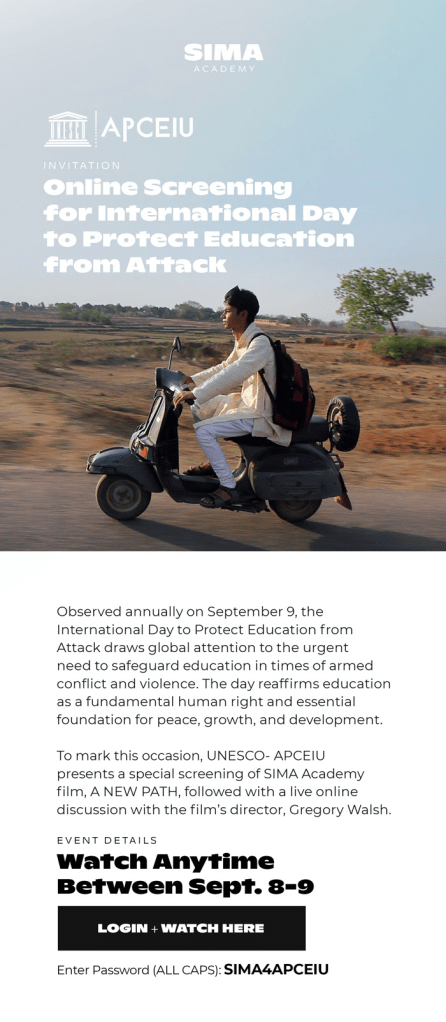
From the sea-nomad shores of the Philippines to the night clubs of Istanbul, the campaign trail of New York City to the creative streets of Johannesburg and more, these 13 powerful stories uplift LGBTQIA+ voices reclaiming space, rewriting narratives, and reshaping communities.
Juneteenth— June 19th, also known as Emancipation Day — is one of the commemorations of people seizing their freedom in the United States.
This beautiful tradition of Black freedom should be taught in school.
Yet, if this administration has its way, it will be illegal to teach students about Juneteenth. Most states have passed or proposed legislation to prohibit teaching about structural racism and books are being banned from school libraries in record numbers. The president’s executive orders do the same. Their goal: to outlaw teaching about the founding of this country on slavery and genocide, as well as about the long Black freedom struggle.
Some laws ban teaching about the structures and systems that led to enslavement and how these practices continue to manifest in policing, redlining, voter suppression laws, and more.
But educators continue to teach truthfully about structural racism. They are doubling down on their commitment to teach young people about institutionalized racism and how to organize for justice.
This month, educators joined the national #TeachTruth campaign to defend the right to teach truthfully about U.S. history, immigration, the climate, Palestine, and more; to protest book bans; to defend LGBTQ+ rights; and to challenge fascism.
A rich collection of global stories that spotlight human resilience and community-driven solution. From reclaiming and preserving heritage to addressing labor injustice, ecological collapse, and gender taboos these films offer powerful, grounded narrative that challenge perspective and inspire action.
The newly updated Next Generation Climate curriculum builds on the previous versions to not only offer current scientific data and figures but to incorporate a more human-centered approach. In the 2025 version, you will see discussions of the root causes of climate change; examples of leaders in climate justice movements; more guidance for how to take climate action; and opportunities for reflection and mindfulness to support students’ mental health.
Bonus: Are you an elementary educator based on or around the Twin Cities? Join us on August 13 for a workshop with other K-2 educators! We’ll dive deep on our two K-2 resources, Food Solutions and Healthy Habitats, and explore ways to integrate climate justice solutions into early elementary classrooms. Sign up for the workshop today!
For Memorial Day Weekend, we feature an article by David Blight about the early origins of the holiday, led by African Americans in Charleston, South Carolina, after the Civil War; an article by Howard Zinn urging us to never embark on mass slaughter again; and the documentary and companion oral history collection, Memorial Day Massacre: Workers Die, Film Buried.
Black education was a fugitive project from its inception — outlawed and defined as a criminal act regarding the slave population in the southern states and, at times, too, an object of suspicion and violent resistance in the North. — Jarvis Givens,Fugitive Pedagogy
We just posted Legalize Black Education: The Long Fight for the Right to Learn by Jesse Hagopian. This lesson reveals a pattern: When Black people make significant educational gains — or score victories in their broader struggles for freedom — there is a corresponding white supremacist backlash that often includes legal restrictions and violence.
Students explore laws passed to curb Black education in the wake of major victories for the Black Freedom Struggle, highlighting the historical context and motivations behind these legislative efforts. They also discuss quotes about Black education.
Join us for an interview by Rethinking Schools editor Jesse Hagopian with activist scholars Bettina Aptheker, author of Intimate Politics: How I Grew Up Red, Fought for Free Speech, and Became a Feminist Rebel and Robert Cohen, author of The Essential Mario Savio: Speeches and Writings that Changed America. The workshop is co-sponsored by the University of California National Center for Free Speech and Civic Engagement.
Aptheker will describe her own involvement with the Free Speech Movement (FSM) and Cohen will trace the roots of the FSM back to the Black Freedom Struggle in Mississippi. Both will address the legacy of the Free Speech Movement and the current free speech crisis on campuses and other public institutions. We will share teaching ideas and there will be breakout group discussions about addressing the FSM in the classroom.
The first 100 teacher attendees to register and attend will receive a free copy of one of the books listed above. Professional development credit certificate provided.
Stanley demonstrates how attacks on education and historical memory support authoritarianism, undermining public understanding of past struggles for justice.
By showing how history is weaponized to advance political agendas, Stanley underscores the importance of preserving historical truth as a safeguard against authoritarian rule.
Stanley doesn’t just diagnose the problem — he also offers strategies to resist these attacks, from advocating for historical literacy to supporting educators under fire. As one of those resistance strategies, he points to the role of teachers using people’s history lessons from the Zinn Education Project.