A History of Learning Disability and Human Rights

Date and time

Wed, 6 July 2022

17:30 – 19:00 BST (Virtual event)

REGISTER HERE

Find out why we need to understand the history of learning disability to ensure better support for people with learning disabilities today

About this event

In many ways the past few decades have been a revolutionary period for people with learning disabilities across the world, culminating in the UN Convention on the Rights of Persons with Disabilities (CRPD). However, successful implementation of the CRPD has been a complex business for people with learning disabilities, constrained by the legacy of historic legislation, structures, systems and attitudes.

In this talk, we take the long view on the question of rights for people with learning disabilities, tracing back to the UK’s Mental Deficiency Act of 1913 and the emergence of eugenics, which marked the beginning of the incarceration of people with learning disabilities on a widespread scale. Despite some progress over time, we ask why upholding the rights of people with learning disabilities continues to be so difficult to achieve.

This event is open to all. Please book a ticket to attend and the Zoom link will be emailed to you in advance of the event.

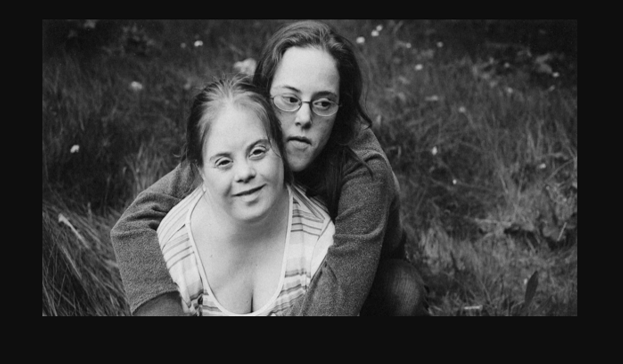
Image: Fiona Yaron-Field

See our full terms and conditions for events here.

Join the RCN’s UK-wide Fair Pay For Nursing campaign

Zinn Education Project: People’s History of July 4th: Beyond 1776

As you get ready to celebrate Independence Day, have a look at this collection of
people’s history stories from July 4th: Beyond 1776.

A collection of people’s history stories from July 4th beyond 1776. The stories include July 4th anniversaries such as when slavery was abolished in New York (1827), Frederick Douglass’s speech “The Meaning of July Fourth for the Negro” (1852), the Reconstruction era attack on a Black militia that led to the Hamburg Massacre (1876), protest of segregation at an amusement park in Baltimore (1963), and more.

Right to a Healthy Environment Panel Discussion

Examine intersection of the environment and human rights and discuss why this should be recognised in the ACT Human Rights ACT 2004.

Thu., 30 June 2022

11:30 am – 1:00 pm AEST

8:30pm- 10:00pm CST

Free online event, register here

To coincide with the ACT government’s community consultation on the right to a healthy environment, the Panel discussion will examine the intersection of the environment and human rights and discuss why this should be recognised in the ACT Human Rights ACT 2004.

Public consultation to inform consideration of the introduction of a right to a healthy environment in the Human Rights Act 2004.

  • The Right to a Healthy Environment Panel Discussion coincides with the ACT Government public consultation on including the right to a healthy environment in the ACT Human Rights Act.
  • The Panel will be discussing the intersection of human rights and the environment what it means to recognise a right to a healthy environment in the ACT.
  • Hosted by ABC TV/radio host Dan Bourchier, the panel will be an opportunity to hear from a range of experts discussing the intersection of human rights and the environment what it means to recognise a right to a healthy environment in the ACT Human Rights Act.
  • Panel speakers include – Dr Helen Watchirs, OAM, President, ACT Human Rights Commission; Dr Caroline Hughes, Executive Director Collections AIATSIS; Melanie Montalban, Managing Lawyer, ACT Environmental Defenders Office; Roxanne Jones, Researcher Mayi Kuwayu National Study of Aboriginal and Torres Strait Islander Wellbeing – ANU [TBC Dr Raymond Lovett Director MK Study, ANU]; Dr Brian Weir, ACT Business Chamber; Adina Cirson, ACT Executive Director, Property Council of Australia

Questions the panel members will explore include the following:

  • How should we define the right to a healthy environment?
  • What duties should be included for government and private entities to ensure respect for individuals’ right to a healthy environment?
  • What additional measures should be considered to ensure protection of the right to a healthy environment for vulnerable groups?
  • How could the right to a healthy environment recognise the importance of ‘country’ for Aboriginal and Torres Strait Islander people?
  • How should government go about fulfilling the right to a healthy environment?

The session will run for 90 minutes, and will be recorded for later viewing.

HRE USA is raising funds through Giving is Gorges!

Give to HRE USA – a project of CTA | Giving is Gorges 2022

Donations are crucial and help us continue to learn, organize, collaborate, and advocate for human rights education in the United States. Join us on June 21st to raise funds for our Kirby Edmonds Summer Fellowship and support our work. Kirby Edmonds was an impactful member of the Ithaca and human rights communities and this fellowship develops human rights education leaders through hands-on experience and mentorship. Donations of all sizes are greatly appreciated! 

Racial Justice Book Discussion – We Are Not Like Them, by Pride and Piazza

Date and time

Sun, June 26, 2022

4:30 PM – 6:00 PM PDT

Register here!

Join SURJ Marin facilitators to discuss the book, We Are Not Like Them, by Christine Pride and Jo Piazza

About this event

Join SURJ Marin facilitators for our virtual monthly book discussion on Sunday, June 26th at 4:30-6:00pm PT.

Told from alternating perspectives, this is an evocative and riveting novel about the lifelong bond between two women, one Black and one white, whose friendship is indelibly altered by a tragic event—a powerful and poignant exploration of race in America today and its devastating impact on ordinary lives. Like Tayari Jones’s An American Marriage and Jodi Picoult’s Small Great Things, We Are Not Like Them explores complex questions of race and how they pervade and shape our most intimate spaces in a deeply divided world. But at its heart, it’s a story of enduring friendship—a love that defies the odds even as it faces its most difficult challenges.

SURJ Marin – Showing Up for Racial Justice

SURJ Marin engages white people to dismantle systems of white supremacy and join the ongoing multiracial movement for racial justice. Our work is informed by relationships of accountability with local Black, Indigenous, People of Color (BIPOC) organizations and community leaders. www.surjmarin.org.

The discussion will not be recorded.

You can get this book at your local library, or if purchasing, we recommend a local bookseller such as https://www.bookpassage.com/ or online at https://www.marcusbooks.com/ in support of a Black-owned bookstore.

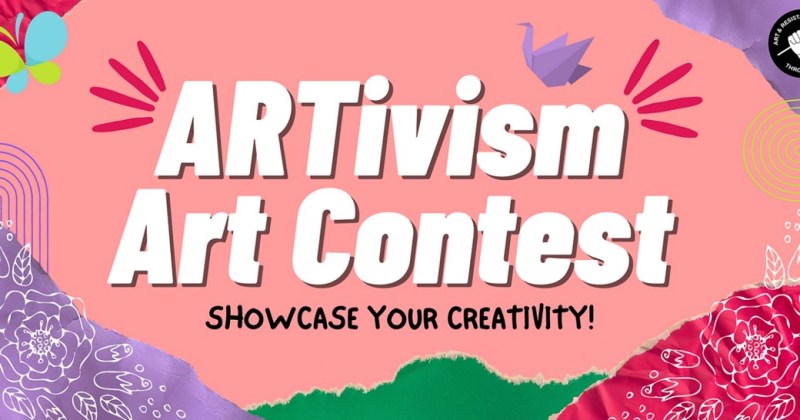
The ARTivism (Art + Activism) Art Contest

Art and Resistance Through Education’s Junior Board recently launched the Artivism Art Contest, a national art contest open to youth ages 13-18. Submissions close on July 2, and we’d love for you to share the attached flyer and following blurb with your program participants/youth in your community! 

Art is a universal language for us to share our voices, tell our stories, and act as a medium for change. Here at ARTE, we aim to emphasize the power of art and invite you to do the same.

The ARTivism (Art + Activism) Art Contest asks young artists, ages 13-18, to submit visual art pieces that comment on a personal experience or issue related to a broader theme in our society.

The results of the ARTivism Art Contest will be decided by a team of judges from ARTE, and submissions close on Saturday, July 2 at 11:59 pm ET.

The contest will have a first, second, and third place winner, and the website page further details the prizes: https://www.artejustice.org/artcontest. Youth can also submit their work using the “submit” button on the website. Please address any inquiries to info@artejustice.org.

WERA IRN Human Rights Education 2022 Webinar Series Seminar 4

Register here 

Wed, 29 June 2022

10:30 – 11:30 CDT

Developing political compassion through narrative imagination in human rights education Iida PYY, University of Helsinki, Finland

In this presentation, Iida Pyy explores the work of Martha Nussbaum, arguing that political compassion is a necessary disposition for engaging with human rights principles and combatting social injustices such as racial discrimination. Drawing from Nussbaum’s theory of political emotions, she explores the need to understand compassion as connected to cognition and practical reasoning. Iida Pyy offers suggestions of how to educate towards political compassion in human rights education (HRE) through Nussbaum’s notion of narrative imagination. In order to address ways in which human rights education may be partial and counteract this tendency with alternative perspectives, the presenter draws on the work of critical HRE scholars and emphasises the importance of counter-narratives and reflective interpretation of narratives. She suggests that Nussbaum’s work on compassion and narrative imagination, informed by such critical considerations, opens up opportunities to look afresh at HRE theory and practice and inform thinking about rights, emotions and social justice.