Apply now: UN Master of Arts in International Relations & Diplomacy

Dreaming of a career in international relations or working with the United Nations?

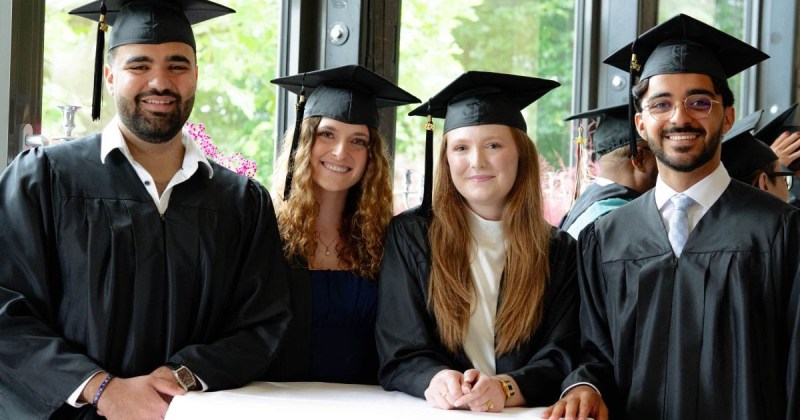
Schiller International University, in partnership with the United Nations Institute for Training and Research (UNITAR), offers specialized master’s programs designed to prepare future global leaders. Through this collaboration, you will gain firsthand insights into international diplomacy, sustainable development, and the inner workings of the UN—equipping you with the skills to make a real impact on the world stage.

Explore

Empower Your Students With Civic Media Literacy

In today’s fast-changing media landscape, students need the skills to navigate information, identify misinformation, and understand how media shapes democracy. As an educator, you play a crucial role in equipping them with these essential skills.

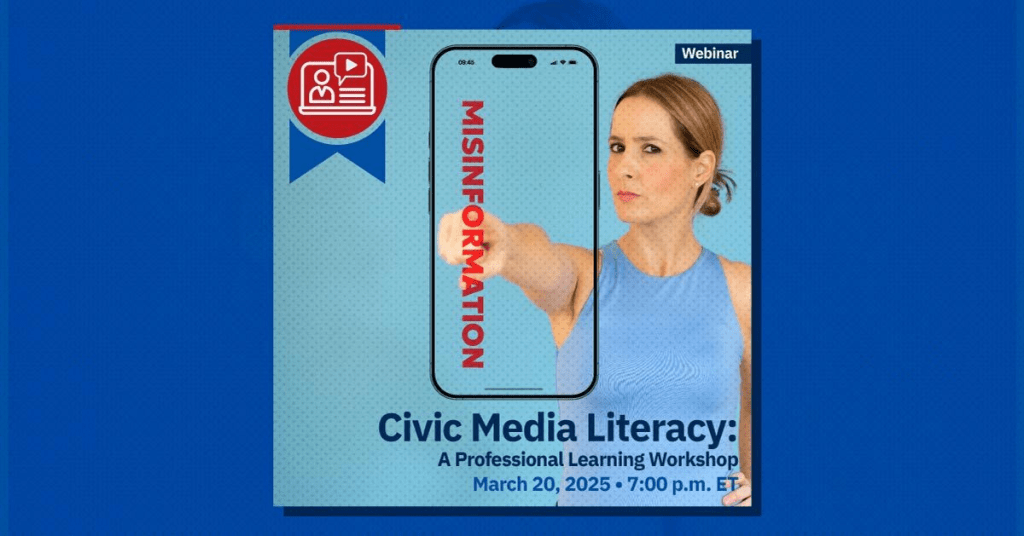
That’s why the Center for Civic Education and the National Association for Media Literacy Education (NAMLE) are excited to offer Civic Media Literacy, a professional learning workshop on Thursday, March 20, at 7 p.m. ET designed to help teachers integrate media literacy into civic education.

Register

The Heroes We Need Today: Teaching About the Radical Ida B. Wells

With more schools and public spaces named for journalist and anti-lynching crusader Ida B. Wells, it is time for students to learn about the courage and vitality of this radical activist.

They also need to be ready to resist any efforts under this administration to remove Wells’ name from public spaces and curriculum.


High school teacher Matt Reed offers a lesson to introduce students to the life and work of Wells.

Read about the lesson and download it for free at Rethinking Schools.

Lesson

Icon of a podcast microphone on top of a stack of books with the two HRE podcast logos on an abstract background

The Rise of Podcasts as a Tool for Human Rights Education

Podcasts have revolutionized our learning journey, offering an accessible and enjoyable way to investigate complex topics. In human rights education, they serve as a powerful bridge between theory and lived experiences, illuminating stories and expert insights. Two inspiring podcasts in this field, EquiTalks: Voices of Human Rights Education, and Human Rights Education Now!, significantly foster awareness and ignite action.

Why Podcasts Are Effective for Human Rights Education

1. Accessible Anytime, Anywhere – Listeners can immerse themselves in human rights content daily, empowering independent learning.

2. Compelling Storytelling – Personal narratives transform abstract concepts into relatable realities, cultivating empathy and deeper understanding.

3. Global Reach—Unlike traditional classrooms, podcasts connect diverse audiences worldwide, sparking a vibrant dialogue on social justice.

EquiTalks: Voices of Human Rights Education

Produced by Equitas, a leading Canadian human rights education organization, Voices of Human Rights Education amplifies the voices of activists, educators, and community leaders. A particularly inspiring episode out of many features Elom, a human rights advocate originally from Togo, who, inspired by Nelson Mandela, leverages development economics to drive transformative social change.

Human Rights Education Now!

Produced by HRE USAHuman Rights Education Now! highlights the global movement to weave human rights education into schools and communities. Recent episodes showcase HRE USA Edmonds Fellows, young leaders passionately advocating for policy change through education.

These podcasts empower listeners to engage meaningfully with human rights issues, sharing impactful stories and strategies. Whether you’re an educator, activist, or simply curious, tuning in is a powerful step toward creating a more just world.

Want to dive in?


Thank you to Tia Hinz, M.Ed. M.A., for writing this article and to Equitas for editing.
Human Rights Courses

Take free human rights online courses offered by the United Nations (UN), leading NGOs and top universities. Learn how the United Nations and other human rights organizations tackle the most pressing human rights issues of our time. The directory below contains both, introductory level courses and advanced courses on specific human rights issues. All courses in our list are available for free to audit or try. You may choose to opt-in for a paid verified certificate issued by the course providers that include Harvard University, Stanford University, UNICEF, among others. Most of the human rights courses listed on this page are self-paced. You can enroll yourself anytime, anywhere it suits you and start with your learning experience instantly.

Explore and sign up here

Tonight! Explore the Meaning of “We the People”

How has citizenship and inclusion expanded since the drafting of the Constitution in 1787?

The Center for Civic Education is teaming up with the Bob and Marion Wilson Teacher Institute of Colonial Williamsburg tonight at 7 p.m. ET to offer a special Civic Learning Week webinar: “Who Are We the People?”

Don’t miss out! Participants will receive a certificate for 1.5 professional development hours for attending this session.

Register Now!

University of San Diego, Joan B. Kroc School of Peace Studies: Master of Science in Humanitarian Action

The Master of Science in Humanitarian Action is a 100% online career-building advanced degree within the University of San Diego’s Joan B. Kroc School of Peace Studies. This program is designed for both recent graduates and experienced professionals and provides the opportunity for students to learn from executive-level directors, experienced consultants and regional coordinators who work directly for humanitarian-related organizations.

This master’s program takes a multidisciplinary approach to prepare students to become the type of critical thinkers and humanitarian leaders who will help solve some of the world’s biggest challenges. Blending conflict analysis, transformation and social innovation with peacebuilding practices, the MS in Humanitarian Action intentionally dissolves the barriers between international humanitarian and domestic emergency management.

The 20-month program admits candidates throughout the year to begin their degree in either the Spring, Summer or Fall. Students will take two courses during each 14-week term, focusing on one 7-week course at a time. Course curriculum includes topics such as assessing humanitarian needs, aid delivery, management and logistics, leadership, effective communication, and more. The program culminates in a capstone simulation exercise where students will tackle a complex humanitarian emergency demonstrating their learned skills and knowledge in order to design, implement and evaluate creative solutions in a real-time scenario.


Summer 2025 Final Application Deadline: 4 April 2025

>> Learn more

Zinn Education Project: King of the North: Martin Luther King’s Freedom Struggle Outside of the South

On Monday, March 24, 2025, historian Jeanne Theoharis and Rethinking Schools editor Jesse Hagopian will discuss Theoharis’s book, King of the North: Martin Luther King’s Freedom Struggle Outside of the South.

Jeanne Theoharis is a distinguished professor at Brooklyn College. She is the author or co-author of numerous books and articles on the Civil Rights and Black Power movements and the politics of race and education. Her books include the award-winning titles The Rebellious Life of Mrs. Rosa Parks and A More Beautiful and Terrible History: The Uses and Misuses of Civil Rights History. Theoharis co-founded the Teach the Black Freedom Struggle class series with the Zinn Education Project and invited our staff to collaborate on a teaching guide for The Rebellious Life of Mrs. Rosa Parks book and film.

ASL interpretation provided.

Professional development credit certificate provided upon request for attendees.

>> Register

Abota Foundation: FACE Grants Program

The ABOTA Foundation will give up to a total of $20,000 per year to educators for classroom projects through the ABOTA Foundation Award for Civics Excellence (FACE).

ABOTA Foundation Award for Civics Excellence (FACE) grants will be considered for projects that educators are interested in implementing in their schools but lack the resources needed to do so. Funds are available for civics education related projects seeking to educate students.

The ABOTA Foundation reviews grant requests twice per year with application deadlines of: MARCH 31 & SEPTEMBER 30

>> Apply